
Prime Numbers and Prime Factorization
Learn what prime numbers are and how to do prime factorisation using factor trees. Let’s get started! 🚀
Video Lesson
Watch and learn the basics
Flashcards
Review key concepts visually
%20Prime%20Numbers.webp)
%20Prime%20Numbers%20below%2020.webp)
%20Prime%20Factorisation%20Division%20Method.webp)
%20Prime%20Factorisation%20Tree%20Method.webp)
🛎️ What is a Prime Number?
- A prime number has exactly two different factors: 1 and itself.
- 2 is the smallest prime number.
- 0 and 1 are not prime numbers.
🛎️ Prime Numbers Below 20
- The prime numbers below 20 are: 2, 3, 5, 7, 11, 13, 17, 19.
- Remembering them helps you factorise larger numbers.
🛎️ What Does Prime Factorisation Mean?
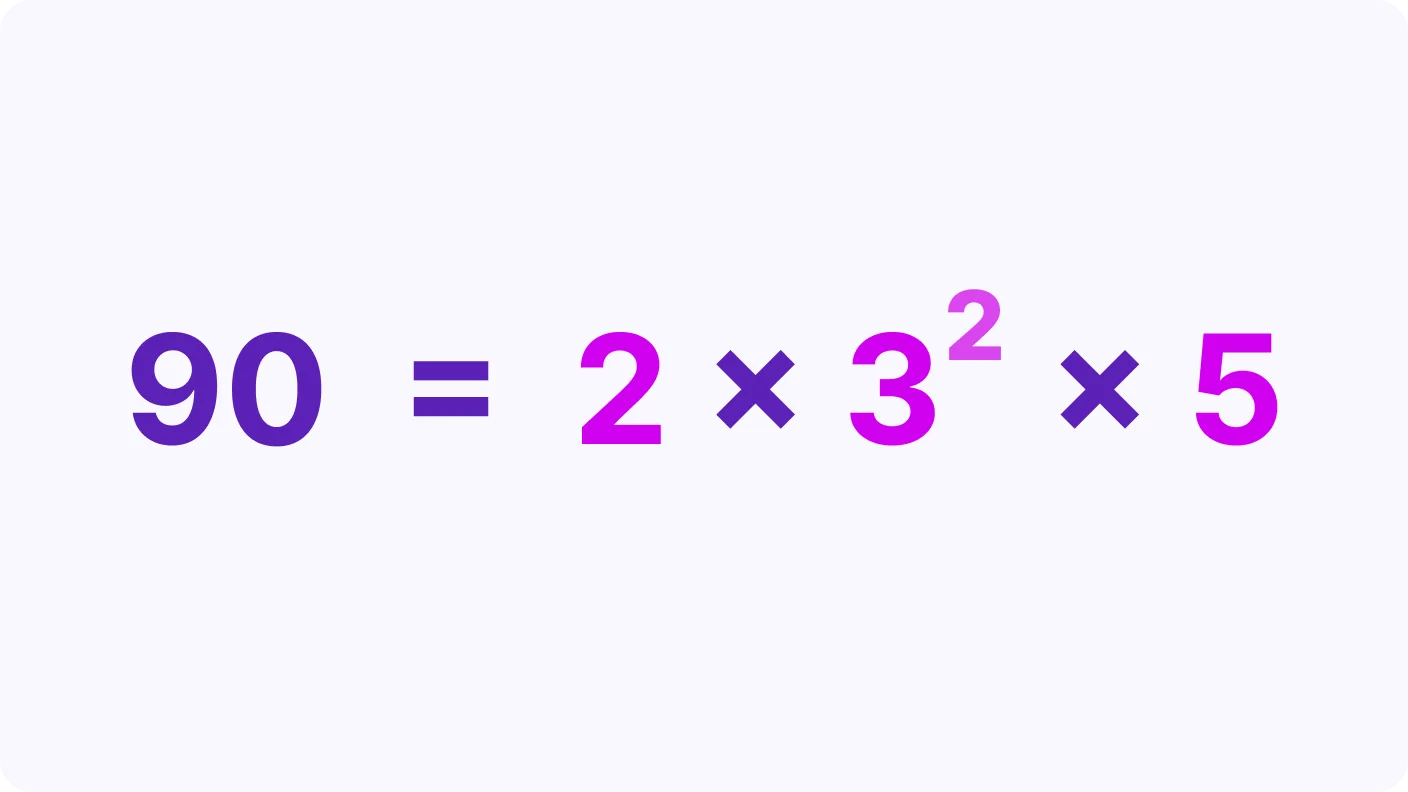
- Prime factorisation means writing a number as a product of prime numbers only.
- For example, 90 = 2 × 3 × 3 × 5.
🛎️ Factor Tree Method for Prime Factorisation
- The factor tree method breaks a number into smaller factors step by step.
- Keep factorising until all factors are prime numbers.
Practice Questions
Test your understanding
Interactive Activity
Build the prime factorization tree
Loading interactive widget...
Click here to open ChatCat