Calculating Probability
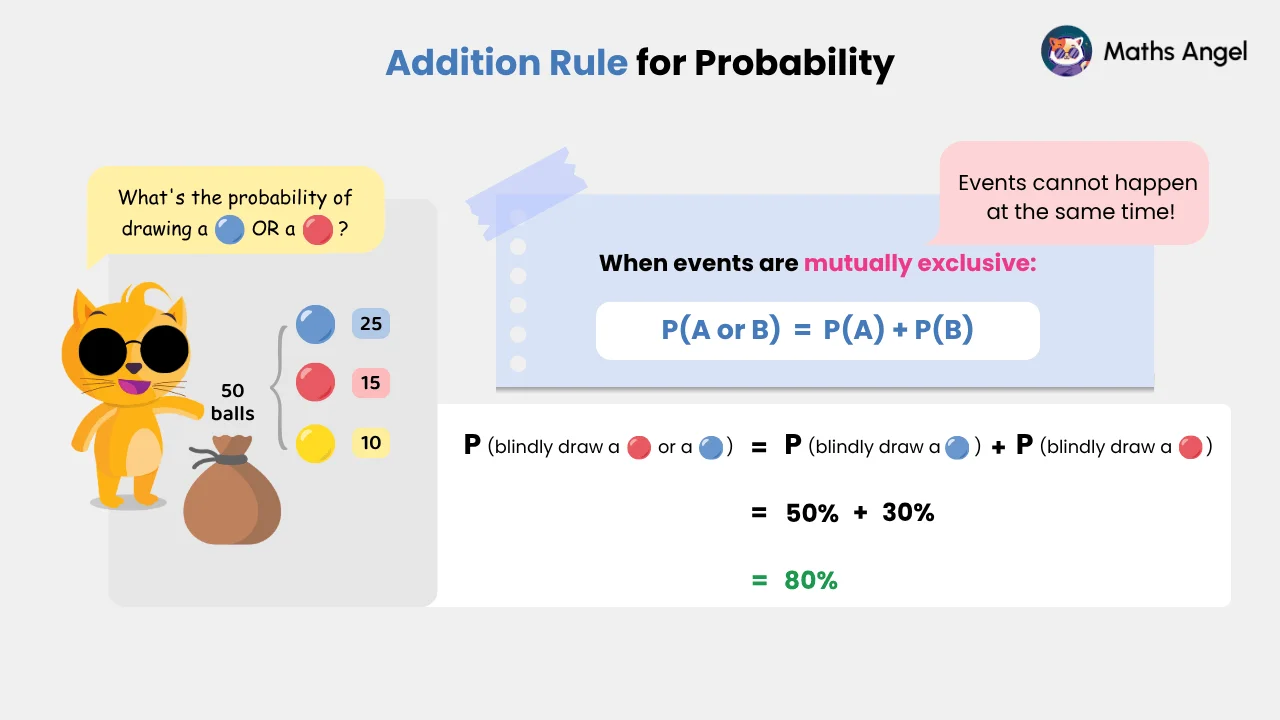
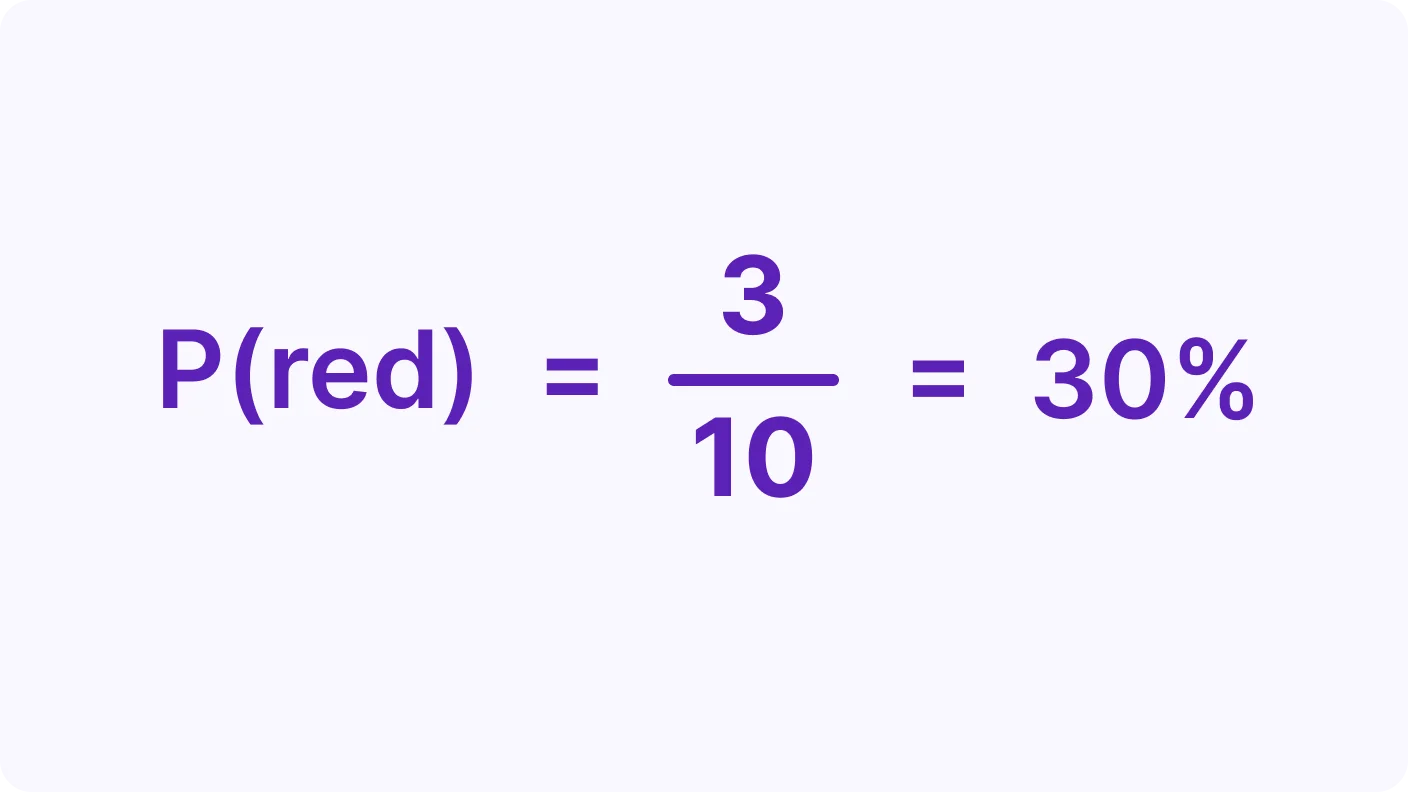
Calculating probability means working out how likely an event is. Divide the desired outcomes by the total outcomes, so 3 red balls out of 10 gives 3/10. Experimental probability estimates it by repeating an experiment.
Video Lesson
Watch and learn the basics
🎬 Did this video explain it clearly?
Flashcards
Review key concepts visually
%20Characteristic%20of%20a%20Probability.webp)
%20Calculating%20Probabilities.webp)
%20Estimating%20Probabilities.webp)
What Is Probability?
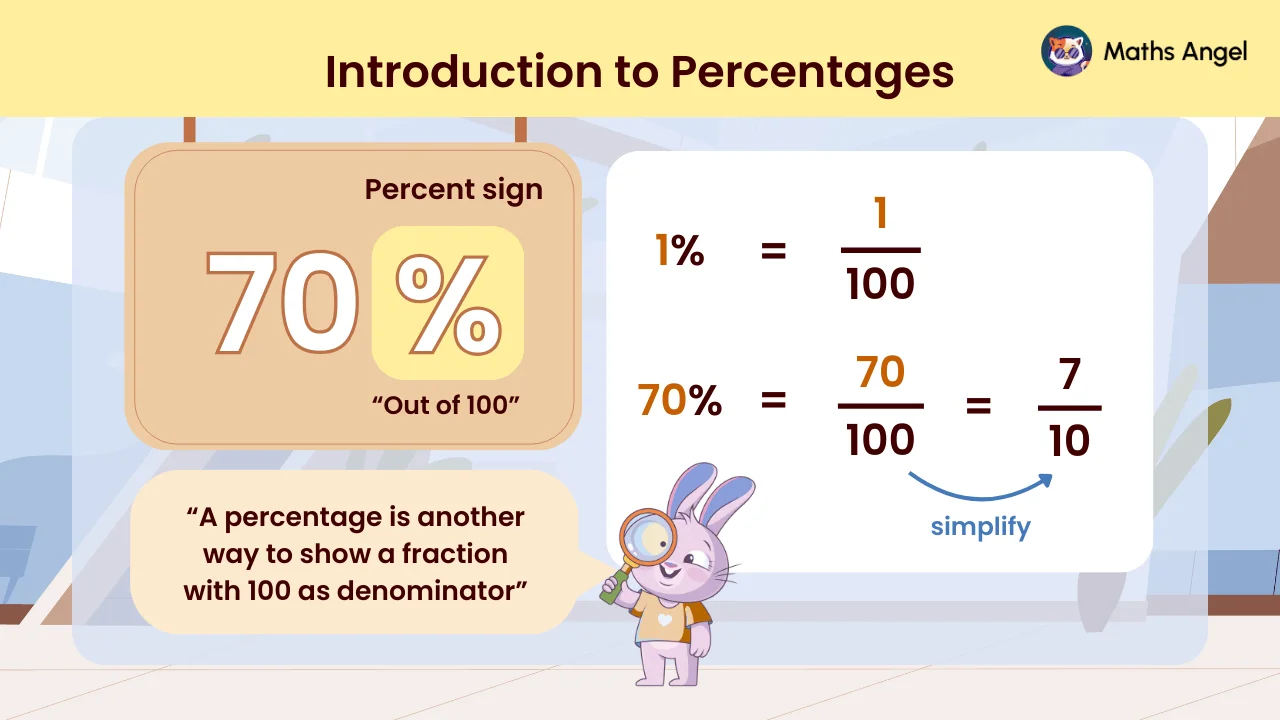
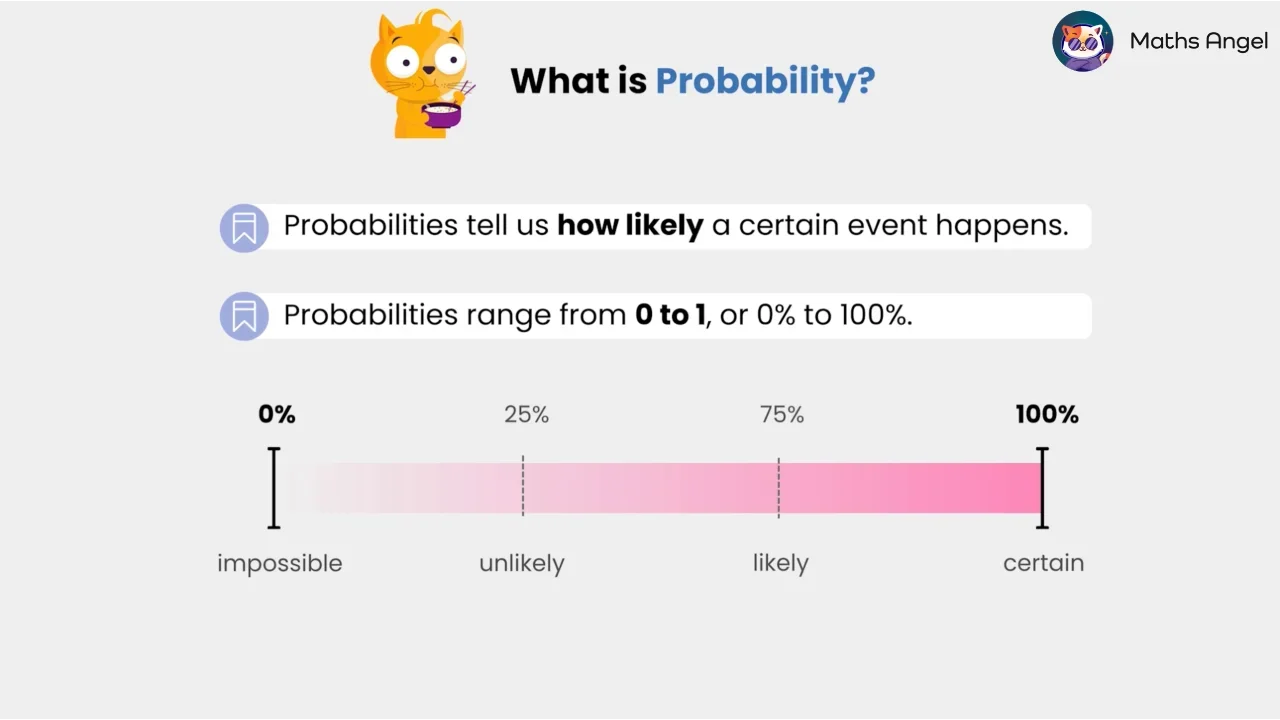
- Probability tells us how likely an event is to happen.
- It is written from 0 to 1, or to .
- means impossible and means certain.
Calculating Probability
- Probability equals number of desired outcomes ÷ total number of outcomes.
- For example, with 3 red balls out of 10 balls, the probability of red is 3/10 or .
Experimental Probability
- Experimental probability is used when the true probability is unknown.
- You repeat an experiment to estimate how likely an event is.
- The more trials you do, the closer it gets to the true probability.
Practice Questions
Test your understanding
If you have a bag with 5 balls, 3 red and 2 blue, what is the probability of drawing a red ball?
Correct! 🎉 +10 pointsCorrect! 🎉 Worth 10 XPNot quite right
There are 3 red balls out of 5 balls in total.
So the probability of drawing a red ball is , which is 0.6 or .
A bag contains 12 balls, 3 red and 9 blue. What is the probability of drawing a blue ball? Give your answer in its simplest form.
Correct! 🎉 +10 pointsCorrect! 🎉 Worth 10 XPNot quite right
There are 9 blue balls out of 12 balls in total.
So the probability is , which simplifies to , that is 0.75 or .
A box contains 6 red marbles, 8 green marbles, and 10 blue marbles. What is the probability of drawing a green marble?
Correct! 🎉 +20 pointsCorrect! 🎉 Worth 20 XPNot quite right
There are marbles altogether, and 8 of them are green.
So .
The denominator must be the total number of marbles (24), not the 16 marbles that are not green, and the numerator must be the green count (8), not another colour's count. When simplifying, divide the top and the bottom by the same number: and .
You roll a fair six-sided die. What is the probability of rolling a number greater than 4?
Correct! 🎉 +20 pointsCorrect! 🎉 Worth 20 XPNot quite right
A fair die has six equally likely outcomes: 1, 2, 3, 4, 5, 6.
Only 5 and 6 are greater than 4. The 4 itself does not count, because "greater than 4" does not include 4.
So 2 of the 6 outcomes are favourable: .
Three things to watch: both 5 and 6 count, the denominator is all 6 outcomes (not just the 4 that fail), and the question asks for the chance of the event happening. The chance of it not happening would be .
You draw a marble from a bag 500 times, and the results show 150 red marbles, 200 blue marbles, and 150 green marbles. What is the experimental probability of drawing a red marble?
Correct! 🎉 +20 pointsCorrect! 🎉 Worth 20 XPNot quite right
Experimental probability = number of red draws ÷ total number of draws.
That is . Dividing the numerator and the denominator by the same number, 50, gives (which is 0.3).
The denominator must be the 500 draws in total, not the number of draws of some other colour. And the recorded results, not the number of colours, decide the answer.
If you flip a fair coin 10 times, does it guarantee that exactly half of the flips will be heads and half tails?
Correct! 🎉 +30 pointsCorrect! 🎉 Worth 30 XPNot quite right
No. Each flip is random, so 10 flips can give any number of heads from 0 to 10.
Getting exactly 5 heads is the single most likely result, but it still only happens about of the time (). So over three quarters of the time you do not get exactly 5 heads and 5 tails.
"Fair" means each flip has an equal chance of heads or tails. It does not promise an exact split in a short run.
Want to see the full working?
Interactive Activity
Explore the relationship between experimental and theoretical probability
Loading interactive widget...
Frequently asked questions
The questions students bump into most on this topic
Probability measures how likely something is to happen. It runs from 0 to 1, or from 0% to 100%: 0 means impossible, 1 means certain, and 0.5 means as likely as not. It can be written as a fraction, a decimal or a percentage. Drawing a red ball from a bag with 3 red and 7 blue has a probability of 3/10, or 30%.
Divide the number of outcomes you want by the total number of outcomes, as long as every outcome is equally likely. A bag holds 10 balls, 3 red and 7 blue, and you draw one without looking: the probability of red is 3 ÷ 10 = 3/10, or 30%. That one formula is the GCSE formula for probability.
All three say the same thing, so use the form the question asks for. 3 out of 10 is the fraction 3/10; divide to get the decimal, 0.3; multiply by 100 to get the percentage, 30%. For 1 out of 7, the fraction is 1/7, the decimal is 0.14 to two decimal places, and the percentage is about 14%.
An outcome is any single result that could happen, such as picking one particular ball out of the ten. An event is the collection of outcomes you are interested in, such as “drawing a red ball”, which covers three of those outcomes. You count the outcomes in the event and divide by the total to get its probability.
An estimate of a probability from an experiment, used when you cannot count the outcomes. Draw a ball, note its colour, put it back, and repeat 100 times: 37 reds gives an experimental probability of 37/100, or 37%. The true probability might be 40%; the more trials you do, the closer the estimate gets. The formula gives the exact, theoretical value.
Put 10 balls in a bag, 3 red and 7 blue, and ask the chance of red: 3 out of 10, or 30%. Then draw a ball, put it back, and repeat 20 times with a tally; the share of reds will be near 30% but not exact: formula versus experiment.
What's next?
Found this one hard? Go one step back first. Feeling confident? Carry on to the next lesson.