Interest and Interest Rate Calculation
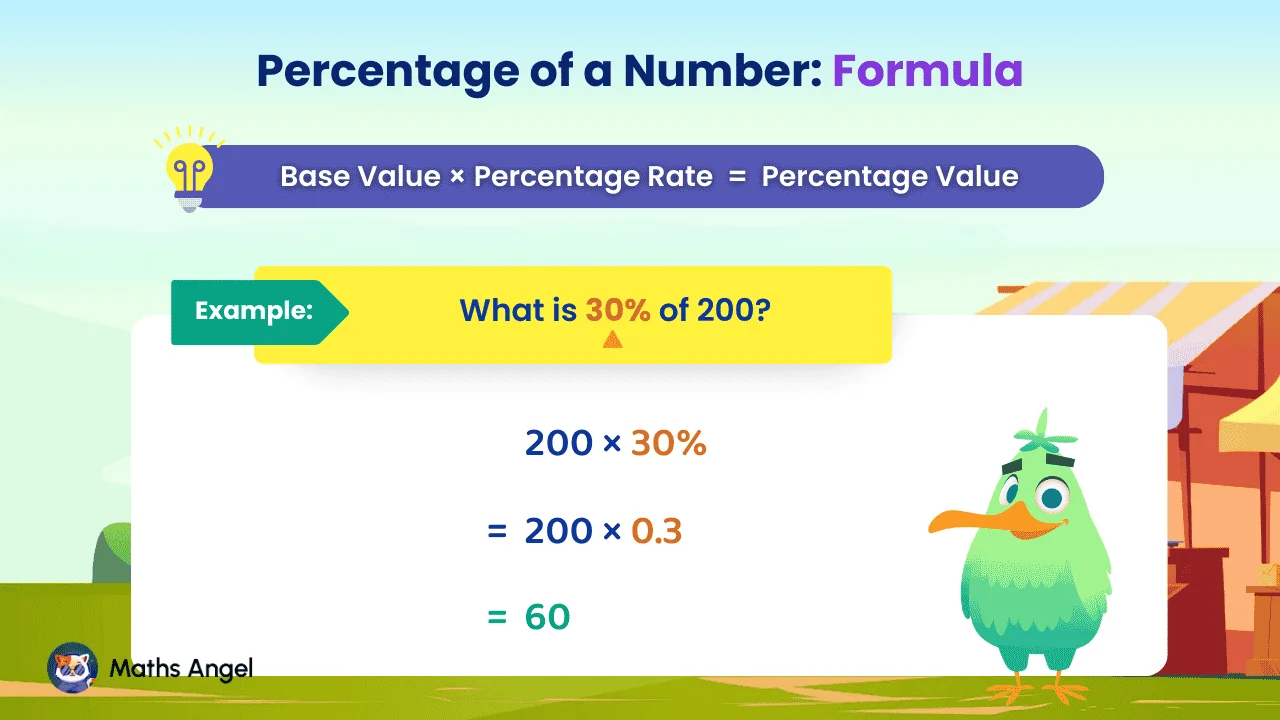
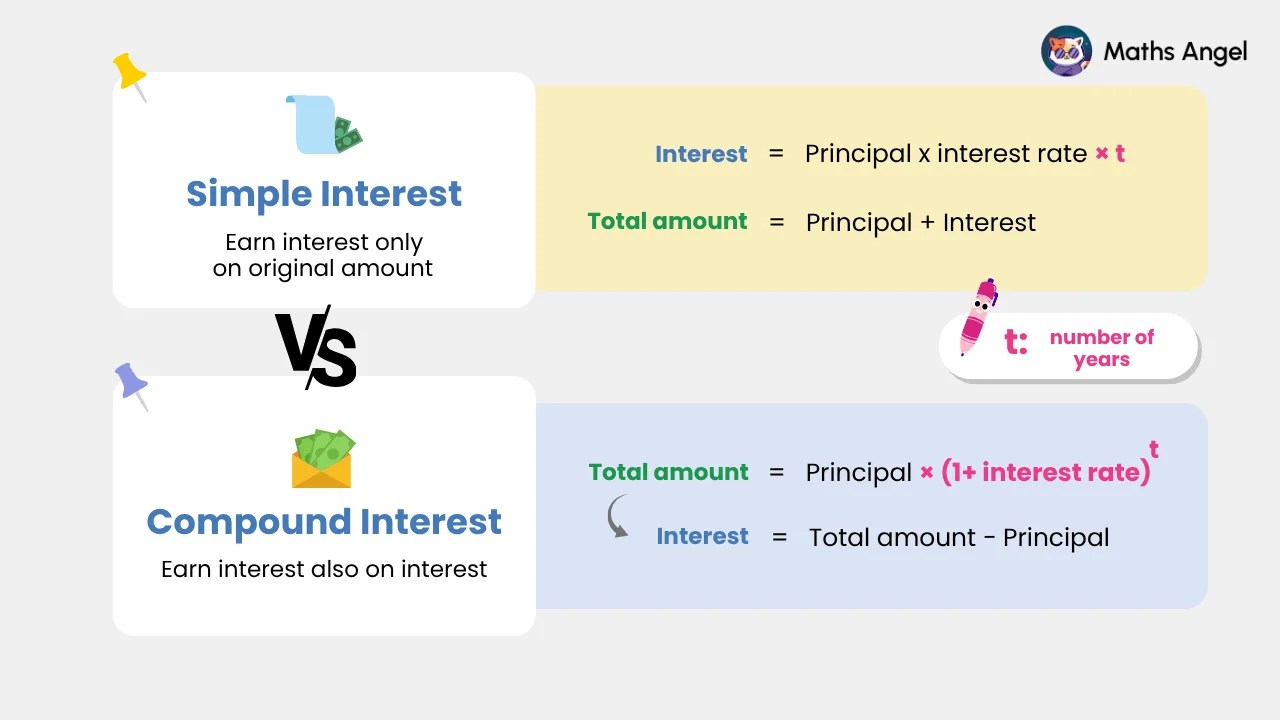
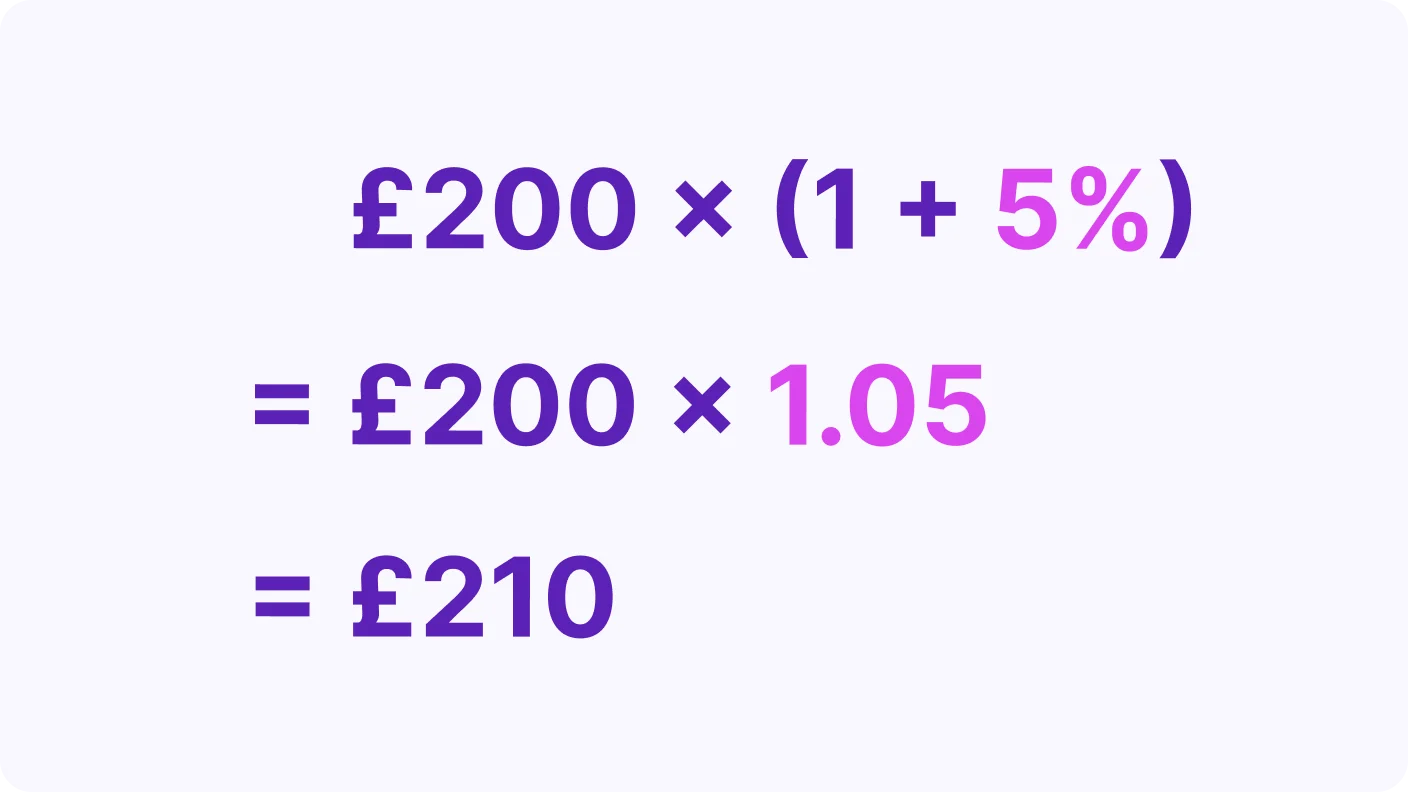
Calculate interest by multiplying the principal, your starting amount, by the interest rate: interest = principal × rate. So 5% of £200 is £10, growing the £200 to £210.
Video Lesson
Watch and learn the basics
🎬 Did this video explain it clearly?
Flashcards
Review key concepts visually
%20Interest%20and%20Interest%20Rate%20Calculation.webp)
%20Calculating%20Interest.webp)
%20Calculating%20Interest%20Rate.webp)
%20Calculating%20Principal.webp)
Understanding Interest
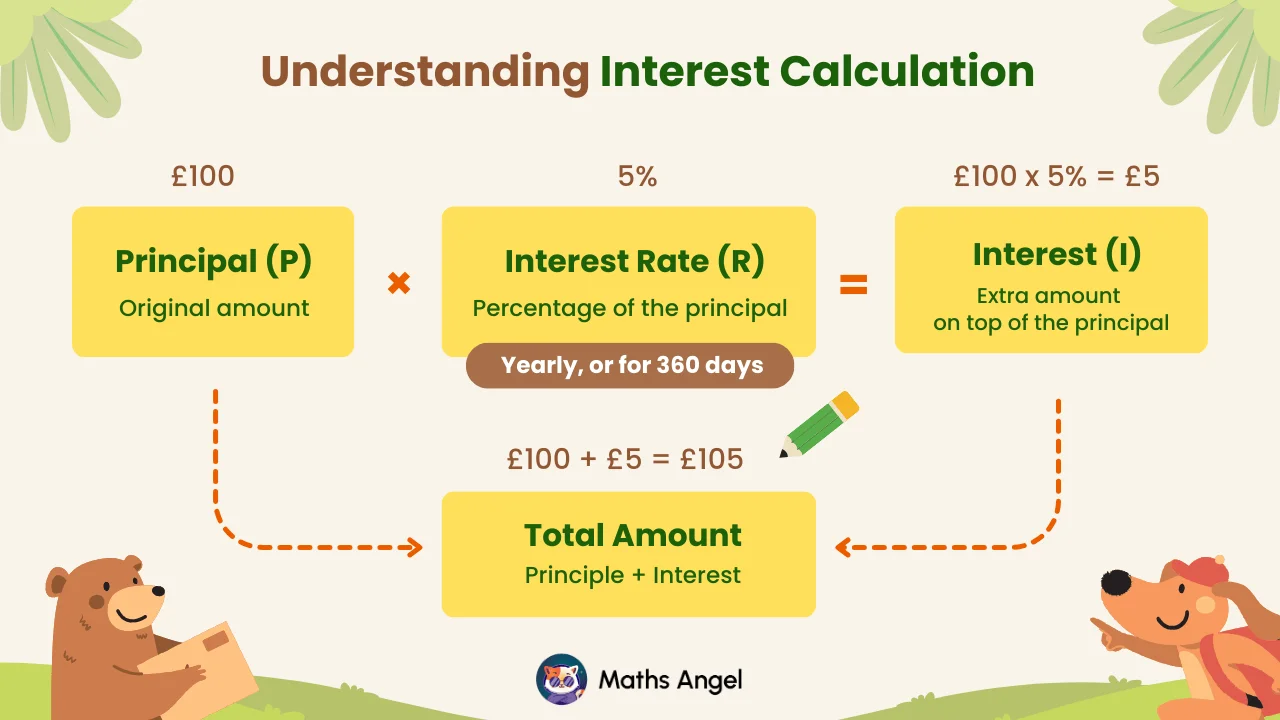
- Interest is the extra money earned or paid on an original amount.
- The original amount is called the principal.
The Interest Formula
- You use interest = principal × interest rate for one year.
- If the time is shorter, you take the fraction of a year.
Calculating the Interest Rate
- You scale the interest to one year first.
- You then rearrange to find interest rate = interest ÷ principal.
Calculating the Principal
- You rearrange the formula to make the principal the subject.
- You divide the interest by the interest rate to find it.
Practice Questions
Test your understanding
You deposit £100 in a bank offering a annual interest rate. How much interest will you earn after 1 year?
Correct! 🎉 +10 pointsCorrect! 🎉 Worth 10 XPNot quite right
The principal is £100 and the rate is per year, so as a decimal.
Interest = £ £6.
The question asks for the interest earned, not the new balance, so the answer is £6. (The balance after a year would be £106.)
A savings account offers a annual interest rate. If you deposit £60, how much interest will you earn in 1 year?
Correct! 🎉 +10 pointsCorrect! 🎉 Worth 10 XPNot quite right
The principal is £60 and the rate is per year, so as a decimal.
Interest = £ £3.
That is the interest only: the account would then hold £63.
Maria deposits £400 in a bank with a annual interest rate. How much interest will she earn after 3 months?
Correct! 🎉 +20 pointsCorrect! 🎉 Worth 20 XPNot quite right
One year's interest is £ £ £8.
Three months is of a year, so the interest earned is £ £2.
A bank offers a annual interest rate. If you deposit £250 for 1 year, how much total amount will you have?
Correct! 🎉 +20 pointsCorrect! 🎉 Worth 20 XPNot quite right
One year's interest is £ £ £10.
The question asks for the total amount, so add the interest to the money you started with: £250 + £ £260.
Tom deposits £1000 in a bank. After 1 year, he receives £1030. What was the interest rate?
Correct! 🎉 +20 pointsCorrect! 🎉 Worth 20 XPNot quite right
The interest earned is £1030 − £ £30.
Rate = interest ÷ .
To write this as a percentage, multiply by 100: .
You earn £18 in interest after 6 months on an investment with a annual interest rate. What was the initial amount you invested?
Correct! 🎉 +30 pointsCorrect! 🎉 Worth 30 XPNot quite right
6 months is half a year, so a full year's interest would be £ £36.
Interest = Principal × Rate, so Principal × 0.03.
£1200.
Want to see the full working?
Interactive Activity
Adjust the principal, rate, and time to see how interest is calculated step by step
Loading interactive widget...
Frequently asked questions
The questions students bump into most on this topic
An interest rate is the percentage a bank pays you each year for the money you keep with it, or charges you for money you borrow. Put £100 in a bank offering 5%, and after a year you earn 5% of £100, which is £5. The £100 is called the principal, the £5 is the interest, and you end with £105.
The interest rate is the percentage, such as 5%. The interest is the money that percentage produces, such as £5 on £100. The principal is the original amount, the £100. So a bank quotes a rate, you deposit a principal, and the interest is what you actually earn: principal × rate.
Multiply the principal by the interest rate for one year. Michael deposits £200 at 3%: 200 × 0.03 = £6 a year. If the money stays for less than a year, take that fraction: 60 days is one sixth of the bank’s 360-day year, so he earns £1 and gets back £201. At 5%, £5,000 earns 5,000 × 0.05 = £250 a year.
Find the interest, scale it to a full year, then divide by the principal. Maria deposited £200 and got £202 after 3 months, so her interest was £2. Three months is a quarter of a year, so a full year would give 2 × 4 = £8. Then 8 ÷ 200 = 0.04, so her interest rate is 4%.
Divide the year’s interest by the rate. Your brother earned £30 in a year at 5%, so principal × 0.05 = 30, and the principal is 30 ÷ 0.05 = £600. Dividing by 0.05 is the same as dividing 3,000 by 5. If the interest was for less than a year, scale it up to a year first.
Banks usually count a year as 360 days when working out interest, so 60 days is one sixth of a year and 3 months is a quarter. Rates are quoted per year, or “per annum”. With simple interest, 1% a month is 12% a year; if each month’s interest is added before the next, it comes to slightly more, which the Compound Interest lesson explains.
What's next?
Found this one hard? Go one step back first. Feeling confident? Carry on to the next lesson.