How to Calculate Percentage Change
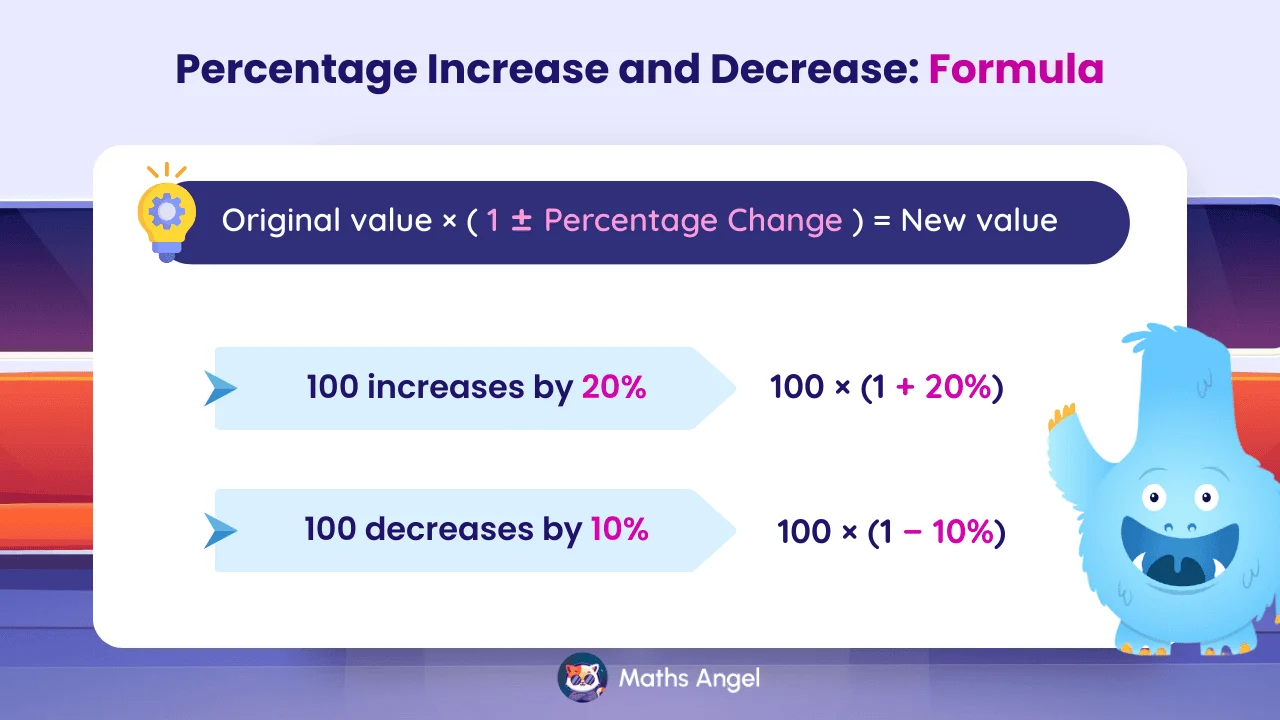
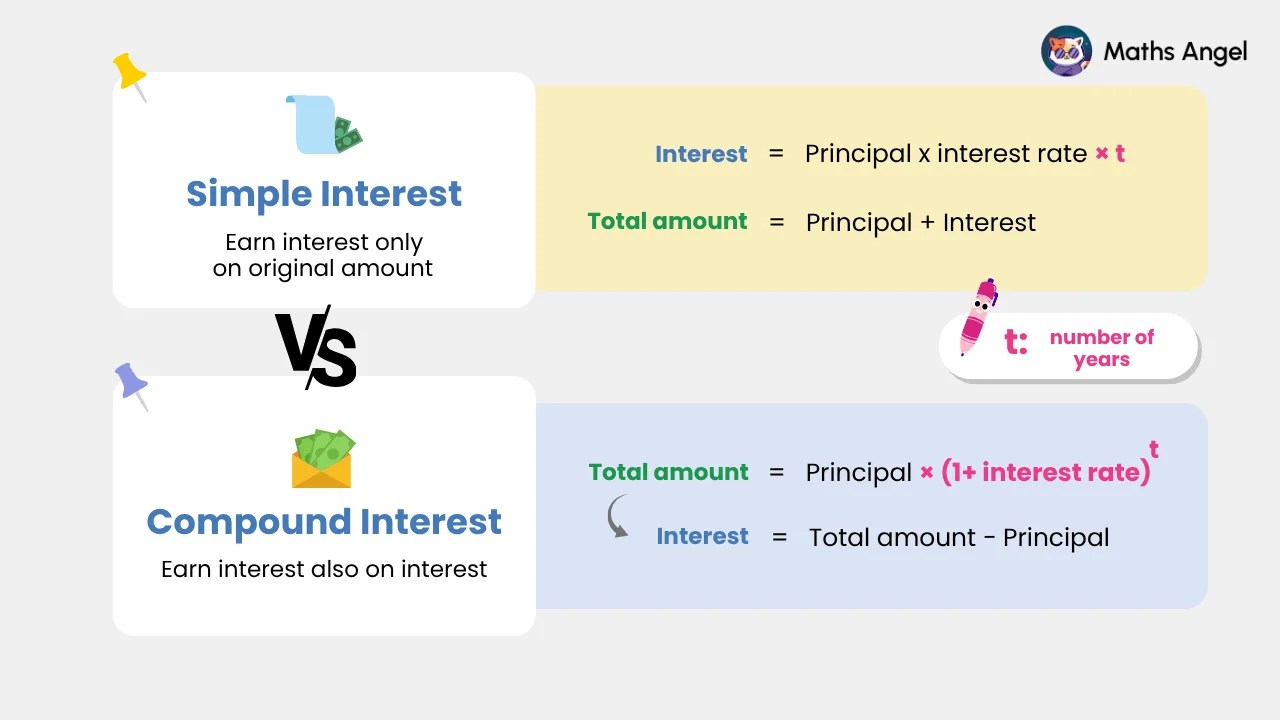
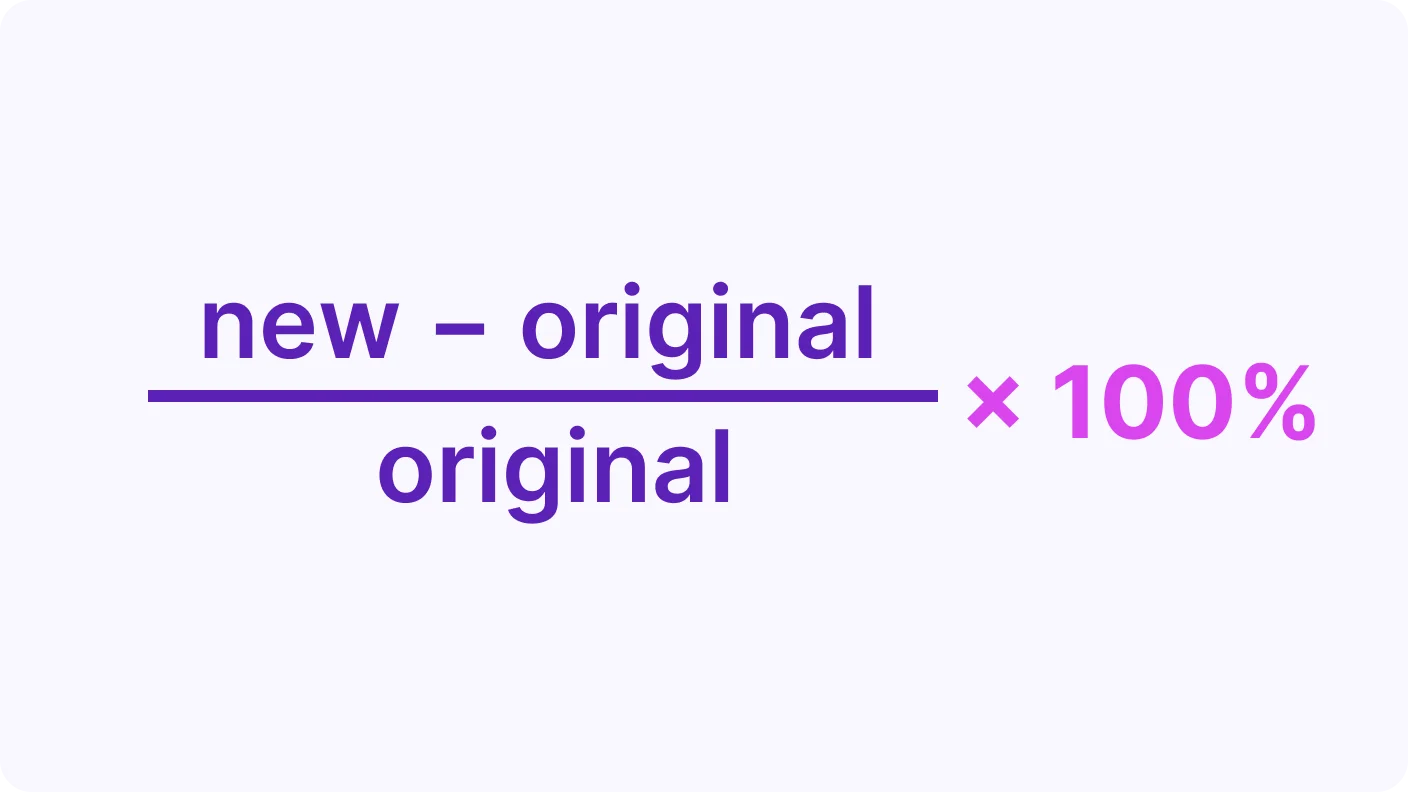
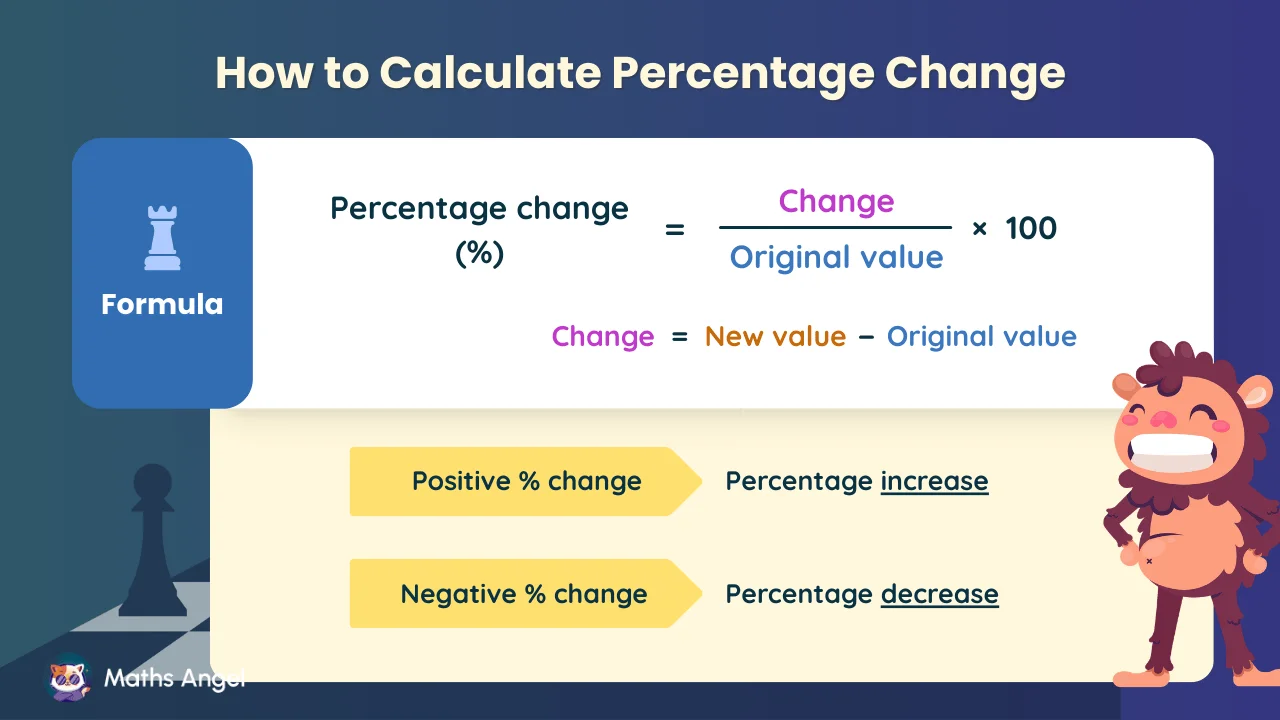
Percentage change shows how much a value has risen or fallen. Find it with (change ÷ original) × 100, so £20 rising to £25 gives 25%. A positive answer is a percentage increase, a negative one a percentage decrease.
Video Lesson
Watch and learn the basics
🎬 Did this video explain it clearly?
Flashcards
Review key concepts visually
%20How%20to%20Calculate%20Percentage%20Change.webp)
%20Percentage%20Change%20Examples.webp)
%20Percentage%20Change%20Practice.webp)
%20Percentage%20Change%20Application.webp)
How to Calculate Percentage Change?
- Percentage change is found by dividing the change by the original value and multiplying by 100.
- The change is the new value minus the original value.
Percentage Change Examples
- If the final answer is positive, it is a percentage increase.
- If the final answer is negative, it is a percentage decrease.
Practising Percentage Decrease
- A percentage decrease happens when the new value is smaller than the original value.
- The percentage shows how much the value has decreased from the start.
Applying Percentage Change to Data
- Always identify the new value and original value first before calculating.
- Exam tip: always divide by the original value, not the new one.
Practice Questions
Test your understanding
The price of a book increases from £20 to £25. What is the percentage change?
Correct! 🎉 +10 pointsCorrect! 🎉 Worth 10 XPNot quite right
Find the change first: .
Then divide the change by the original value: .
Multiply by 100: .
So the percentage change is a increase.
The number of apples in a basket drops from 60 to 48. What is the percentage change?
Correct! 🎉 +10 pointsCorrect! 🎉 Worth 10 XPNot quite right
Find the change first: fewer apples.
Then divide the change by the original number: .
Multiply by 100: .
Since the number went down, this is a decrease.
A phone’s price falls from £400 to £340. What is the percentage change?
Correct! 🎉 +20 pointsCorrect! 🎉 Worth 20 XPNot quite right
Find the change first: .
Then divide the change by the original price: .
Multiply by 100: .
Since the price fell, this is a decrease.
The number of subscribers on a channel goes from 1200 to 900. What is the percentage change?
Correct! 🎉 +20 pointsCorrect! 🎉 Worth 20 XPNot quite right
Find the change first: fewer subscribers.
Then divide the change by the original number: .
Multiply by 100: .
Since the number fell, this is a decrease.
The number of website visits goes from 2500 to 3000. What is the percentage increase?
Correct! 🎉 +20 pointsCorrect! 🎉 Worth 20 XPNot quite right
Find the change first: .
Then divide the change by the original number: .
Multiply by 100: .
So the number of visits rose by .
Attendance at a football match rises from 30,000 to 33,000. What is the percentage change?
Correct! 🎉 +30 pointsCorrect! 🎉 Worth 30 XPNot quite right
Find the change first: .
Then divide the change by the original attendance: .
Multiply by 100: .
Since attendance rose, this is a increase.
Want to see the full working?
Interactive Activity
Build the percentage change formula by selecting the correct values to fill the blanks
Loading interactive widget...
Frequently asked questions
The questions students bump into most on this topic
Percentage change tells you how much a value has gone up or down as a percentage of where it started. It is the change divided by the original value, times 100. A positive answer is a percentage increase and a negative one a percentage decrease: a board game going from £50 to £65 is a 30% increase.
Percentage change = change ÷ original value × 100, where the change is the new value minus the original value. A board game’s price goes from £50 to £65: the change is 15, so 15 ÷ 50 × 100 = 30, a 30% increase. Always divide by the original value, never the new one; that is the GCSE exam tip.
Subtract the original value from the new value, divide by the original value and multiply by 100. From £50 to £65 the change is 15, and 15 ÷ 50 × 100 = 30, so a 30% increase. From 250 to 300 the change is 50, and 50 ÷ 250 × 100 = 20%. If you want to increase a number by a percentage instead, see the Percentage Increase and Decrease lesson.
The same formula; the change comes out negative. A clock’s price drops from £80 to £60: the change is 60 − 80 = −20, and −20 ÷ 80 × 100 = −25, so a 25% decrease. A table bought for £1,200 and sold for £960 has a change of −240, and −240 ÷ 1,200 × 100 = −20%, a 20% decrease.
Always the original value, the one you started with. The sign of the answer then tells you which way it went: positive is an increase, negative a decrease. Ignore details the formula does not use: a table bought for £1,200 and sold for £960 after three years is a 20% decrease, and the three years do not come into it.
Pick the original value and the new value from the table first, then apply the formula. A cinema had 1,500 visitors in week 2 and 1,425 in week 4. The change is 1,425 − 1,500 = −75, and −75 ÷ 1,500 × 100 = −5, so visitors fell by 5% from week 2 to week 4. The weeks in between do not matter.
What's next?
Found this one hard? Go one step back first. Feeling confident? Carry on to the next lesson.