Pie Chart
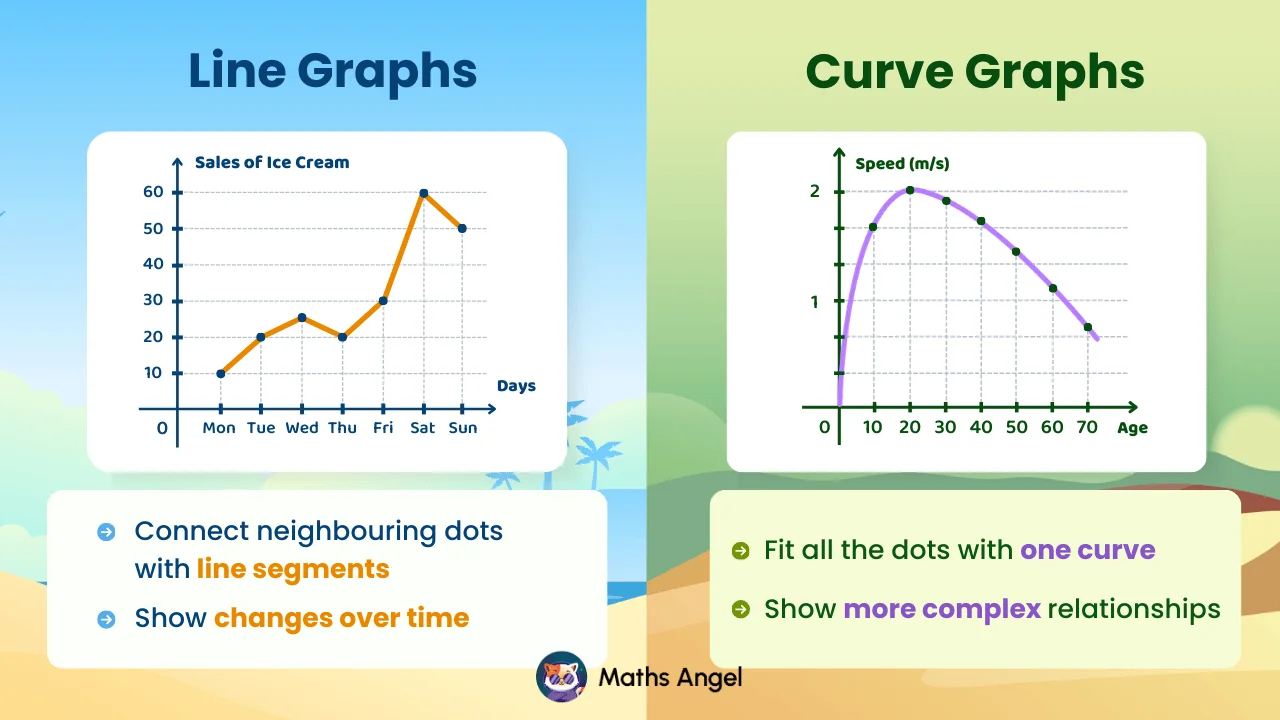
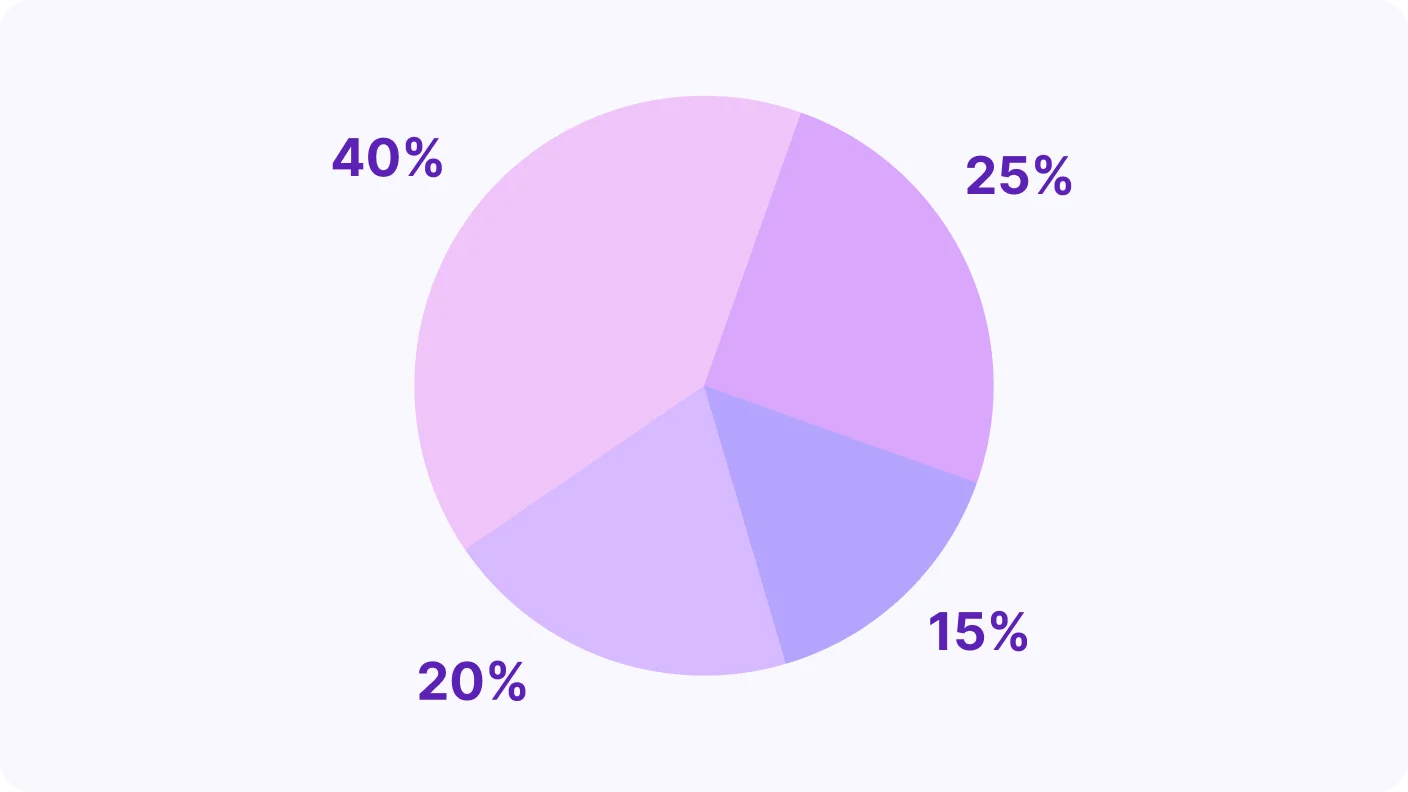
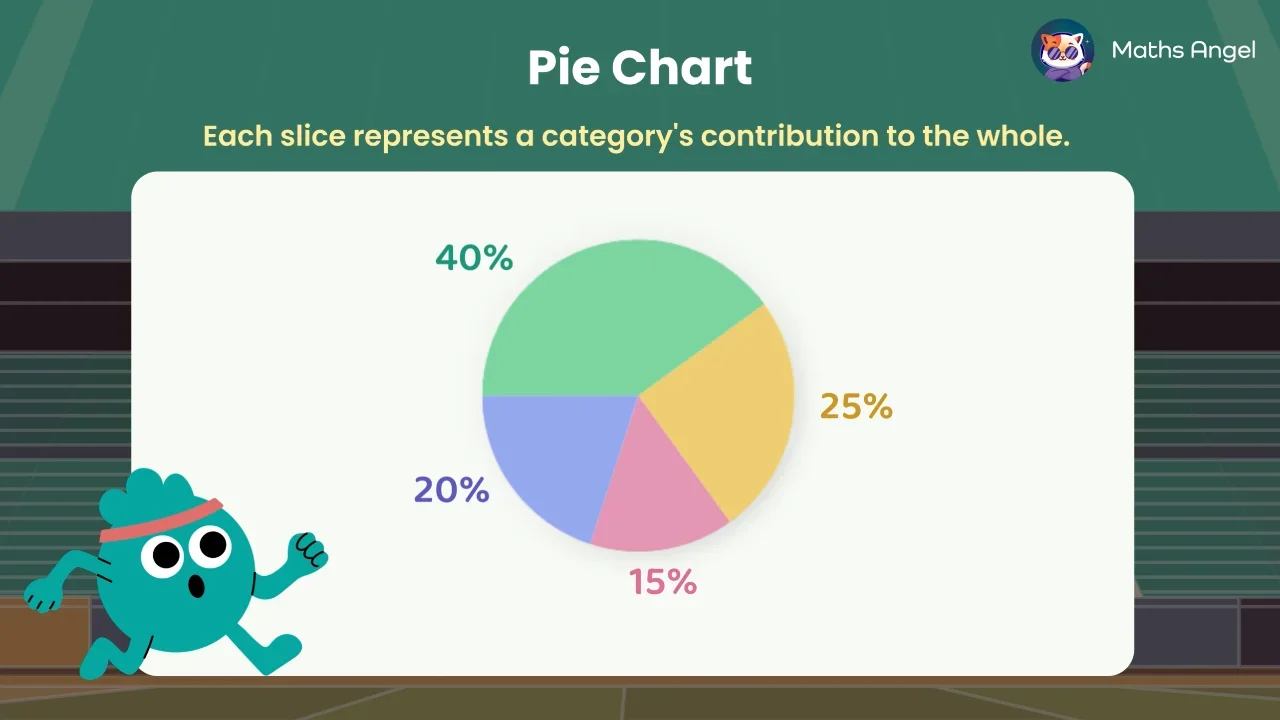
A pie chart shows data as slices of a circle, each slice a part of the whole. To draw one, find each central angle using frequency ÷ total × 360°, so 25 of 100 gives 90°. Together the slices fill the whole circle of 360°.
Video Lesson
Watch and learn the basics
🎬 Did this video explain it clearly?
Flashcards
Review key concepts visually
%20Pie%20Chart.webp)
%20How%20to%20Draw%20a%20Pie%20Chart.webp)
%20How%20to%20Read%20a%20Pie%20Chart.webp)
What Is a Pie Chart?
- A pie chart shows how each category is a part of the whole.
- Each slice represents a fraction or percentage of the total.
How to Draw a Pie Chart
- Find each central angle using frequency ÷ total × .
- Draw the circle, measure each angle, and label the categories.
Reading a Pie Chart
- Use angle ÷ × total to find the number in a category.
- Larger angles mean a bigger proportion of the whole.
Practice Questions
Test your understanding
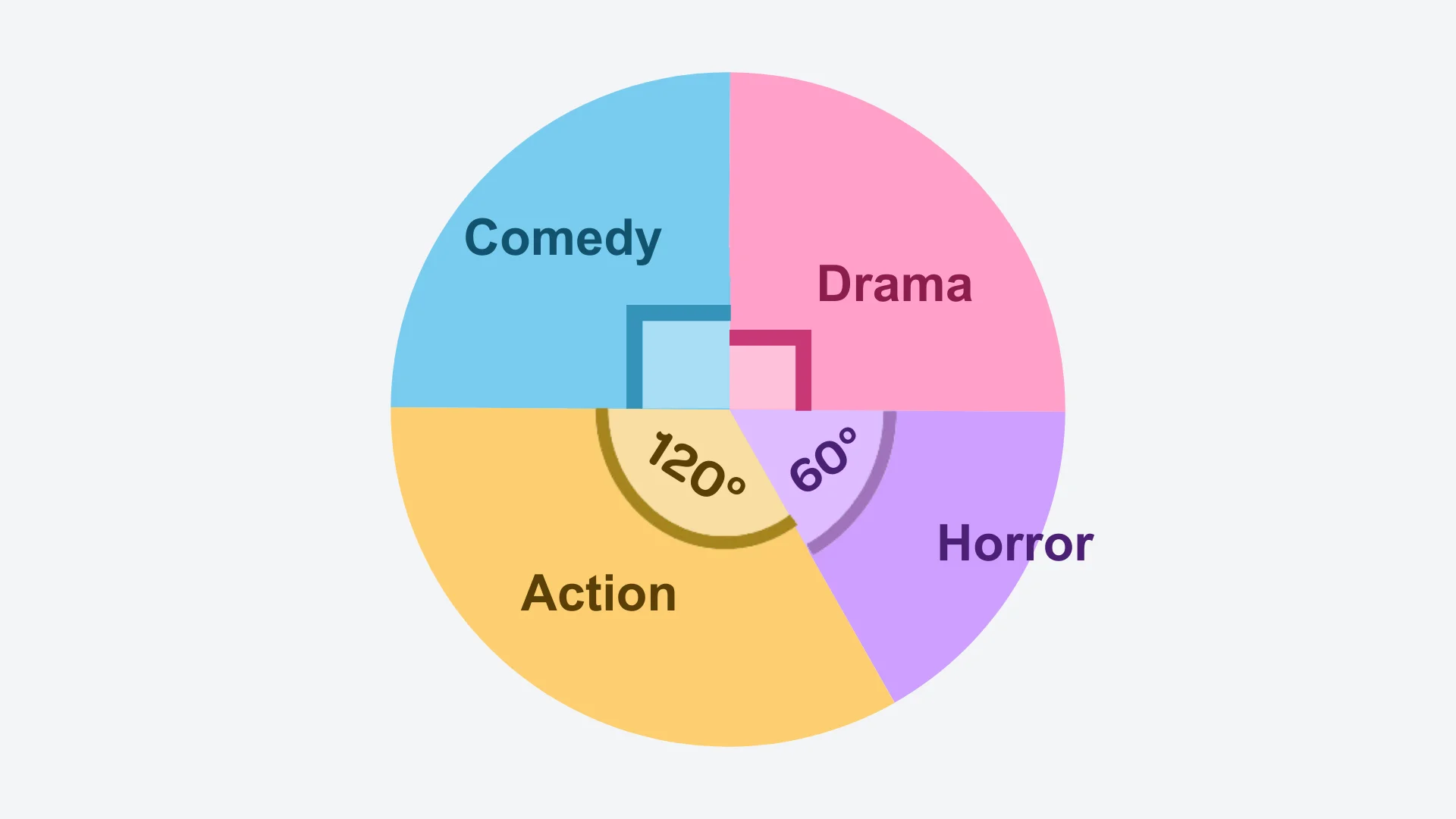
The pie chart shows the favourite genres of movies among 80 students. How many students prefer Comedy?
Correct! 🎉 +10 pointsCorrect! 🎉 Worth 10 XPNot quite right
Comedy is marked as a right angle, so its central angle is .
As a fraction of the whole chart that is .
20 students.
Always compare the sector angle with , and remember the fraction has to be applied to the 80 students.
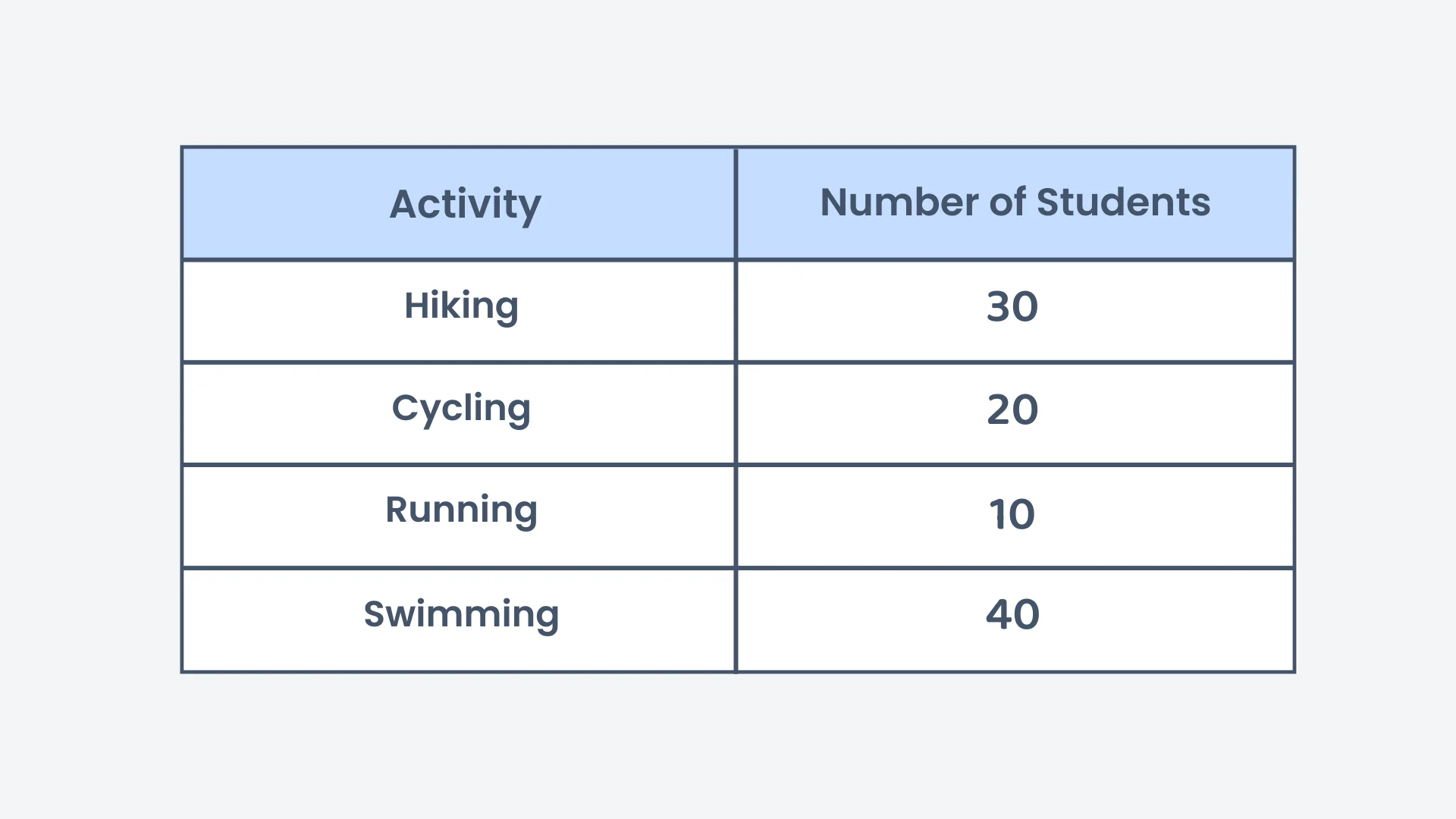
The table below shows favourite outdoor activities among students. What is the central angle for Cycling?
Correct! 🎉 +10 pointsCorrect! 🎉 Worth 10 XPNot quite right
First find the total: students.
Cycling was chosen by 20 students, so its share of the circle is .
Central .
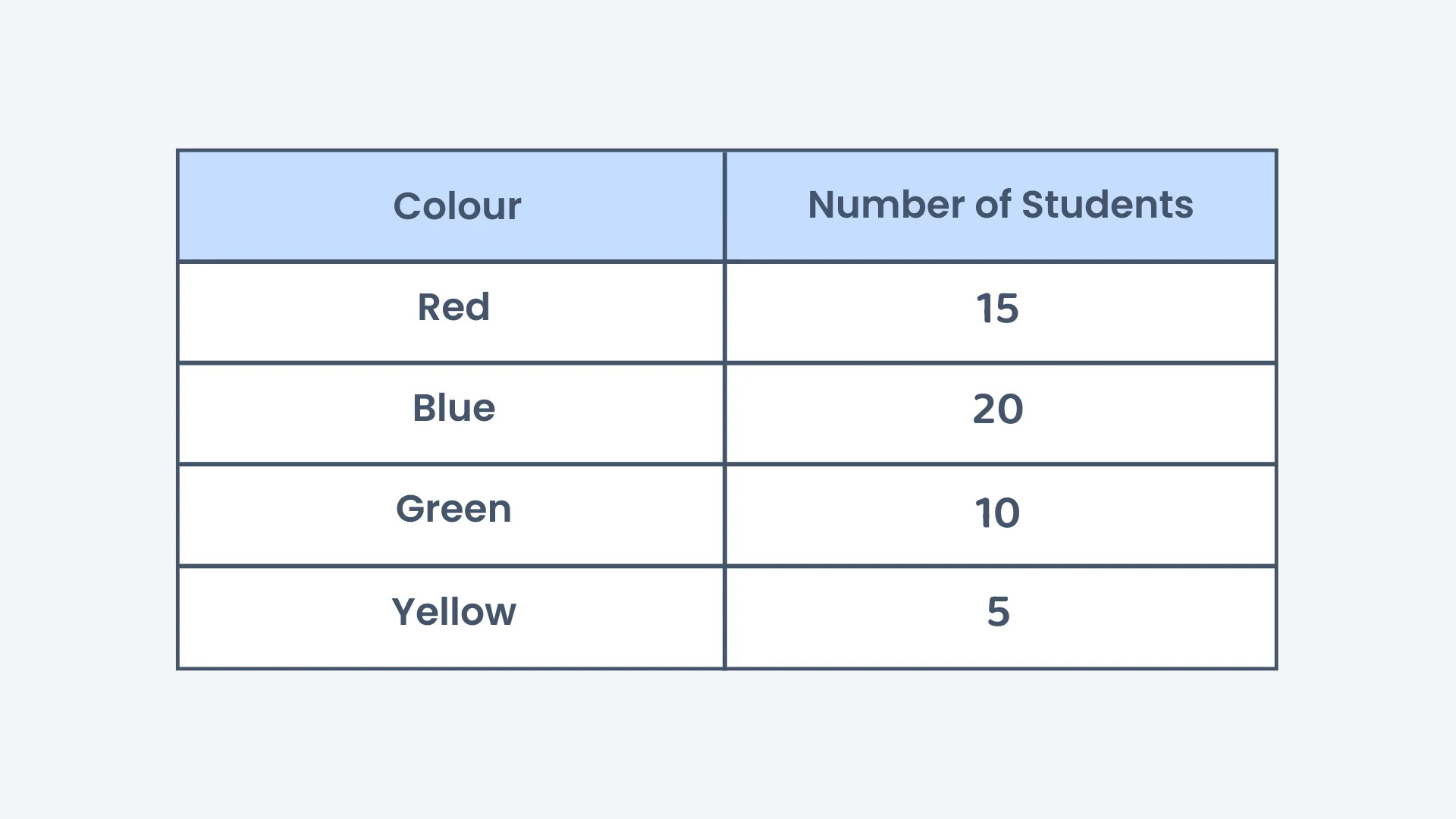
The table below shows the favourite colours of 50 students. What is the central angle for Blue?
Correct! 🎉 +20 pointsCorrect! 🎉 Worth 20 XPNot quite right
The total is students.
Blue was chosen by 20 students, so its share of the circle is .
Central .
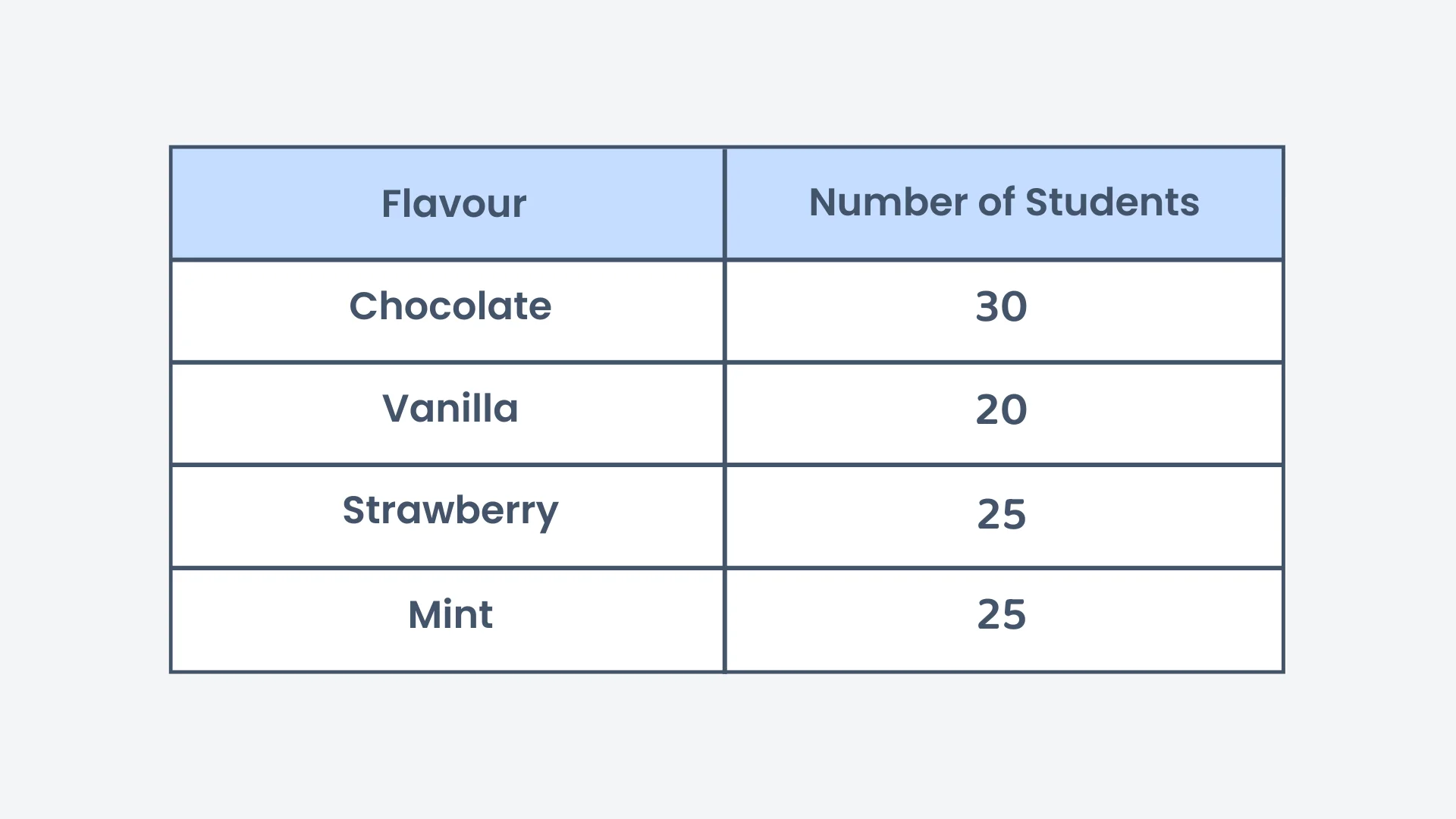
The table below shows students' favourite ice cream flavours. What is the central angle for Strawberry?
Correct! 🎉 +20 pointsCorrect! 🎉 Worth 20 XPNot quite right
The total is students.
Strawberry was chosen by 25 students, so its share of the circle is .
Central .
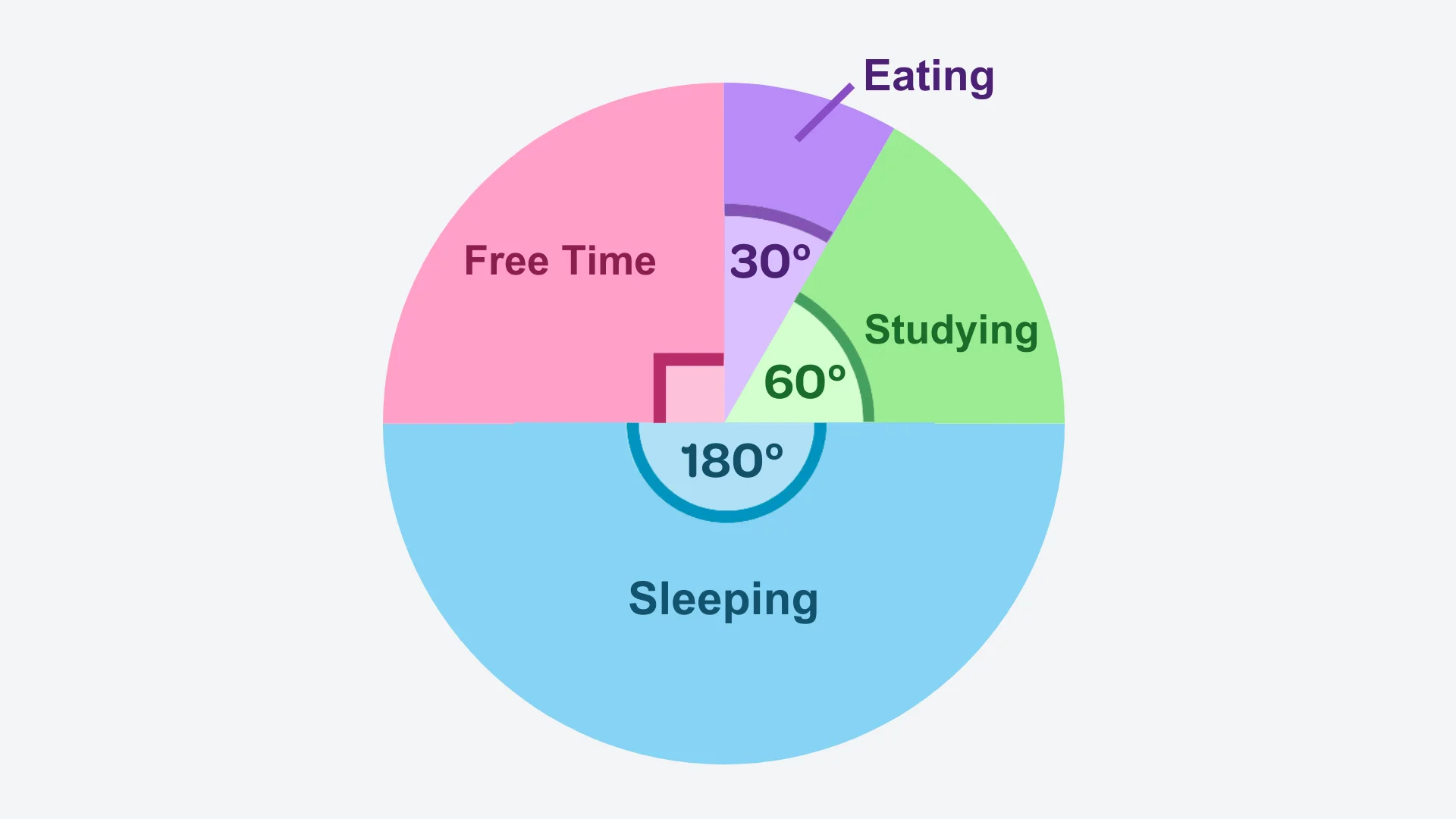
The pie chart shows the time spent on different activities during the day. What is the total time spent on Studying if the total hours in a day are 24?
Correct! 🎉 +20 pointsCorrect! 🎉 Worth 20 XPNot quite right
Studying has a central angle of , so it is of the day.
4 hours.
The is a share of the day, so it must be multiplied by the 24 hours.
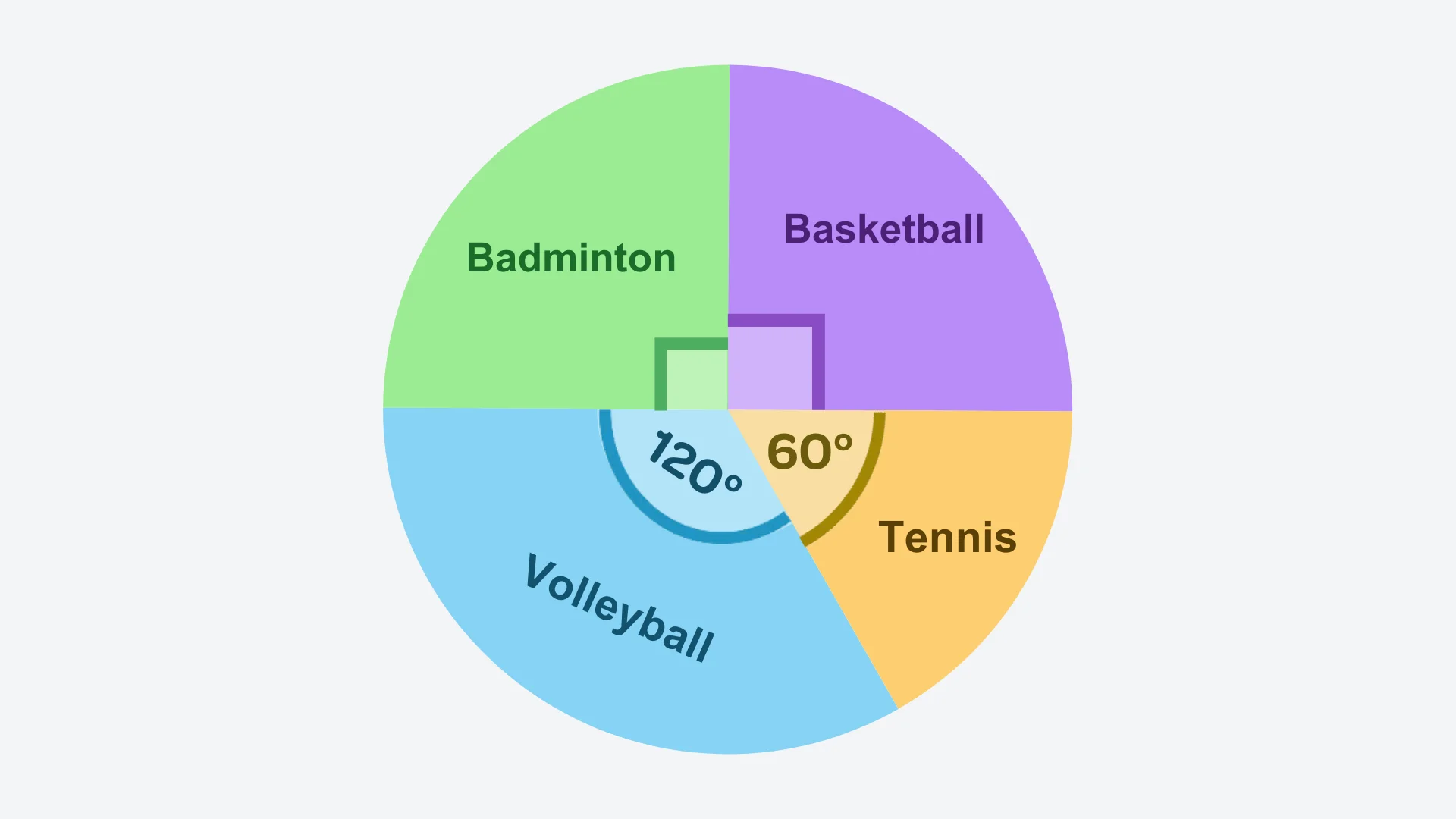
The pie chart below shows the favourite sports of students at a school. If 60 students prefer Basketball, how many students prefer Volleyball?
Correct! 🎉 +30 pointsCorrect! 🎉 Worth 30 XPNot quite right
Basketball is a right angle, , which is of the chart. If of the students is 60, the whole school total is 240 students.
Volleyball is , which is of the chart.
80 students.
Want to see the full working?
Interactive Activity
Adjust the segments to see how a pie chart represents parts of a whole
Loading interactive widget...
Frequently asked questions
The questions students bump into most on this topic
A pie chart is a circle divided into slices, where each slice shows one category’s share of the whole. The bigger the slice, the bigger the share. It is used to compare parts of a whole at a glance: in a chart of 100 students’ favourite sports, the football slice is the biggest because 40 of them chose football. The slices always fill the full 360°.
Work out the angle for each category: frequency ÷ total × 360°. With 100 students, basketball’s 25 give 25 ÷ 100 × 360° = 90°. Check the angles add up to 360°, then draw a circle, put a protractor at the centre and draw each angle in turn; the last slice is the space left over, but measure it to be sure. Label each slice with its percentage.
Divide the category’s frequency by the total, then multiply by 360°. For 100 students: basketball 25 ÷ 100 × 360° = 90°, football 40 gives 144°, swimming 20 gives 72° and tennis 15 gives 54°. The angles must add up to 360°, because the slices fill a whole circle; 90 + 144 + 72 + 54 = 360, so these are right.
Use the angle: the number in a category equals its angle ÷ 360° × the total. If the pepper slice is 90° and stands for 20 students, then 90 ÷ 360 is a quarter, so the total is 20 × 4 = 80 students. The ham slice is 36°, which is 36 ÷ 360 = one tenth of 80, so 8 students chose ham.
Add up the angles you know and subtract from 360°, because the slices fill the whole circle. In the pizza toppings chart, subtracting the other angles leaves 72° for the pineapple slice. Once you have the angle, you can turn it into a number of people or a percentage like any other slice.
Divide the angle by 360° and write the result as a percentage. The pineapple slice is 72°, and 72 ÷ 360 = 0.2, so 20% of the students chose pineapple. To go the other way, multiply the percentage by 360°: 20% of 360° is 72°.
What's next?
Found this one hard? Go one step back first. Feeling confident? Carry on to the next lesson.