Area of a Triangle
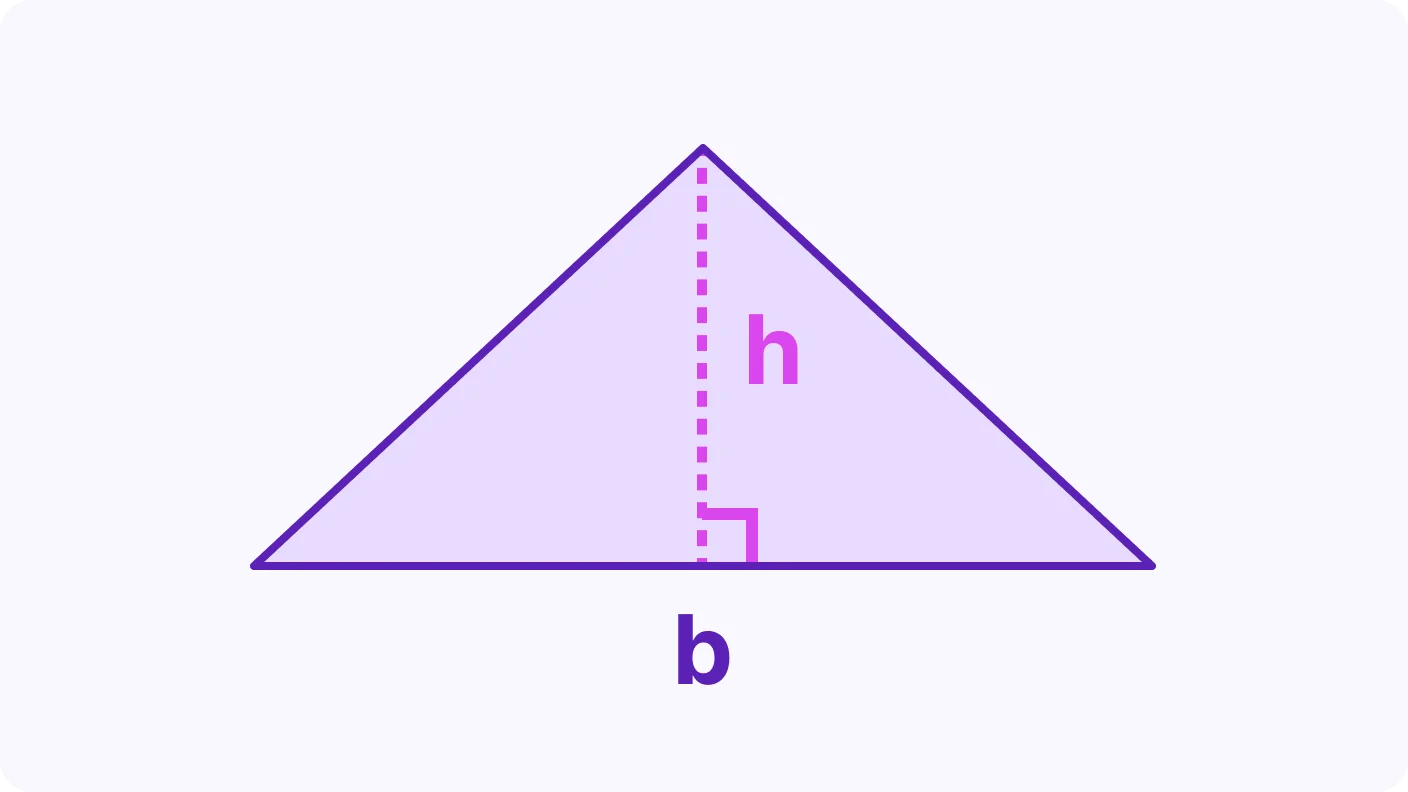
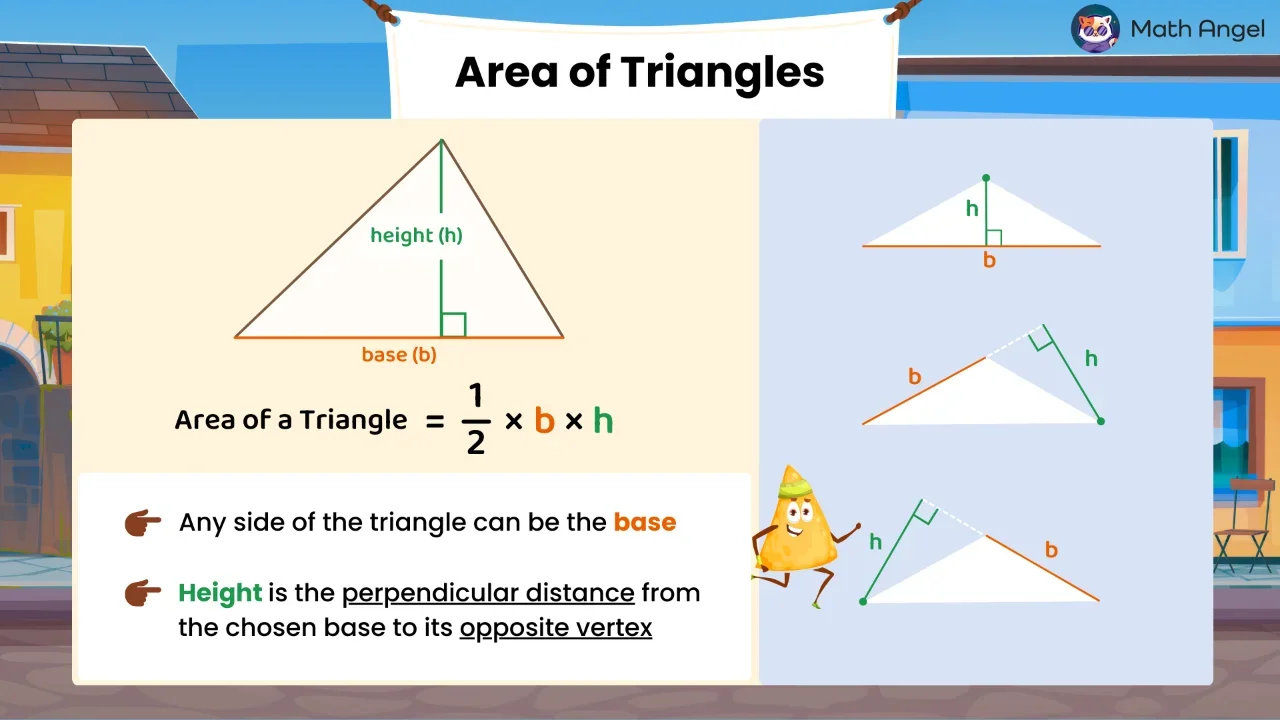
The area of a triangle = ½ × base × height. Multiply the base by the height, then divide by 2, so a base of 6 and height of 5 gives ½ × 6 × 5 = 15. The height must be perpendicular, meeting the base at a right angle.
Video Lesson
Watch and learn the basics
🎬 Did this video explain it clearly?
Flashcards
Review key concepts visually
%20Area%20of%20Triangles%20Formula.webp)
%20Regular%20triangles%20Example.webp)
%20Right-angled%20triangles%20Example.webp)
%20Finding%20the%20height%20from%20the%20area.webp)
What is the Area of a Triangle
- The area of a triangle is given by: base × height
- The height must be perpendicular to the base.
Finding the Area of a Triangle
- If you know a base and its perpendicular height, you can find the area.
- Multiply base × height, then divide by 2.
Area of a Right-Angled Triangle
- In a right-angled triangle, the two perpendicular sides are called the legs.
- To find the area, multiply the legs, then divide by 2.
Finding the Height from the Area
- Use the same formula: base × height
- Substitute the known values and solve for the missing height.
Practice Questions
Test your understanding
The base of a triangle is , and the corresponding height is . What is the area?
Correct! 🎉 +10 pointsCorrect! 🎉 Worth 10 XPNot quite right
Use Area .
, and half of is .
The area is cm². The halving step is what makes the triangle exactly half of the cm by cm rectangle around it.
The base of a triangle is , and the height is . What is the area?
Correct! 🎉 +10 pointsCorrect! 🎉 Worth 10 XPNot quite right
Use Area .
, and half of is .
The area is cm², exactly half of the cm by cm rectangle around the triangle.
Find the area of the triangle with a base of and a perpendicular height of .
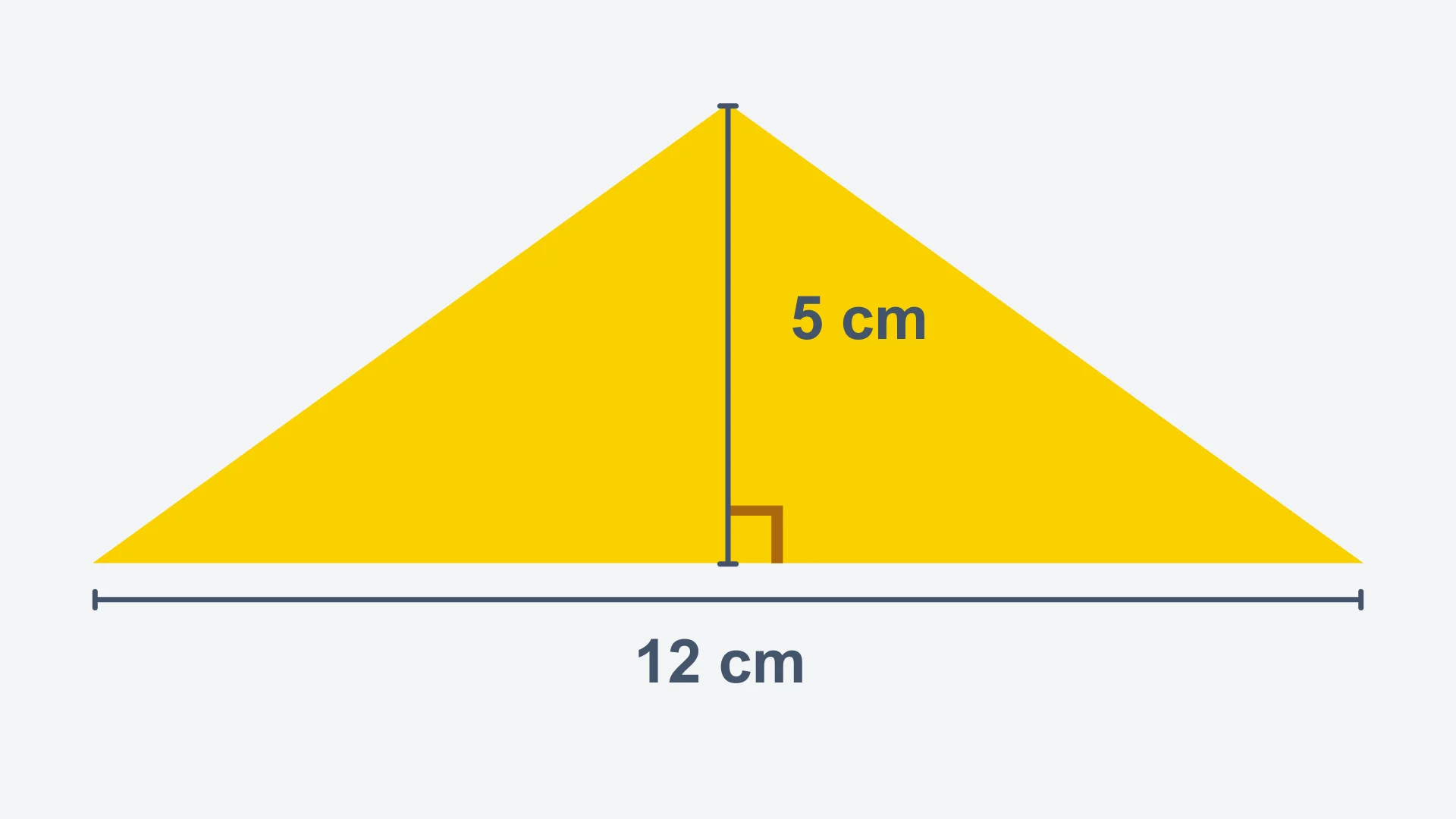
Correct! 🎉 +20 pointsCorrect! 🎉 Worth 20 XPNot quite right
Use Area .
The height must be the perpendicular distance from the base to the opposite vertex: that is the cm line drawn down to the base and marked with a right angle.
, and half of is . The area is cm².
Find the area of the right-angled triangle with perpendicular sides and .
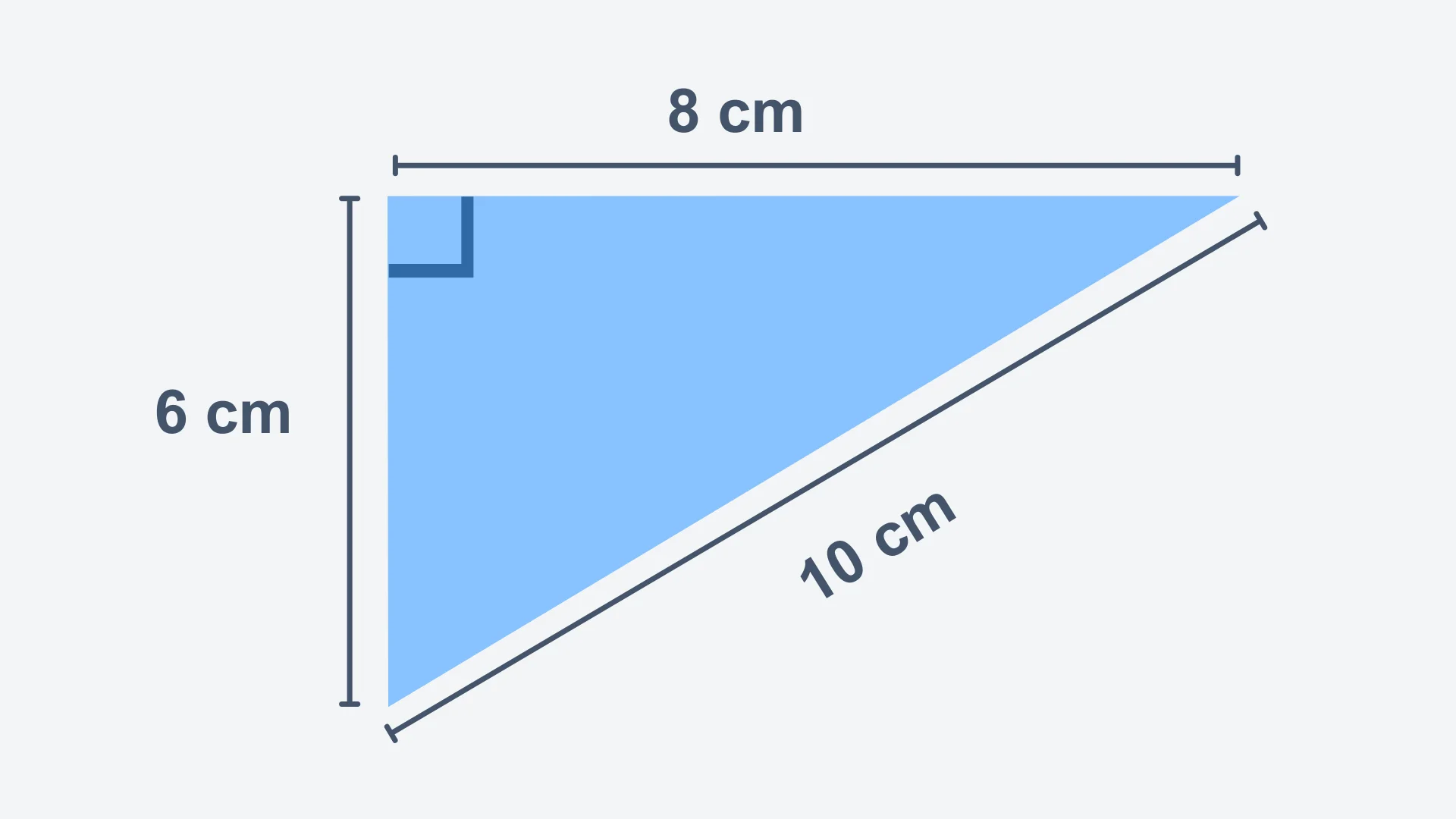
Correct! 🎉 +20 pointsCorrect! 🎉 Worth 20 XPNot quite right
In a right-angled triangle the two sides that meet at the right angle are the base and the height, so use cm and cm. The cm hypotenuse is a slanted side and is never used in the area formula.
Area .
The area is cm².
Find the area of the triangle with a base of and a perpendicular height of .
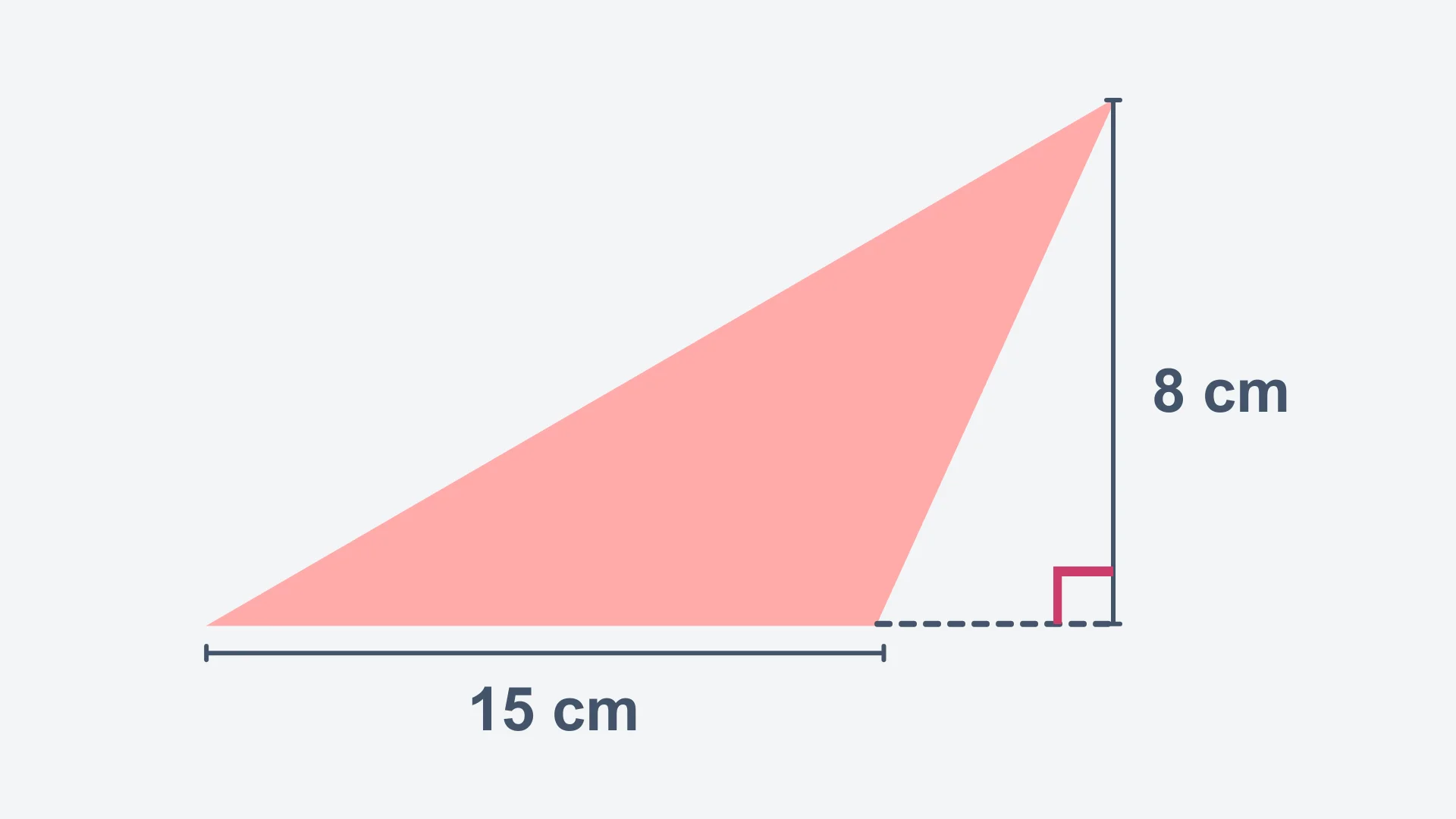
Correct! 🎉 +20 pointsCorrect! 🎉 Worth 20 XPNot quite right
The height must be perpendicular to the base, but it does not have to sit inside the triangle. Here it is drawn outside, meeting the extended base. It is still a valid height.
Area .
The area is cm².
A triangle has two perpendicular sides of and , and its longest side is . What is the height measured perpendicular to that side?
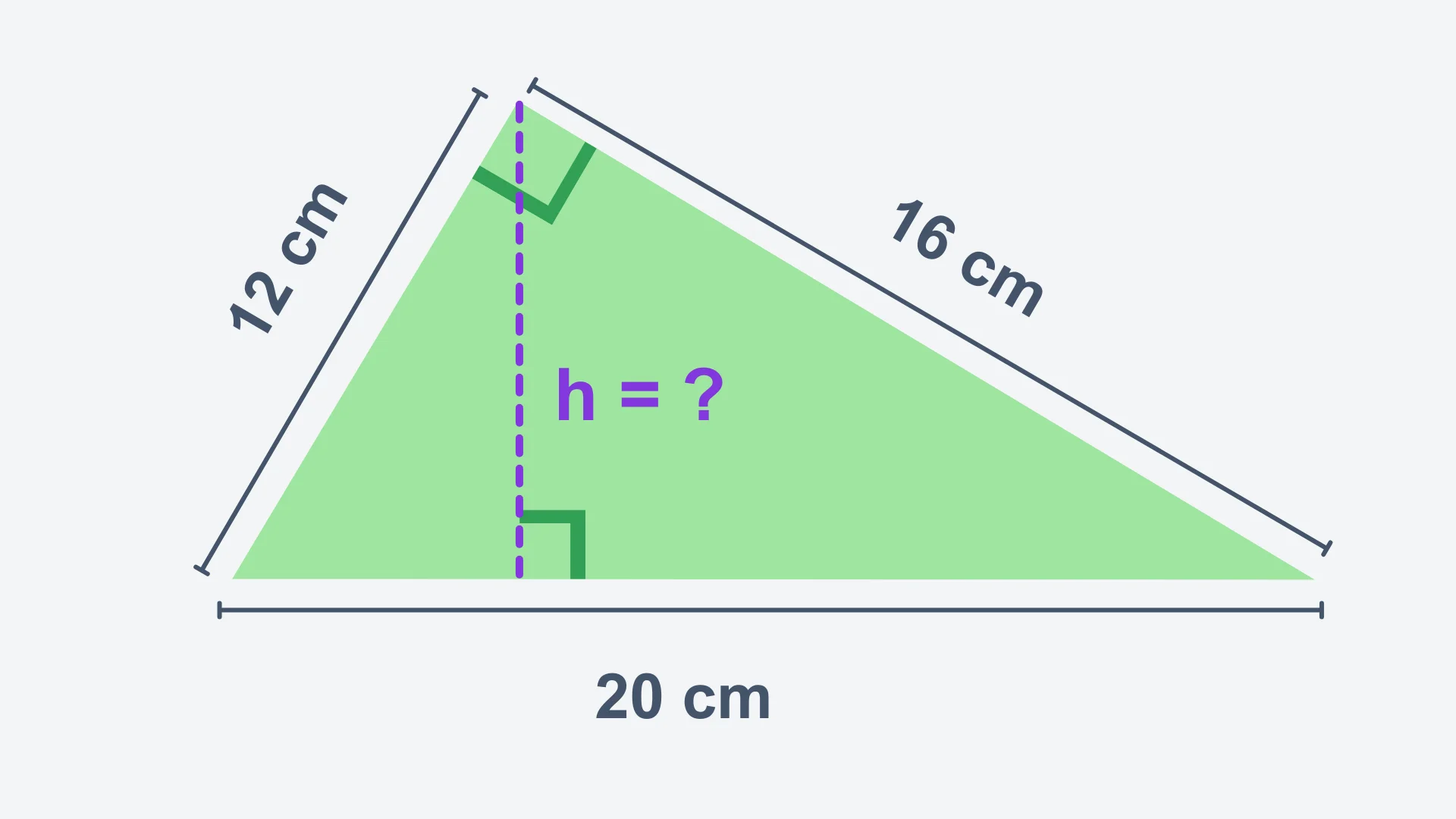
Correct! 🎉 +30 pointsCorrect! 🎉 Worth 30 XPNot quite right
The two perpendicular sides can be used as base and height, so the area is cm².
The area is the same whichever side you call the base, so with the side as the base: .
That gives , so cm.
Want to see the full working?
Interactive Activity
Drag the top point to change the shape, or use sliders below
Loading interactive widget...
Frequently asked questions
The questions students bump into most on this topic
The area of a triangle is ½ × base × height. The base is any side you choose, and the height is the perpendicular distance from that base to the opposite corner. A diagonal cuts a rectangle into two identical triangles, which is why the triangle gets half. With a base of 6 cm and a height of 5 cm: ½ × 6 × 5 = 15 cm².
Pick a side as the base, find the height that meets it at a right angle, then work out ½ × base × height. The height must match the base you chose; a different base has a different height, but the area comes out the same. In GCSE questions, check the marked height is perpendicular to the marked base, not a slanted side.
In a right-angled triangle the two shorter sides, the legs, are perpendicular to each other, so you can use them as the base and the height without drawing anything. Multiply the legs and halve the result. For legs of 5 cm and 12 cm: ½ × 5 × 12 = 30 cm².
Use the same formula, ½ × base × height; it works for every triangle, not only right-angled ones. Choose any side as the base and measure the height as the perpendicular distance from that base to the opposite corner. In some triangles that height falls outside the shape, which is fine as long as it meets the base line at a right angle.
What's next?
Found this one hard? Go one step back first. Feeling confident? Carry on to the next lesson.