Perimeter of a Polygon
The perimeter of a polygon is the total length of all its sides. To find the perimeter, add up the length of every side: a triangle with sides of 5, 4 and 3 cm has a perimeter of 12 cm. For a rectangle, use the shortcut 2 × (length + width).
Video Lesson
Watch and learn the basics
🎬 Did this video explain it clearly?
Flashcards
Review key concepts visually
%20Perimeter%20of%20Polygons%2C%20Quadrilaterals%2C%20Squares.webp)
%20Perimeter%20of%20Triangles.webp)
%20Perimeter%20of%20Complex%20Shapes.webp)
What is Perimeter?
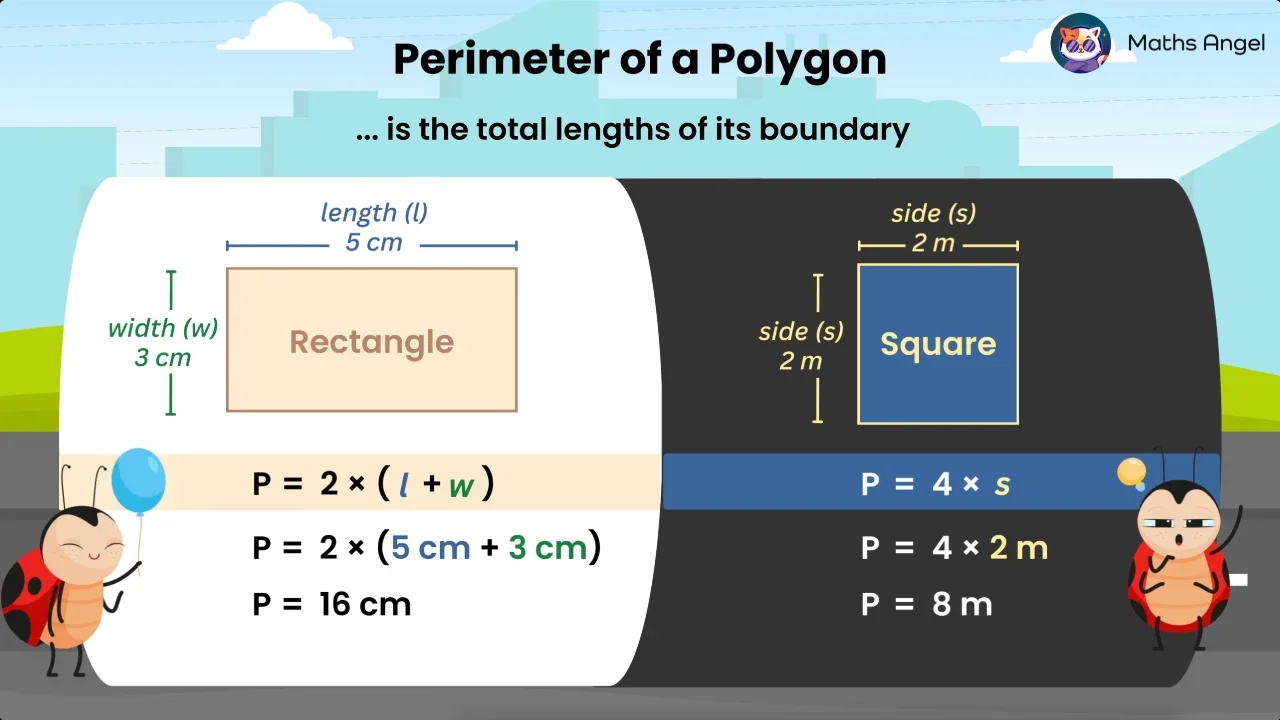
- The perimeter of a polygon is the total length of its boundary.
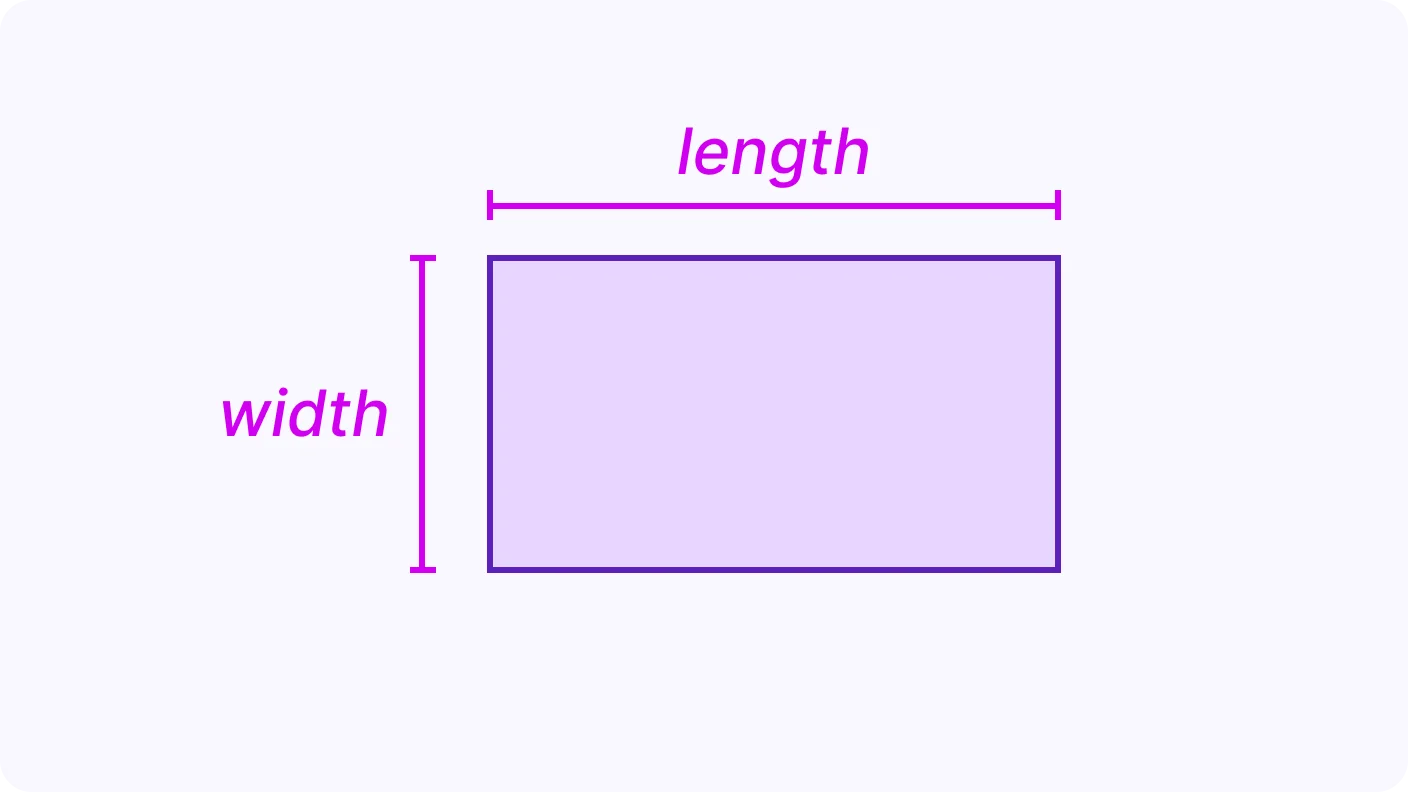
- For a rectangle: length + width).
- For a square: side length.
Perimeter of Triangles
- The perimeter of a triangle is the sum of its three sides.
- For an isosceles triangle: equal side + base
- For an equilateral triangle: side length
Perimeter of Complex Shapes
- Add the lengths of the edges around the outside of the shape.
- You can also add lengths together to think of the shape as a rectangle.
Practice Questions
Test your understanding
What is the perimeter of a square with side length ?
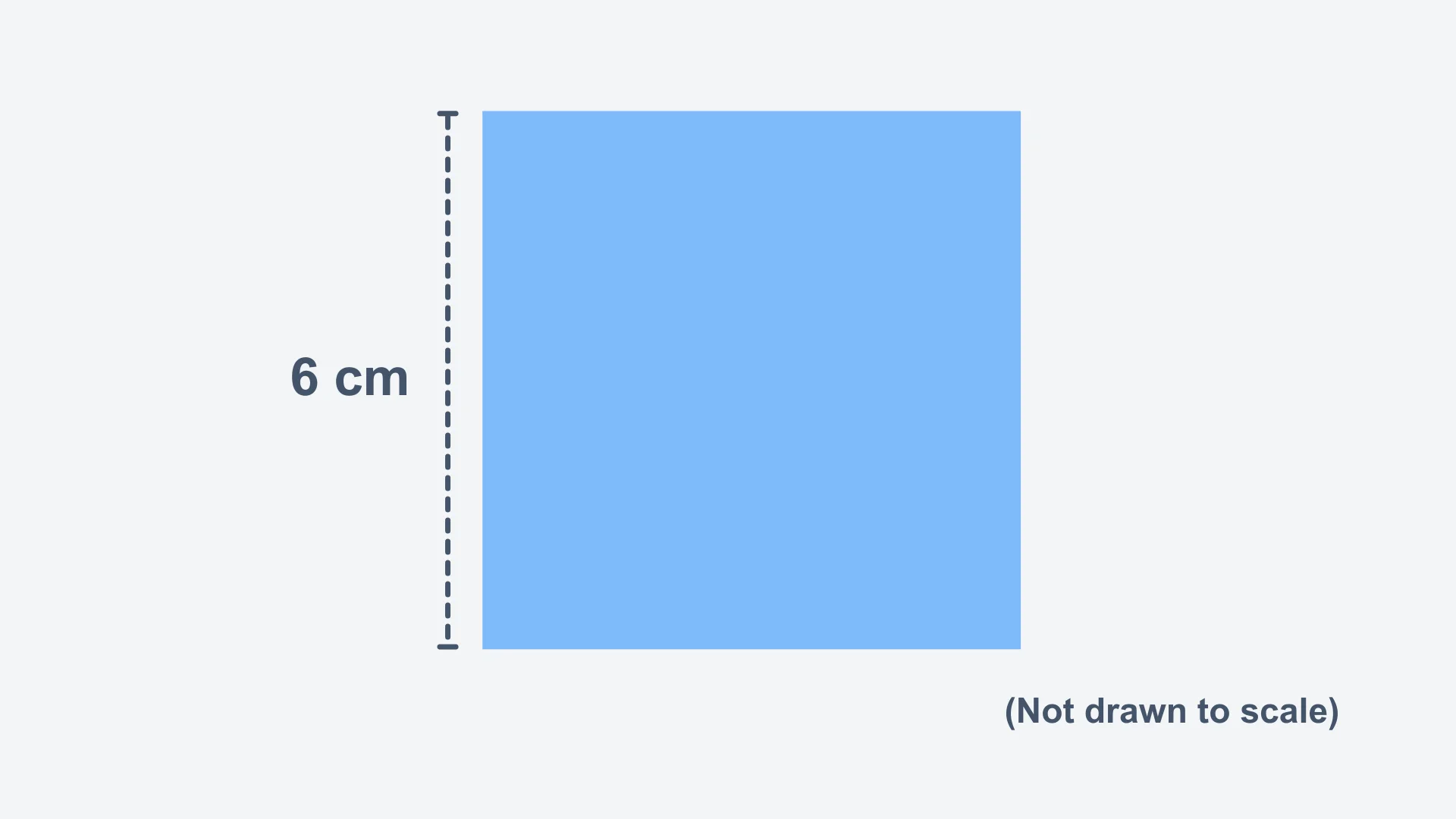
Correct! 🎉 +10 pointsCorrect! 🎉 Worth 10 XPNot quite right
All four sides of a square are the same length, so the perimeter is
.
Perimeter is the distance all the way round the edge, so the answer is measured in cm, not cm².
Find the perimeter of a rectangle with length and width .
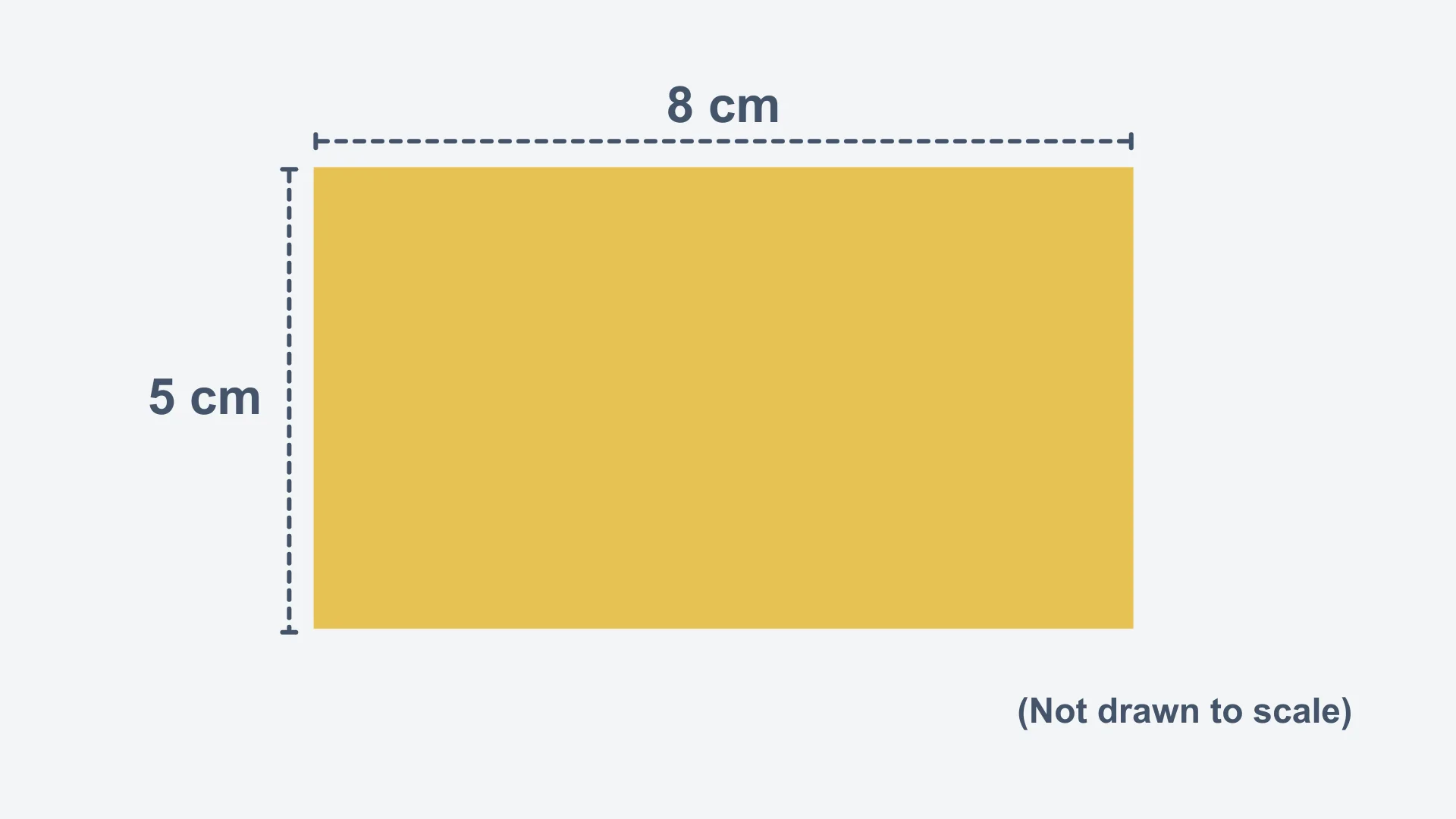
Correct! 🎉 +10 pointsCorrect! 🎉 Worth 10 XPNot quite right
A rectangle has two lengths and two widths, so the perimeter is
.
You can also add the four sides one at a time: cm.
The perimeter of an equilateral triangle is . What is the length of one side?
Correct! 🎉 +20 pointsCorrect! 🎉 Worth 20 XPNot quite right
An equilateral triangle has three equal sides, so the perimeter is . To reverse this, divide by 3:
.
Check: cm.
An isosceles triangle has a base of and two equal sides of each. What is its perimeter?
Correct! 🎉 +20 pointsCorrect! 🎉 Worth 20 XPNot quite right
The perimeter is the total distance round the outside, so add all three sides. The side appears twice:
.
An irregular hexagon has edges of the following lengths: , , , , , and . What is its perimeter?
Correct! 🎉 +20 pointsCorrect! 🎉 Worth 20 XPNot quite right
The perimeter is the sum of all six edge lengths:
.
Ticking each length off as you add it stops you from missing one or counting one twice.
A square has a perimeter of . If its side length is increased by , what will be the new perimeter?
Correct! 🎉 +30 pointsCorrect! 🎉 Worth 30 XPNot quite right
First find the original side: .
The new side is , so the new perimeter is .
Another way: every one of the four sides grows by , so the perimeter grows by cm, giving cm.
Want to see the full working?
Interactive Activity
Visualise how to calculate the perimeter of different polygons step by step
Loading interactive widget...
Frequently asked questions
The questions students bump into most on this topic
The perimeter of a shape is the total length of its boundary, the distance all the way round its edge. To find it, add the lengths of every side. A triangle with sides of 5 cm, 4 cm and 3 cm has a perimeter of 5 + 4 + 3 = 12 cm. The order does not matter, as long as every side is counted once.
Add the lengths of all the sides. Two shortcuts save time: a rectangle has two equal lengths and two equal widths, so its perimeter is 2 × (length + width), and a square has four equal sides, so its perimeter is 4 × side. A square with 2 m sides has a perimeter of 4 × 2 = 8 m.
Add all four sides, or use the shortcut: a rectangle has two equal lengths and two equal widths, so its perimeter is 2 × (length + width). For a rectangle 5 cm long and 3 cm wide, that is 2 × (5 + 3) = 16 cm. Both ways give the same total.
Add the lengths of all three sides. An isosceles triangle has two equal sides, so its perimeter is 2 × the equal side + the base: equal sides of 5 cm and a base of 3 cm give 2 × 5 + 3 = 13 cm. An equilateral triangle has three equal sides, so its perimeter is 3 × side: 3 × 7 = 21 cm.
First work out any missing side from the sides you know: in the lesson’s L-shape the left edge is 3 + 2 = 5 cm and the top is 3 − 1 = 2 cm. Then add every side, going round in one direction so none is missed, which gives 16 cm. A quicker way: slide the edges out into a rectangle and use 2 × (5 + 3) = 16 cm.
Perimeter is the distance around the outside of a shape, like walking around the edge of a playground. Ask your child to add up the sides as they go: a triangle with sides 5, 4 and 3 cm is 5 + 4 + 3 = 12 cm. For a rectangle, two sides match two sides, so add two and double.
What's next?
Found this one hard? Go one step back first. Feeling confident? Carry on to the next lesson.