Full Maths Curriculum For
KS3 to GCSE
10-minute lessons with videos, flashcards, quizzes, and AI help.
Tally Marks, Bar Charts, Tables
Tally marks count with a bundle of 5 lines. Bar charts compare visually, and tables summarise data concisely. Learn with videos, exercises, flashcards and maths solver.

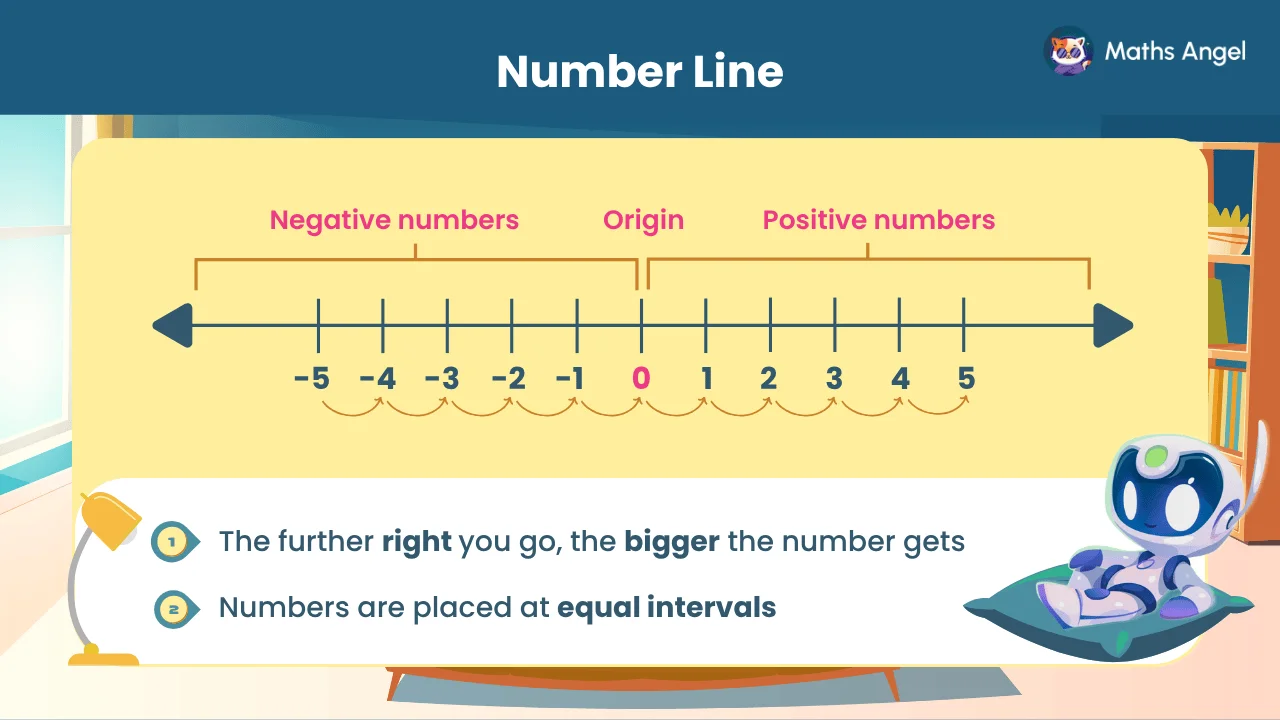
Number Line and Comparing Numbers
A number line is a visual tool that represents numbers in order on a straight line. Learn how to compare numbers and represent inequalities with symbols.

Place Value and Rounding Numbers
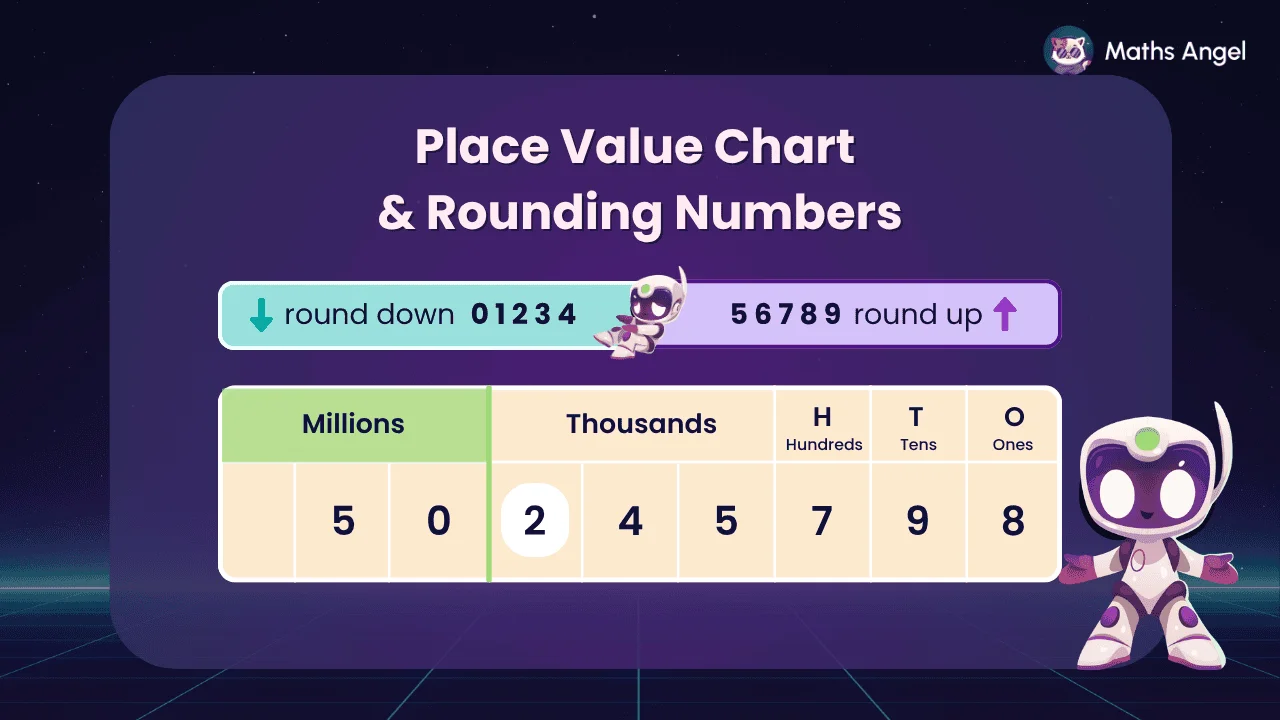
Place value shows the value of each digit in a number. Round down if the digit is less than 5, and round up if is 5 or greater. Learn with videos, flashcards, and exercises.

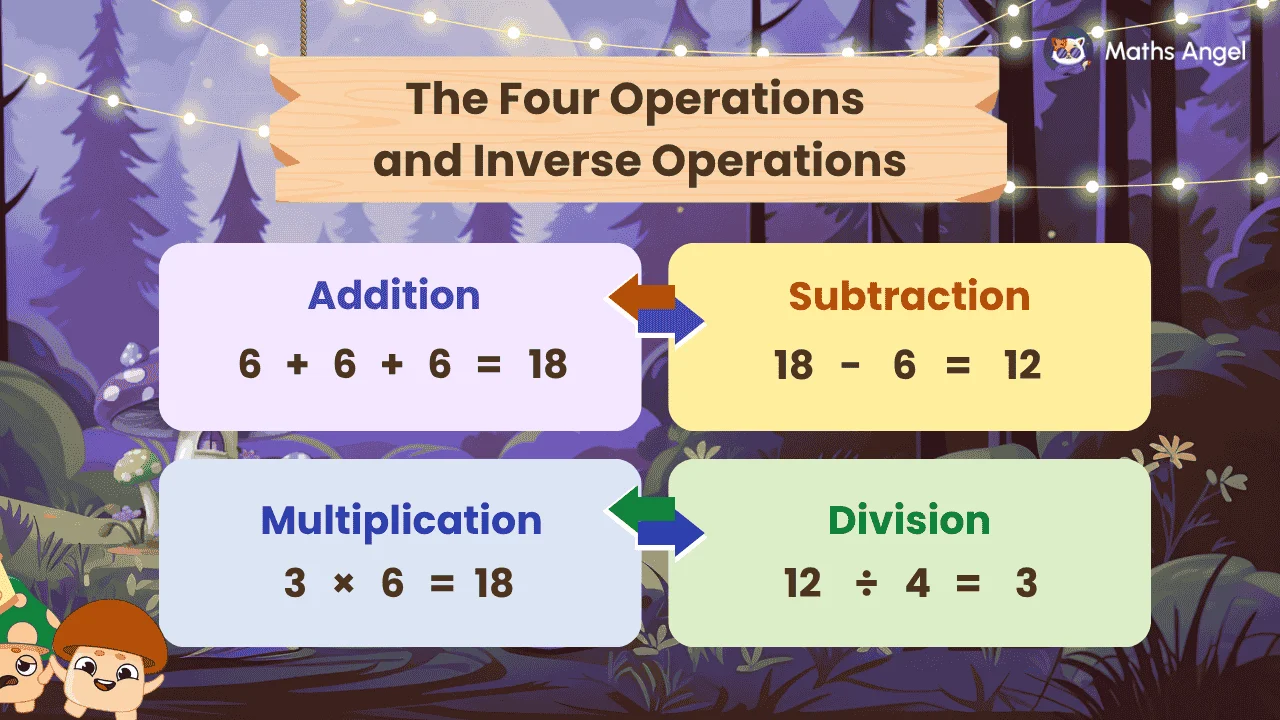
Basic Arithmetic and Inverse Operations
Basic arithmetic includes 4 maths operations: addition, subtraction, multiplication, and division. Learn how inverse operations 'undo' each other in this lesson.

Calculating Money
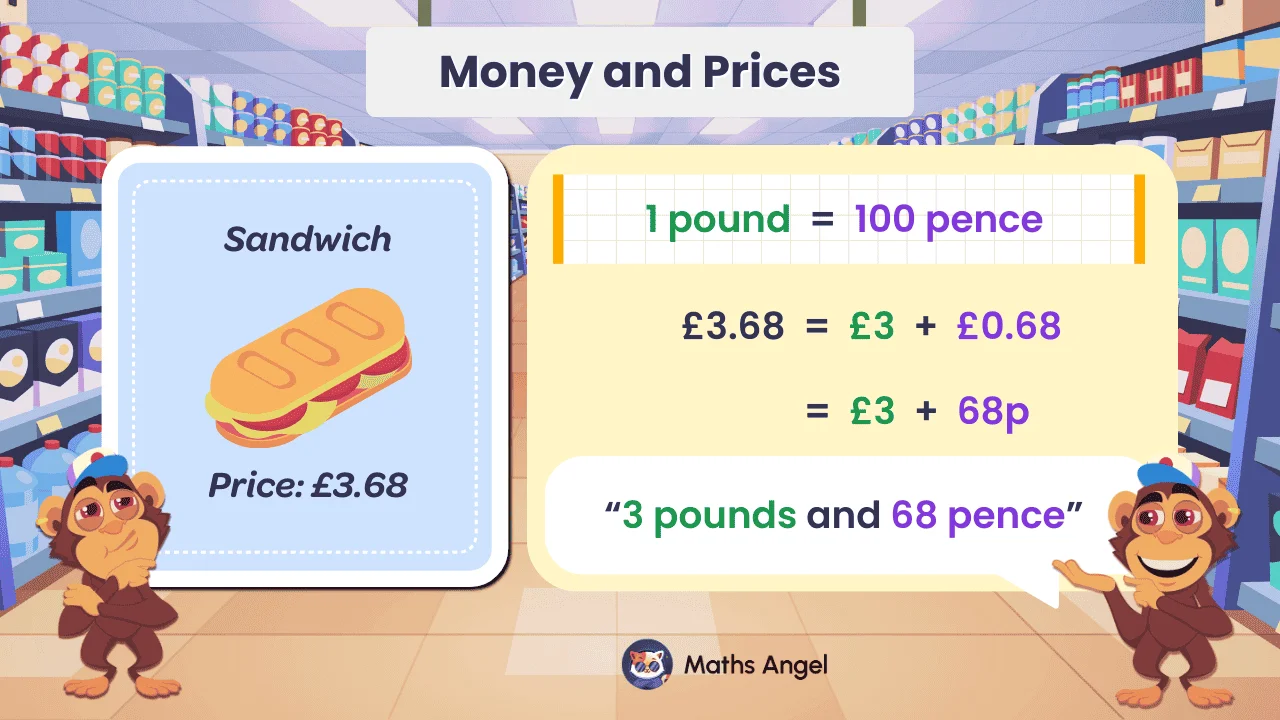
Learn to calculate with money by separating pounds and pence (1 pound = 100 pence). Practise adding, subtracting, multiplying, and dividing with examples.

Converting and Calculating Units of Length
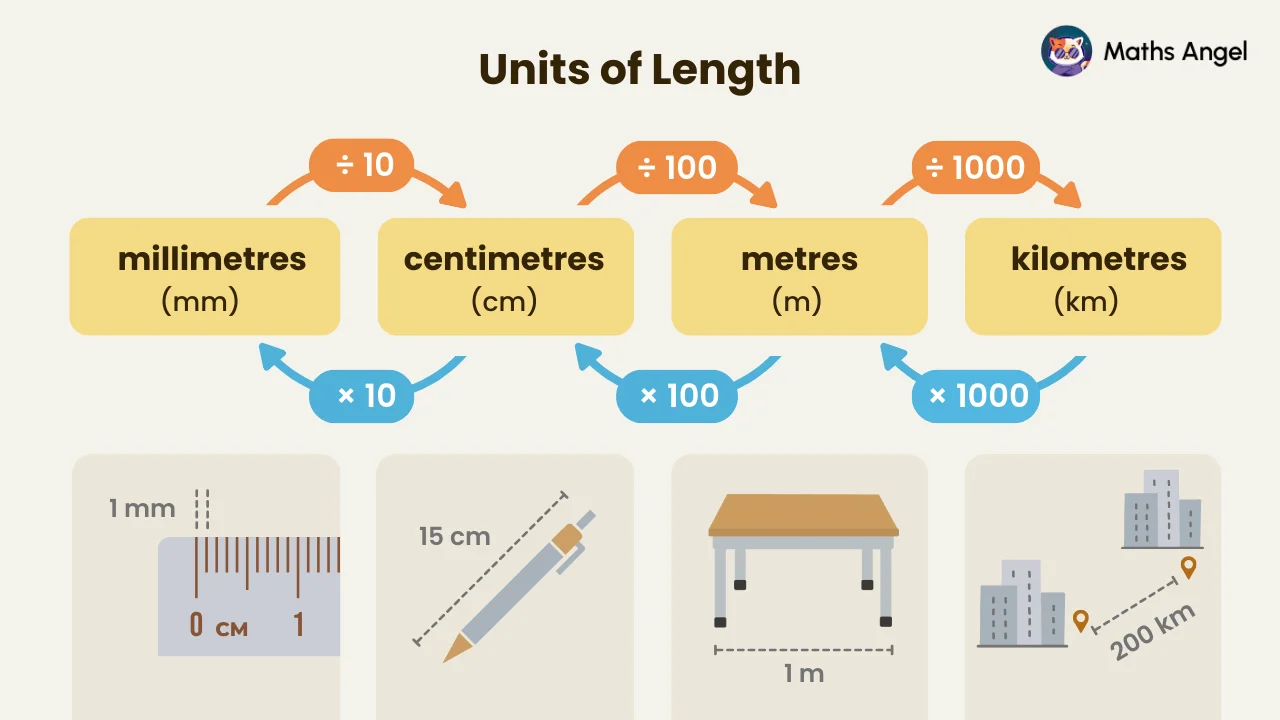
Metric units of length include km, m, cm, and mm. Learn to convert between them and master adding and subtracting lengths with clear explanations and examples.

Converting and Calculating Units of Mass
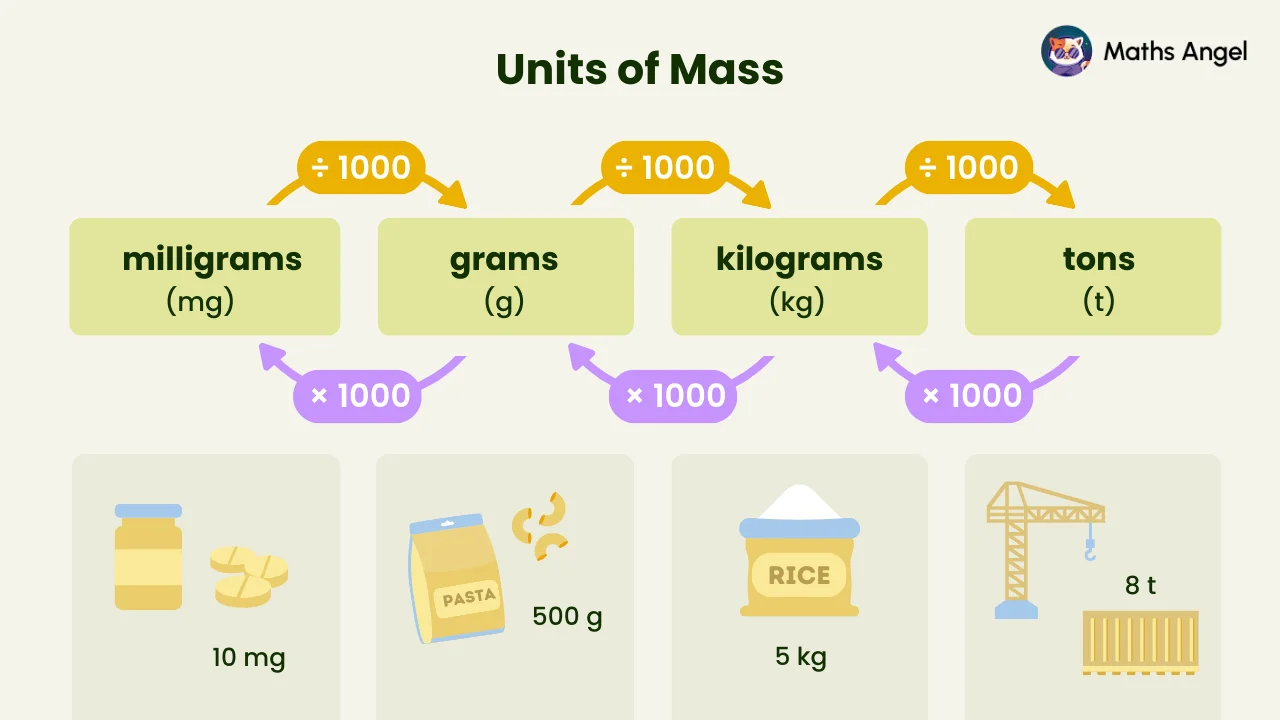
Metric units of mass include t, kg, g, and mg. Learn to convert between them and master adding and subtracting weights with clear explanations and examples!

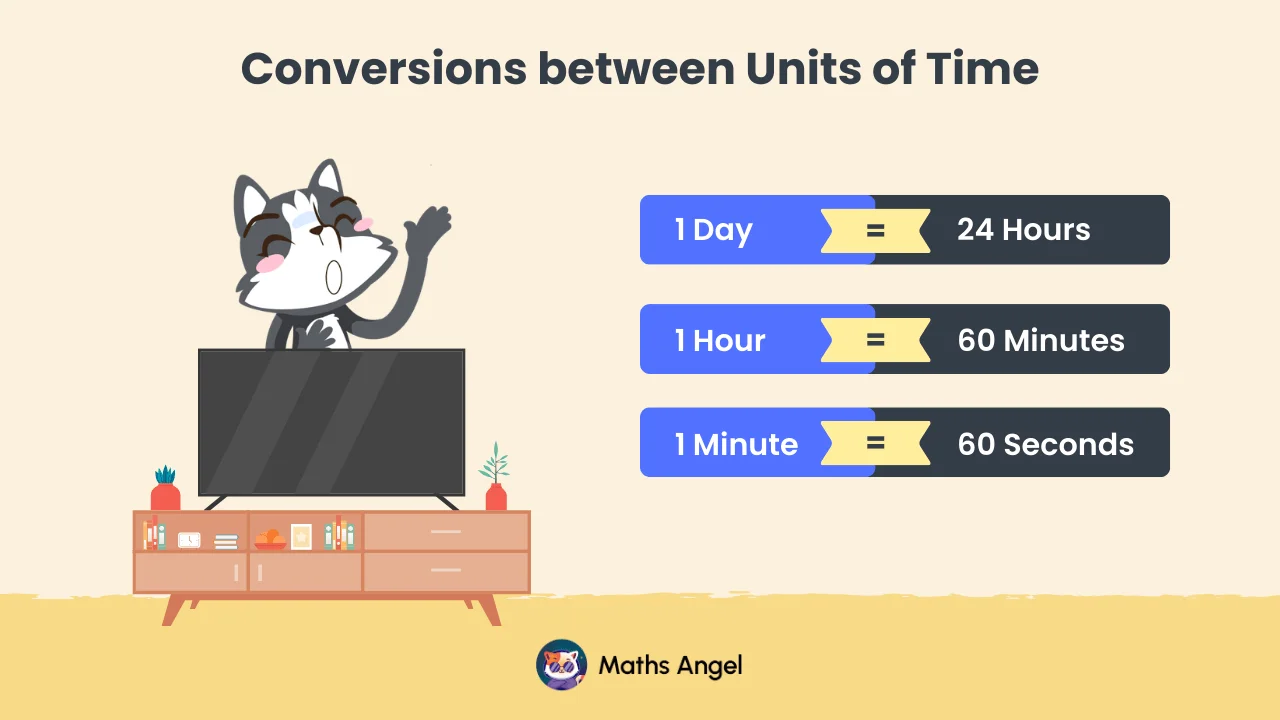
Converting Time and Calculating Time
Learn to convert time units: 1 hour = 60 minutes, and 1 minute = 60 seconds. This tutorial also shows how to add total time and calculate time differences with clear examples!

Perpendicular and Parallel Lines
Perpendicular lines intersect at 90°, while parallel lines stay equidistant and never intersect. Learn how to measure distances between points and lines.

Line of Symmetry and Reflection Symmetry
A line of symmetry divides a shape into two equal halves. Learn to count symmetry lines in common shapes and identify reflection symmetry. Start learning.

Rotational Symmetry
A shape has rotational symmetry if it looks the same when rotated less than 360°. Learn the center, angle, and order of symmetry with examples like triangles and hexagons.

Polygons and Types of Quadrilaterals
A polygon is a 2D closed shape with straight edges. Learn the properties of quadrilaterals like rhombus, trapezium, and parallelogram, plus the interior angles formula.

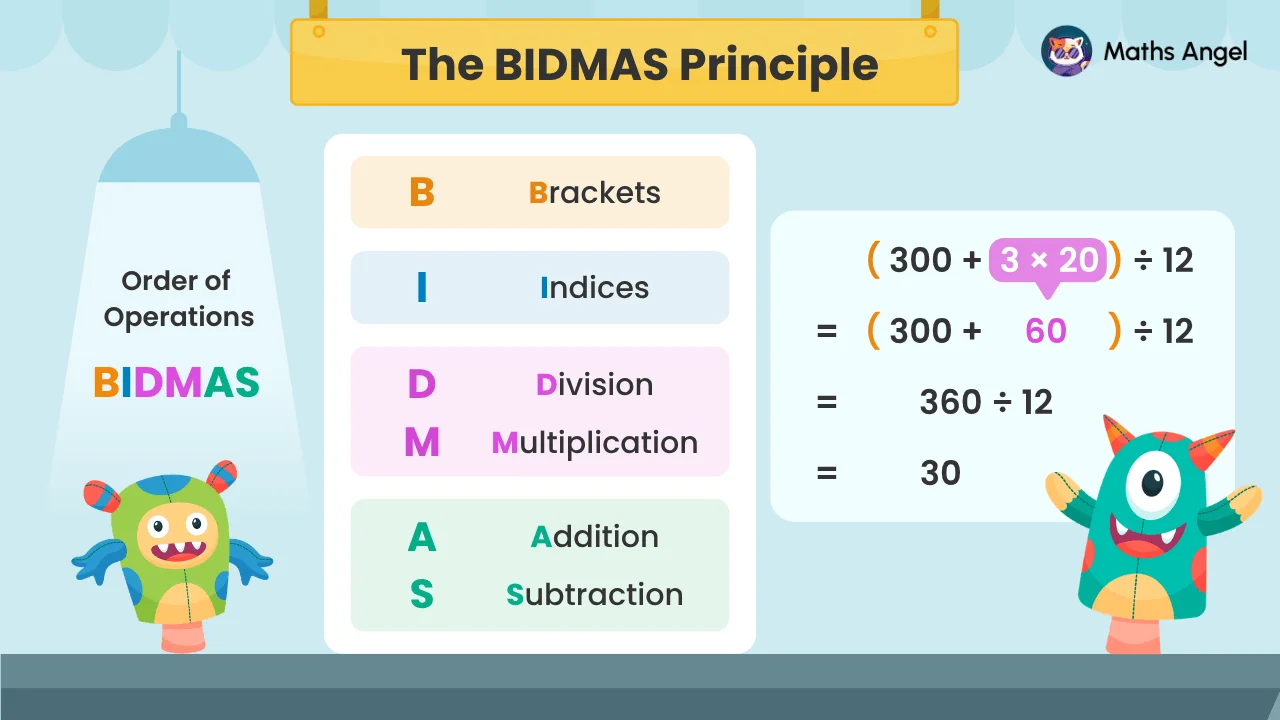
BIDMAS - Order of Operations
BIDMAS (or BODMAS) is an acronym that explains the correct order of operations: B - Brackets, I - Indices, D - Division, M - Multiplication, A - Addition, S - Subtraction.

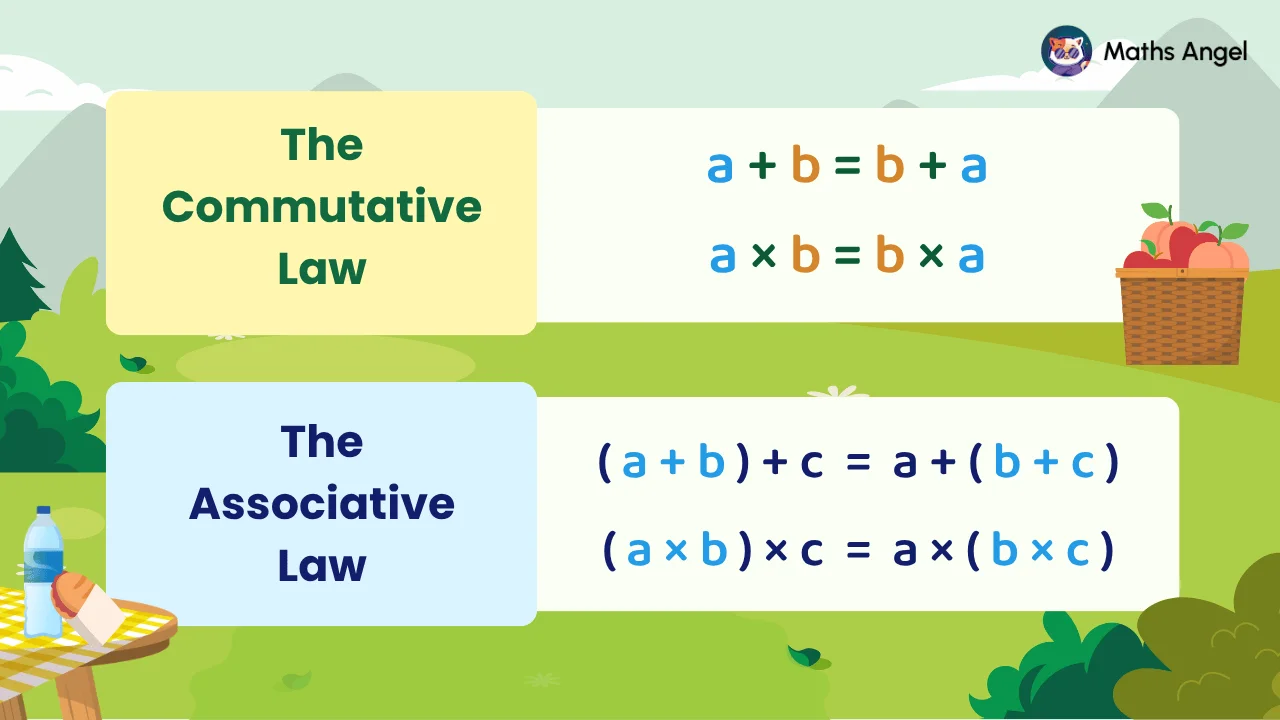
Commutative and Associative Properties
Commutative Property lets you swap numbers in addition or multiplication, and Associative Property lets you regroup them without changing the result. Learn with examples in this maths lesson!

Distributive Property
The Distributive Property states that multiplying a number by a sum or difference is the same as distributing it to each term. Learn to expand, factorise, and simplify with examples.

Powers and Indices
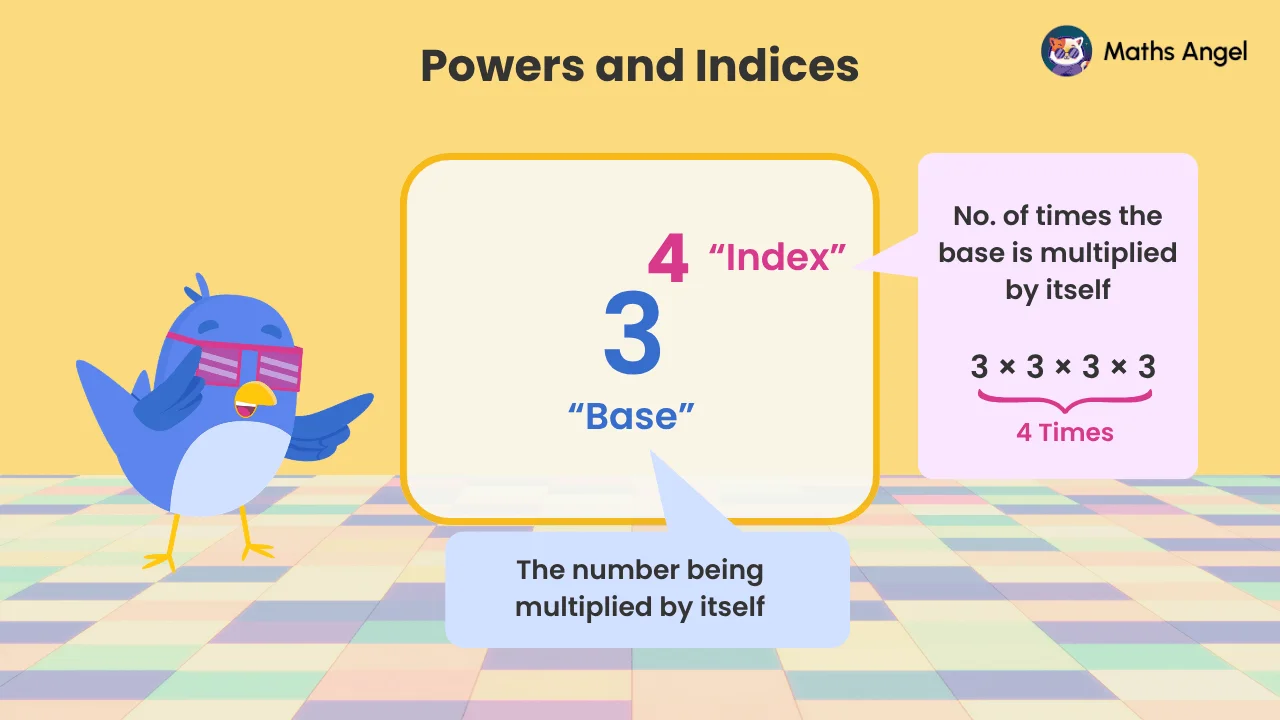
Learn powers and indices, like 5³, where 5 is the base and 3 is the index or exponent. Discover common square and cube numbers and how indices work in BIDMAS.

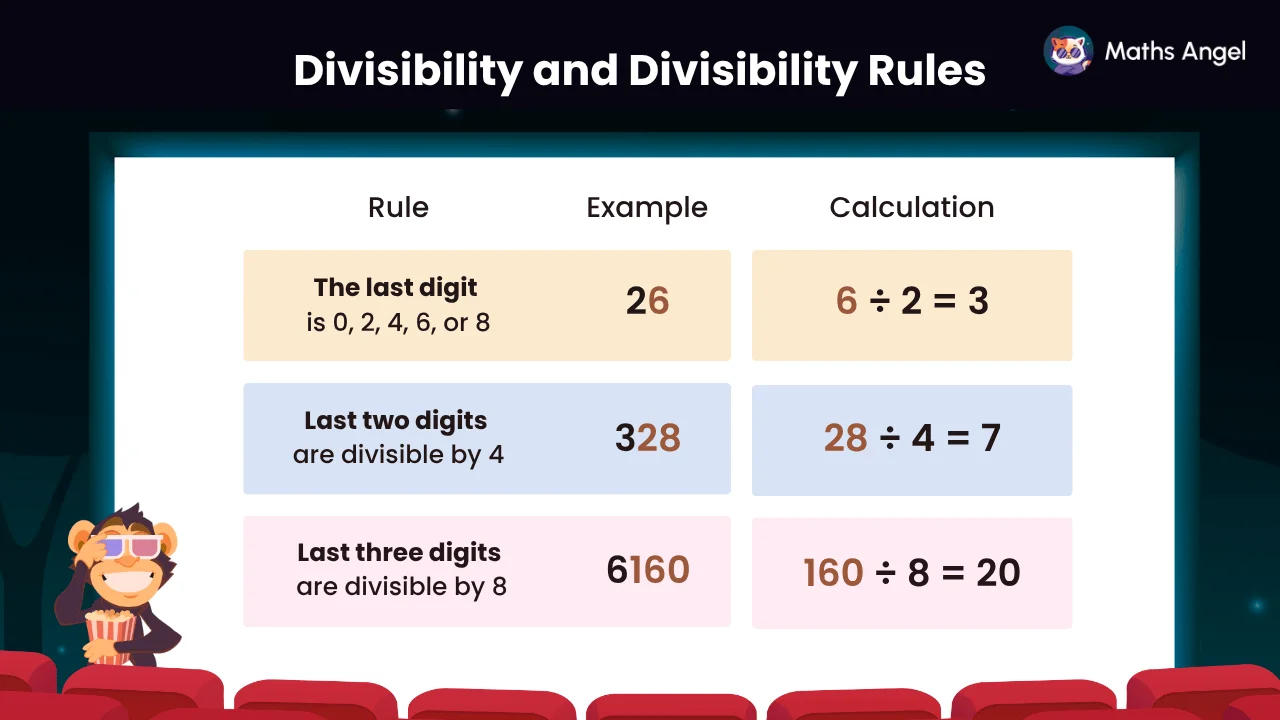
Divisibility and Divisibility Rules
Learn divisibility rules with clear examples. A number is divisible by 2 if its last digit is even; or divisible by 3 if the sum of its digits is divisible by 3.

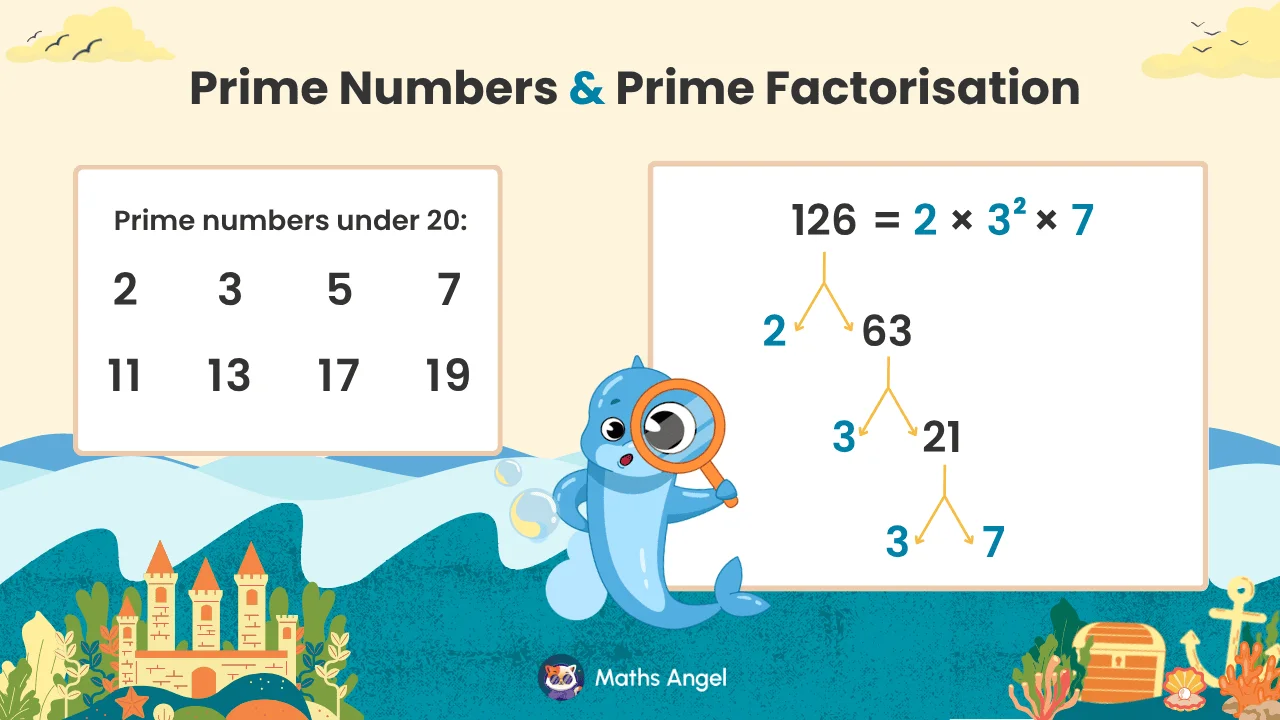
Prime Numbers and Prime Factorization
Prime numbers have exactly two factors: 1 and the number itself. Learn prime factorization to find a number's prime factors using division and factor tree methods with examples.

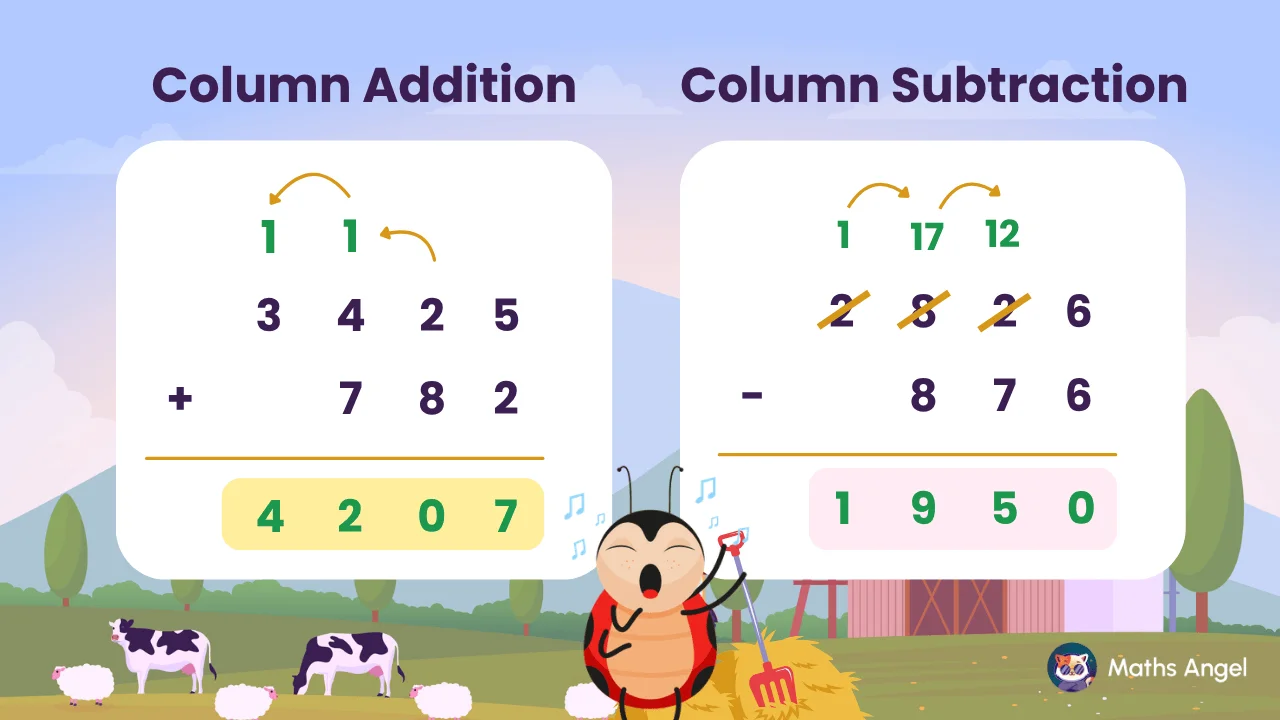
Column Addition and Column Subtraction
Learn column addition and subtraction in this lesson, including how to carry over and borrow from zero, with step-by-step examples using 3-digit and 4-digit numbers.

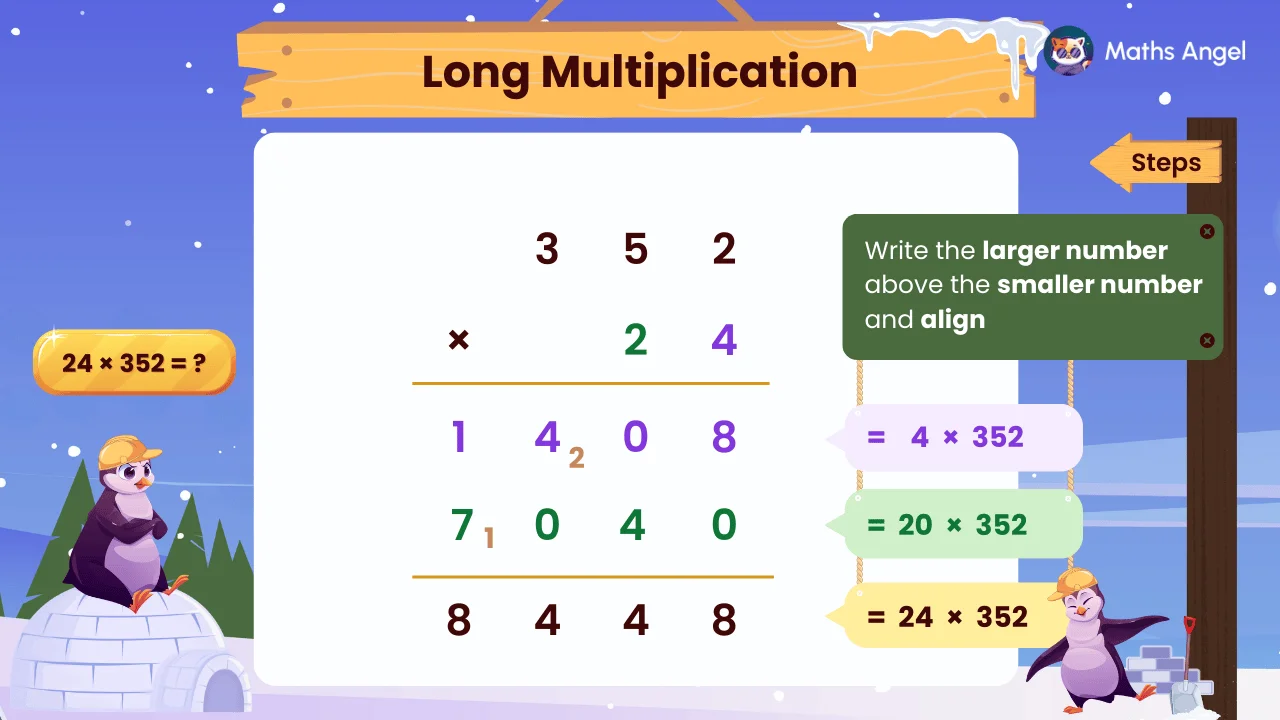
Long Multiplication
Learn in this maths lesson how to do long multiplication with clear, step-by-step instructions. Practice with 2-digit and 3-digit numbers and strengthen your maths skills.

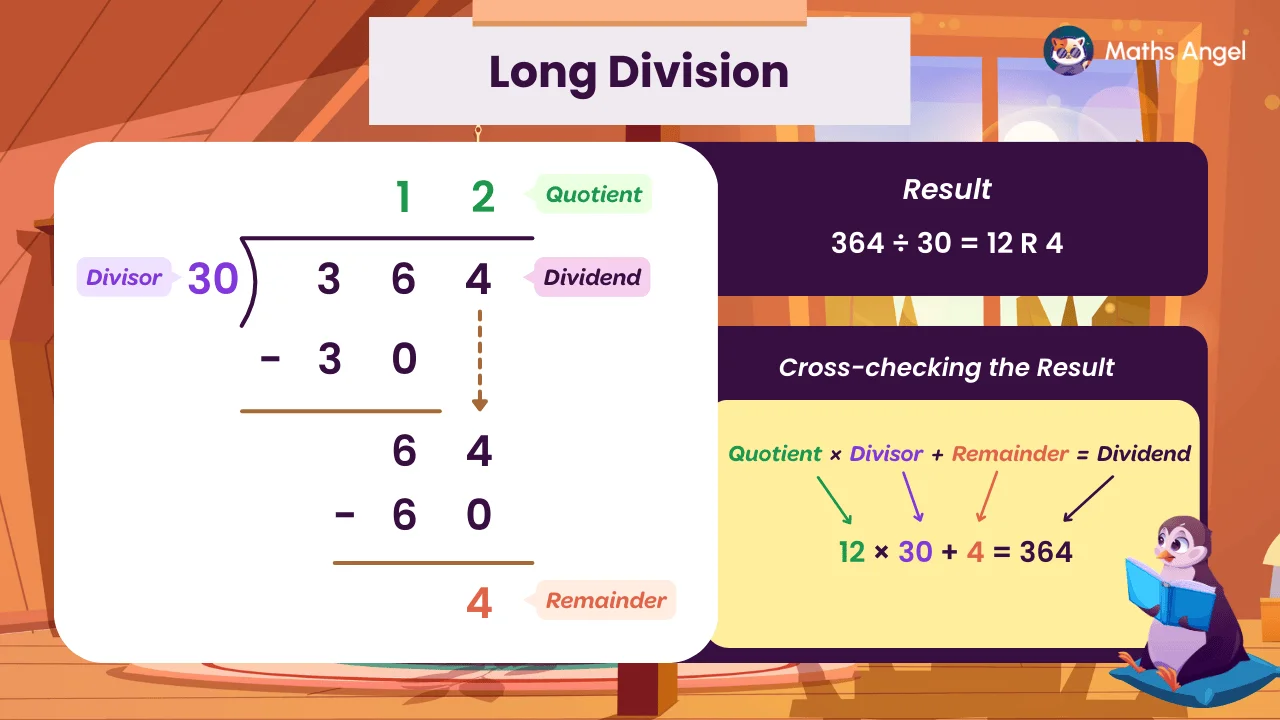
Long Division
Learn how to do long division with clear, step-by-step examples. Understand borrowing, handling remainders, and solve 2-digit and 3-digit problems in this lesson.

Units of Area
Area is the measure of space a surface covers, expressed in units of area like mm², cm², and m². Learn how to convert between area units with clear examples.

Area of a Triangle
Learn how to find the area of a triangle using the formula ½ x base x height. Explore step-by-step examples, practice questions, and engaging flashcards in this math lesson.

Perimeter of a Polygon
To find the perimeter of a polygon, add the lengths of all sides. Learn perimeter formulas for rectangles, squares, triangles, and compound shapes with step-by-step examples.

Area of a Trapezium
The area of a trapezium formula is (base1 + base2) ÷ 2 x height. Learn with step-by-step examples for regular, right-angled, and isosceles trapeziums.

Solids and Units of Volume
Solids are 3D shapes with length, width, and height, like cuboids. Learn common units of volume (mm³, cm³, mL, L) and how to convert volume units with clear examples.

Volume of a Cuboid and Cube
The volume of a cuboid is calculated as V = length × width × height, and the volume of a cube is V = side^3. Learn with composite examples and real-life applications in this maths lesson!

Surface Area of Solids
The surface area of a solid is the total area of all its faces. Learn surface area formulas for cubes, cuboids, prisms, and composite 3D shapes with clear examples and practice!

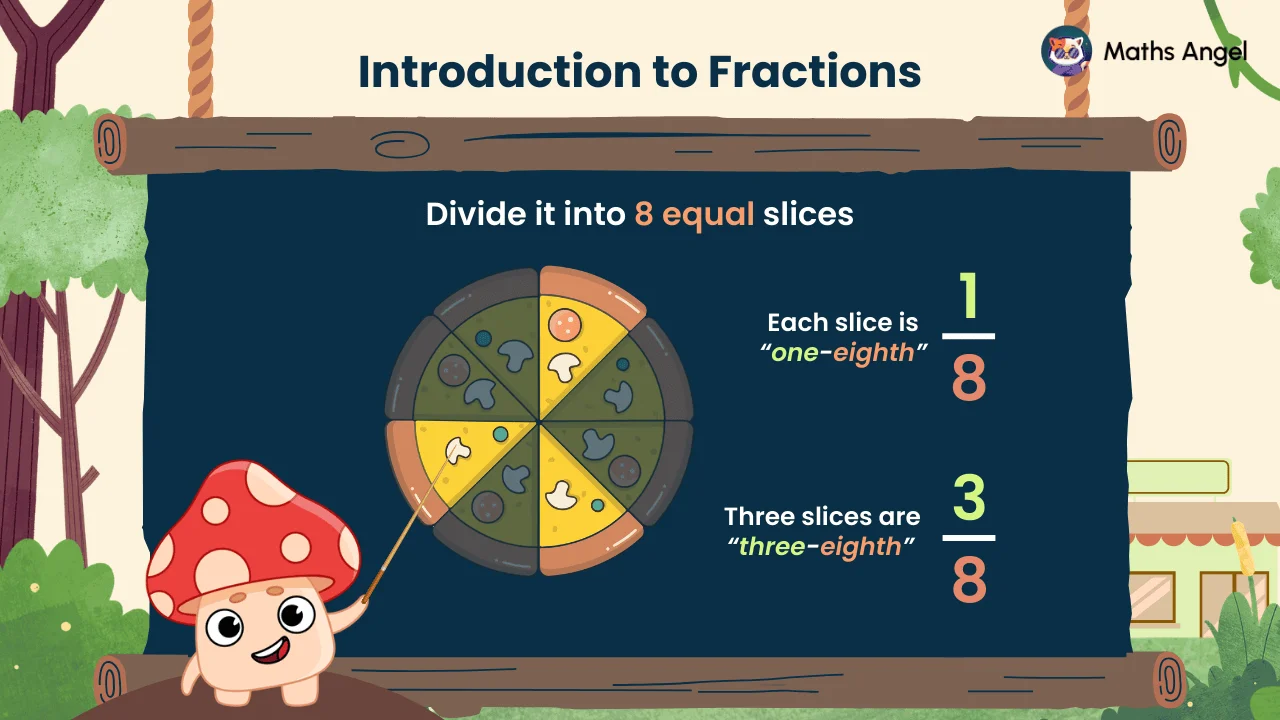
Introduction to Fractions
Fractions represent parts of a whole using a numerator (top) and a denominator (bottom). Learn to understand fractions with real-life examples and calculate fractions of quantities.

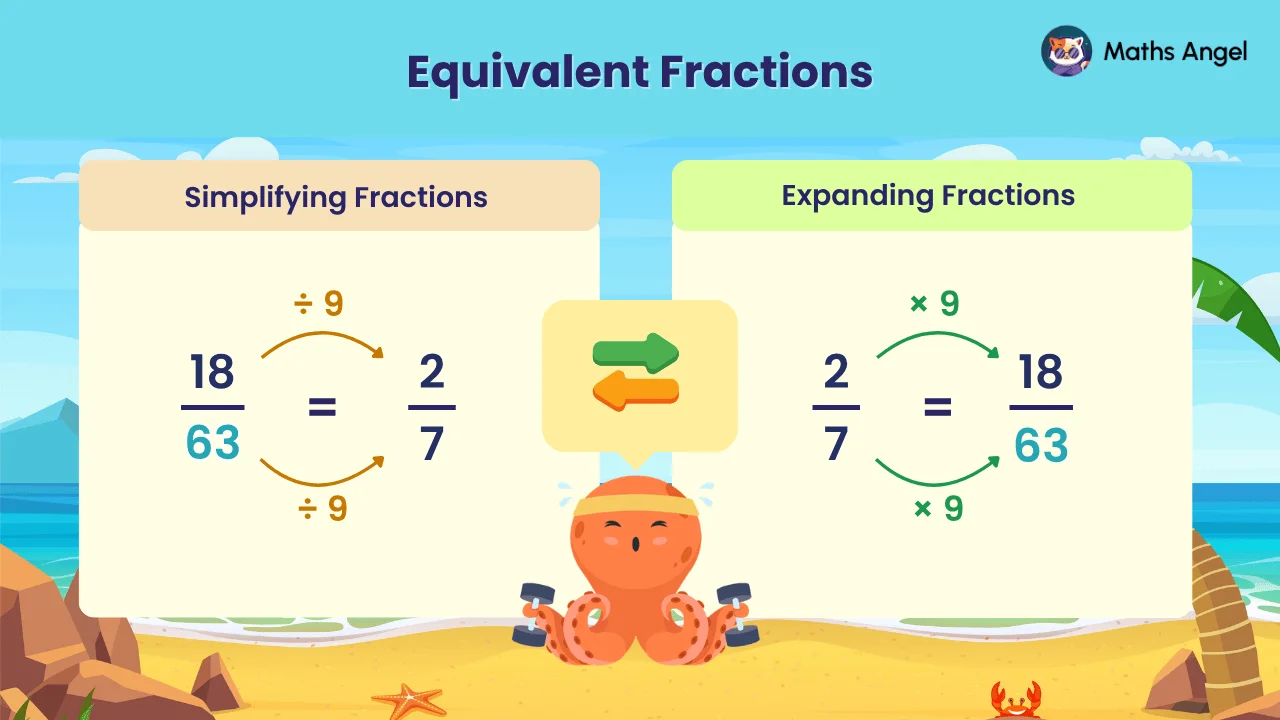
Equivalent Fractions
Equivalent fractions have different forms but the same value—for example, 1/2 = 4/8 = 8/16. Learn how to expand or simplify fractions with clear examples in this maths lesson.

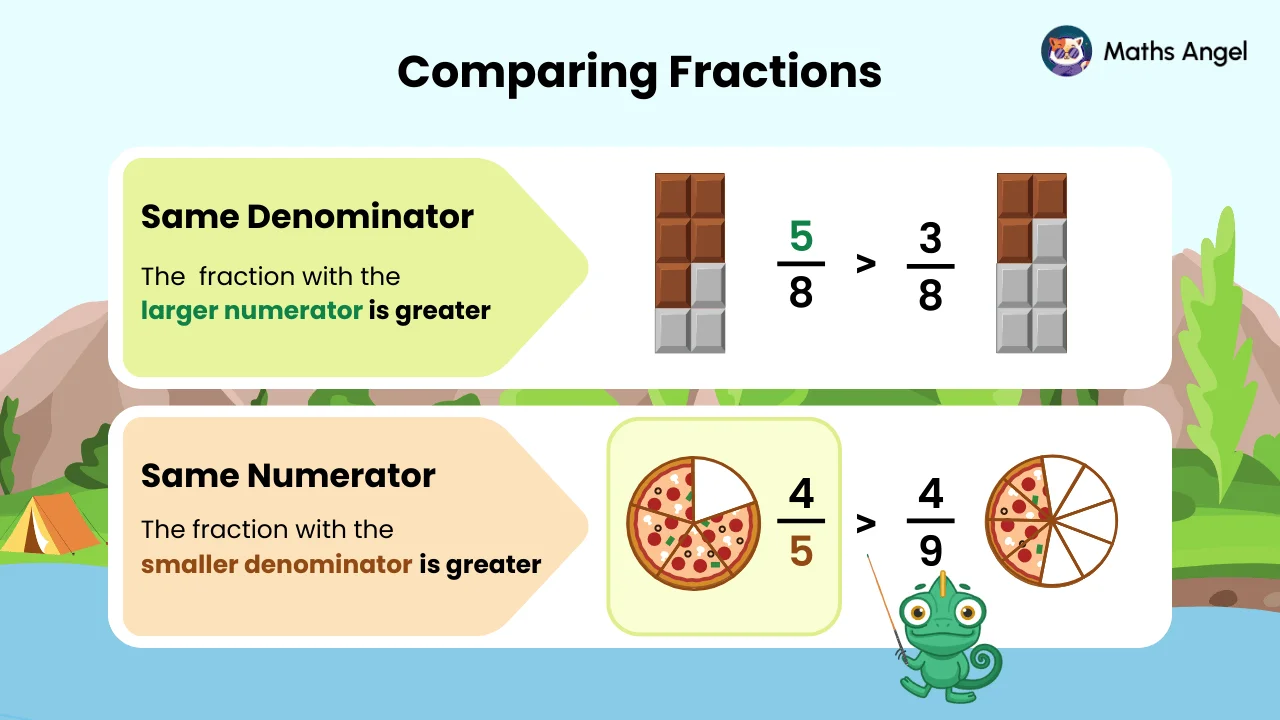
Comparing Fractions
Comparing fractions means finding which fraction is greater or smaller. Learn to compare fractions with the same or different denominators using the common denominator method and clear examples!
Fractions and Percentages
A percentage is another way to show a fraction with 100 as the denominator. Percentages represent parts of a whole. Learn to convert fractions to percentages and vice versa with clear examples!

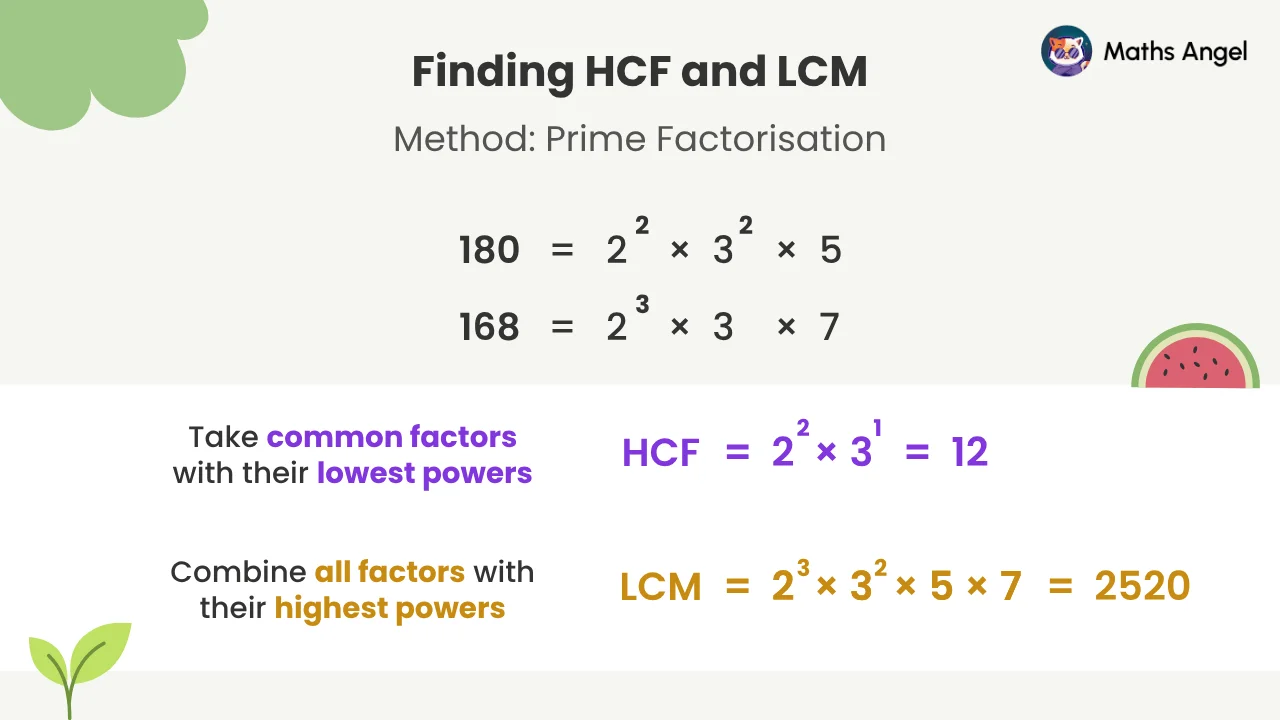
How to Find HCF and LCM
Highest Common Factor (HCF) is the greatest factor shared by numbers, and Lowest Common Multiple (LCM) is the smallest multiple they share. Learn how to find HCF and LCM using factor decomposition with clear examples.

Introduction to Ratios
A ratio compares two or more quantities to show their relative sizes. Learn how to calculate, simplify, and expand ratios with real-life examples in this engaging maths lesson!

How to Combine Ratios
To combine ratios, when the common term matches, for example a:b = 2:5 and b:c = 5:3, then a:b:c = 2:5:3. Explore more examples and real-life applications.

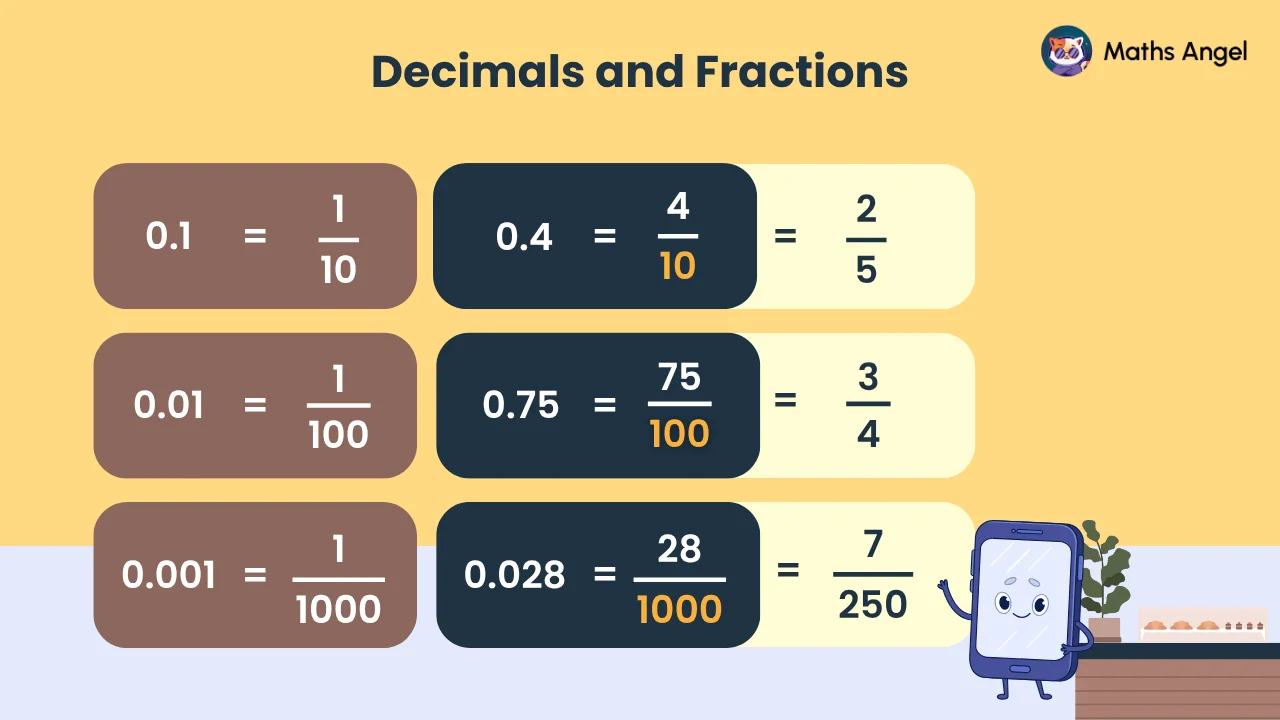
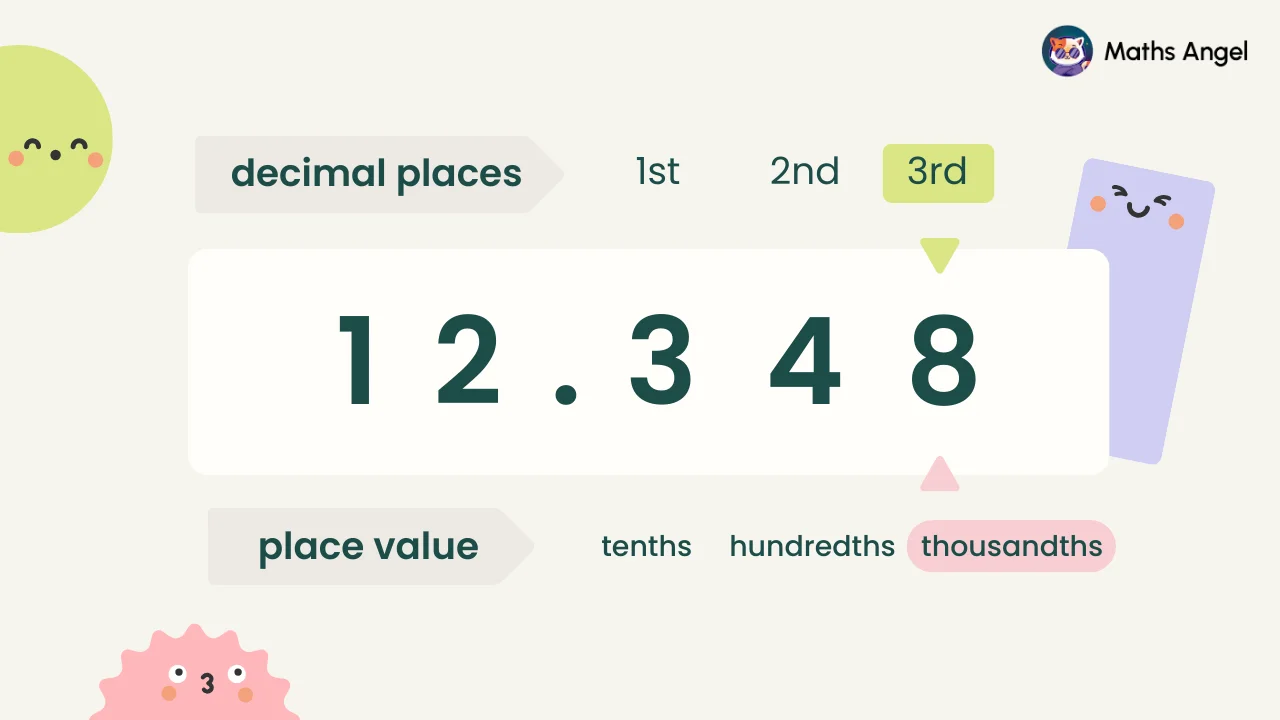
Decimals and Fractions
Decimals are numbers with a whole part and a fractional part separated by a decimal point. Learn to understand decimal place value and convert decimals to fractions with clear examples!

Comparing and Rounding Decimals
Rounding decimals is easy—check the digit to the right of your target place: round up if 5 or more, down if less. Learn to round to specific decimal places with clear examples.

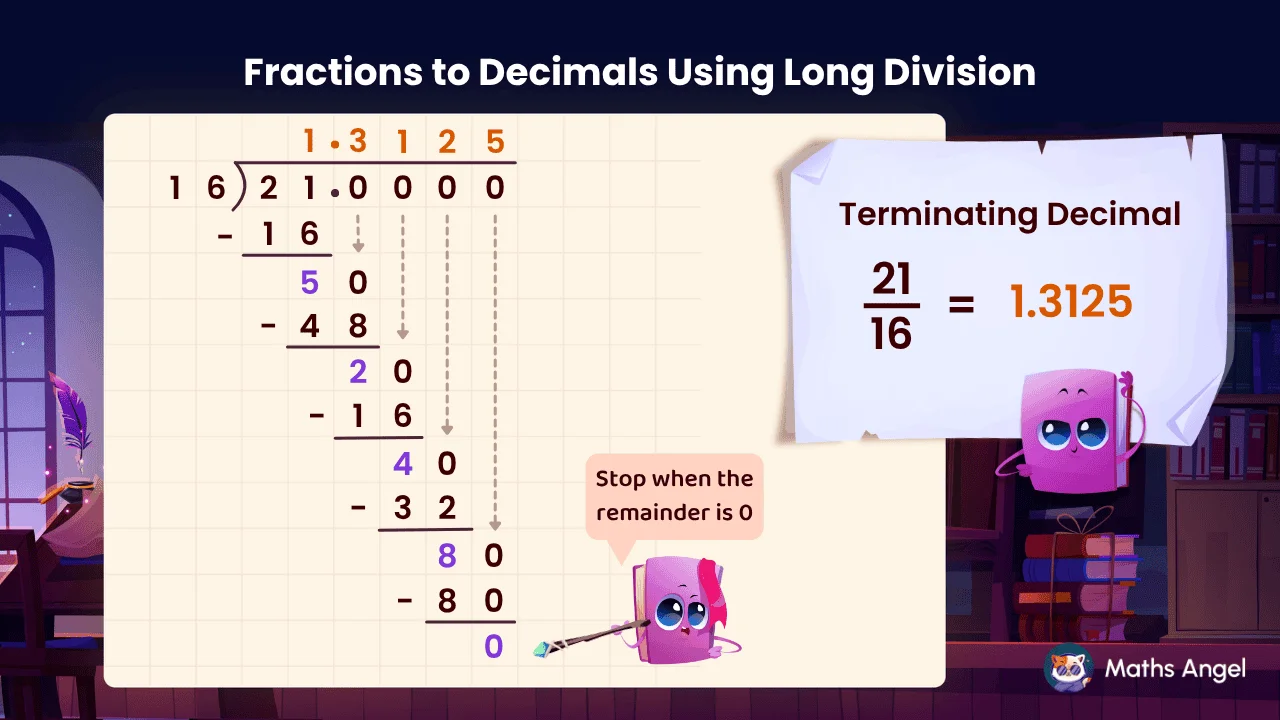
Convert Fraction to Decimal Using Long Division
To convert fraction to decimal, divide the numerator by the denominator using long division. Finite digits mean a terminating decimal, while repeating digits mean a recurring decimal.

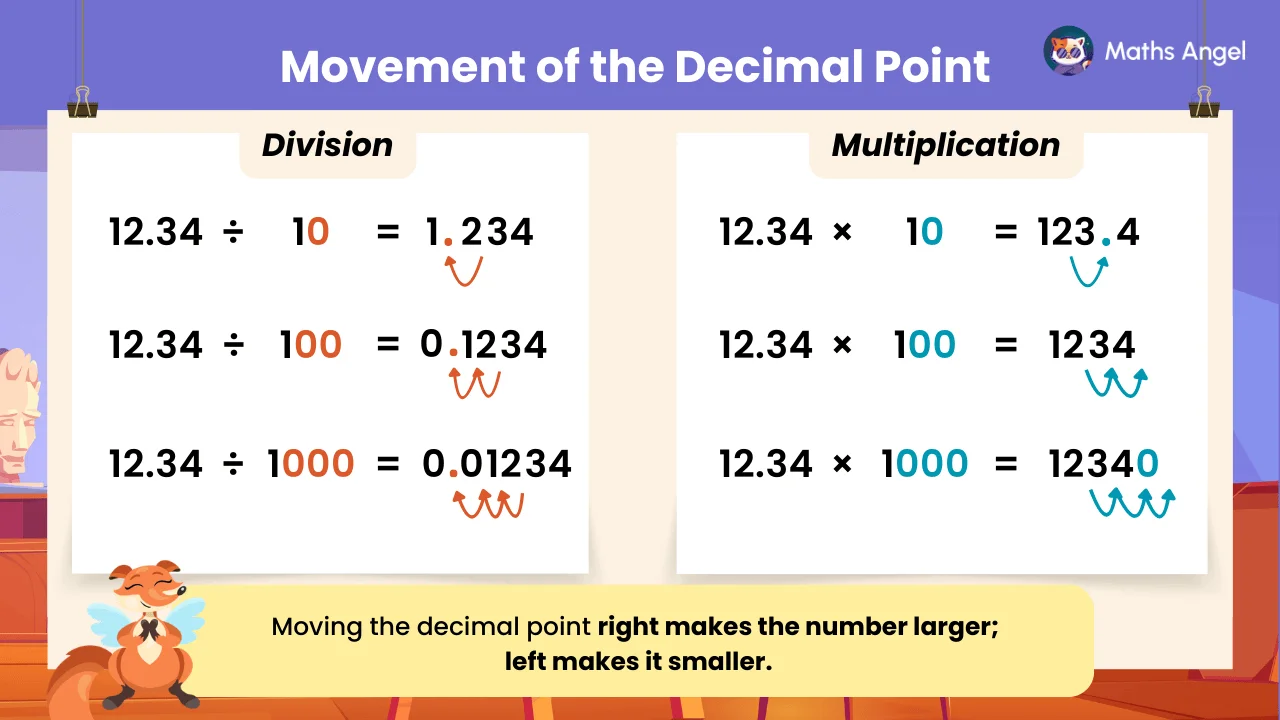
Movement of the Decimal Point
When multiplying decimals by 10, 100, or 1000, move the decimal point 1, 2, or 3 places to the right. When dividing by powers of 10, move the decimal point to the left. Learn with clear examples!

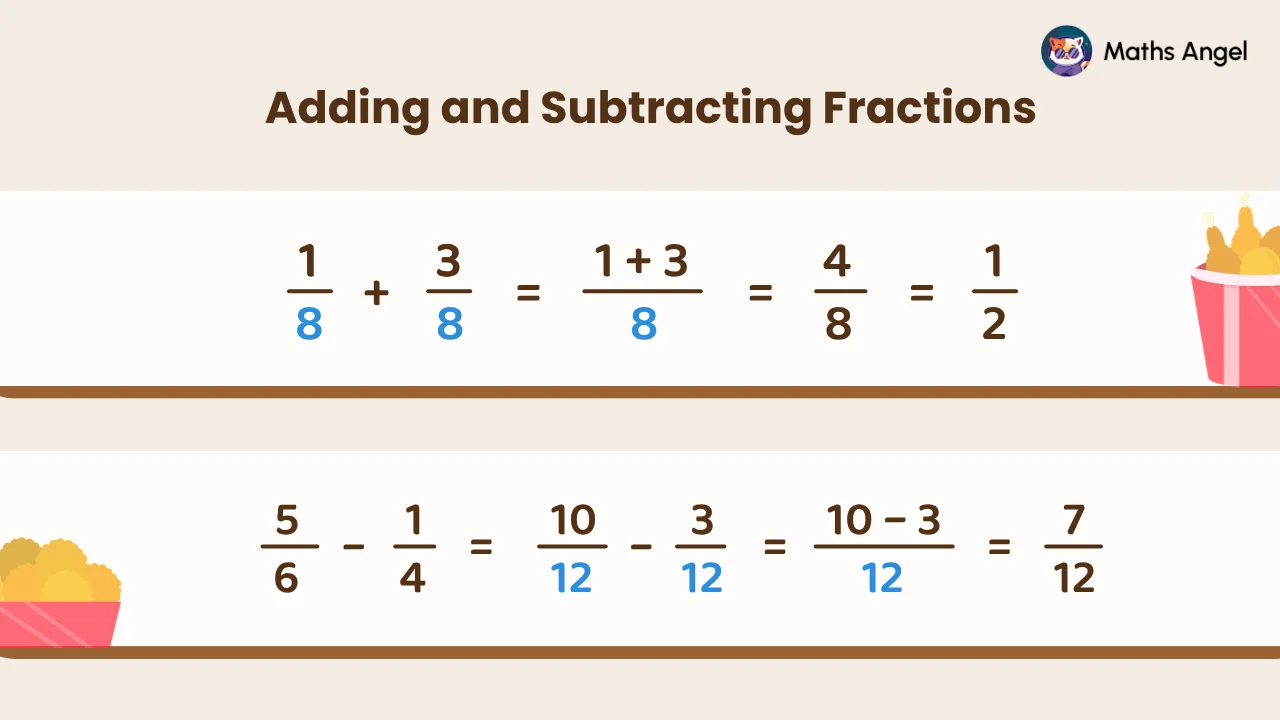
Adding and Subtracting Fractions
Adding and subtracting fractions involves like and unlike denominators. Learn step-by-step how to work with proper, improper, and mixed fractions with clear examples.

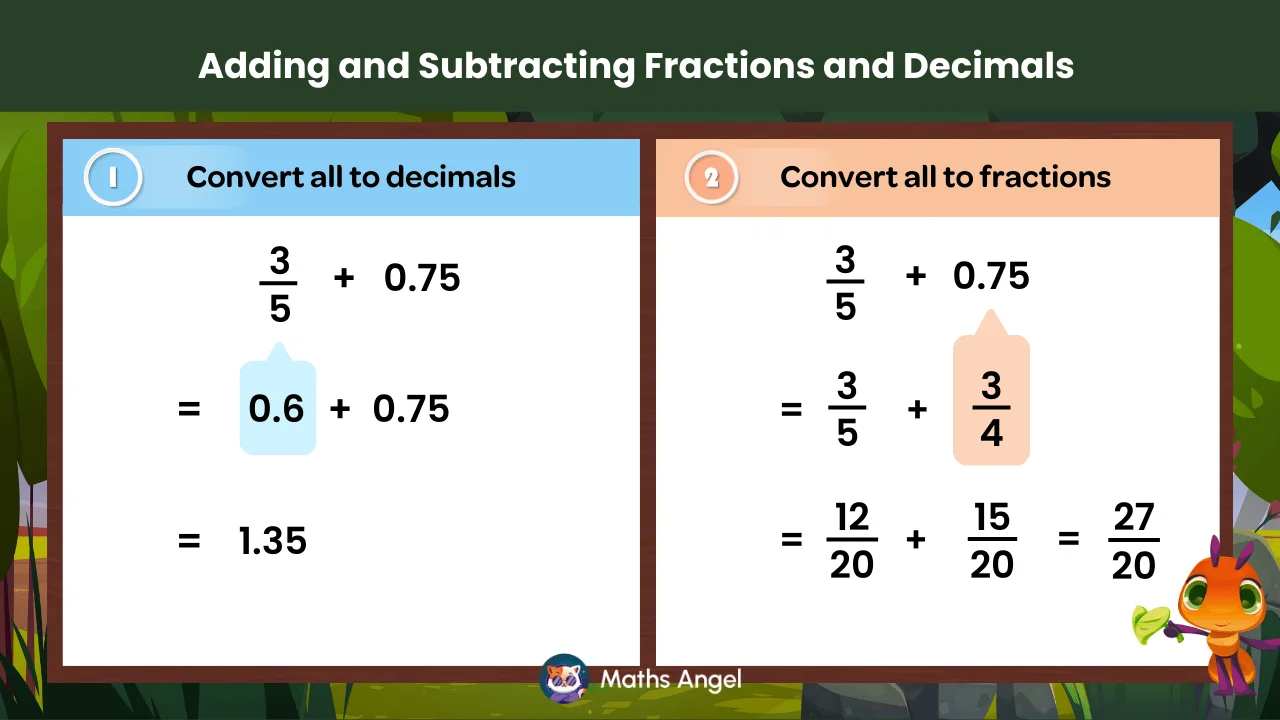
Adding and Subtracting Fractions and Decimals
Learn how to add and subtract fractions and decimals by converting to either fractions or decimals. Understand both methods, their pros and cons, with clear examples.

Plotting and Reflecting Points on the Coordinate Plane
The coordinate plane has two perpendicular axes: x (horizontal) and y (vertical). Learn how to plot and reflect points on a coordinate plane with clear, simple examples!

Translating Shapes
Translating shapes means moving them on a grid without changing size or orientation. Learn how to use column vectors to describe and apply translations with examples.

Properties of Circles
A circle is a shape where all points are equidistant from the centre. Learn key properties like radius, diameter, chords, sectors, and tangents with clear definitions and examples!

Measurement and Types of Angles
An angle is formed when two rays meet at a vertex. Explore acute, right, obtuse, straight, reflex, and full angles. Learn to measure and draw angles with a protractor through clear examples.

Rotating Shapes
Rotation is a transformation that turns a shape around a fixed point. Learn rotating shapes using tracing paper, drawing lines, and finding the center of rotation.

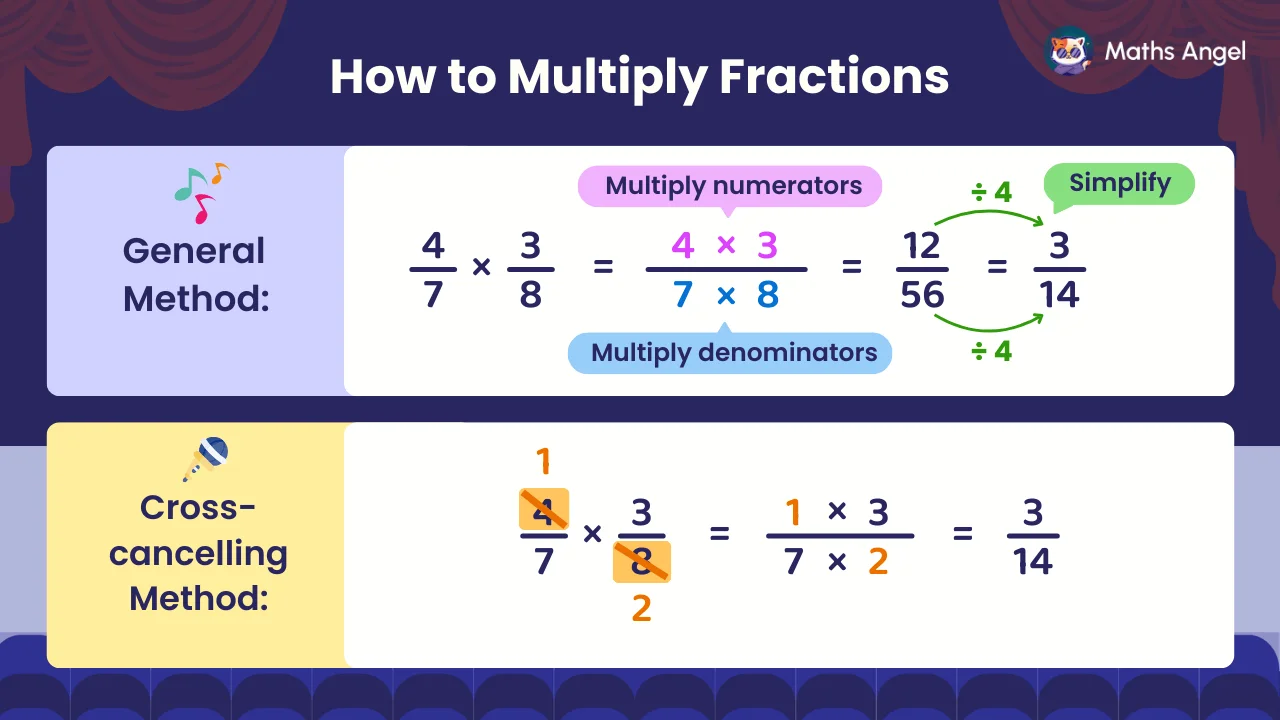
Multiplying Fractions
Learn multiplying fractions by fractions, whole numbers, and mixed numbers in this free math lesson. Master the cross-cancelling method with step-by-step examples.

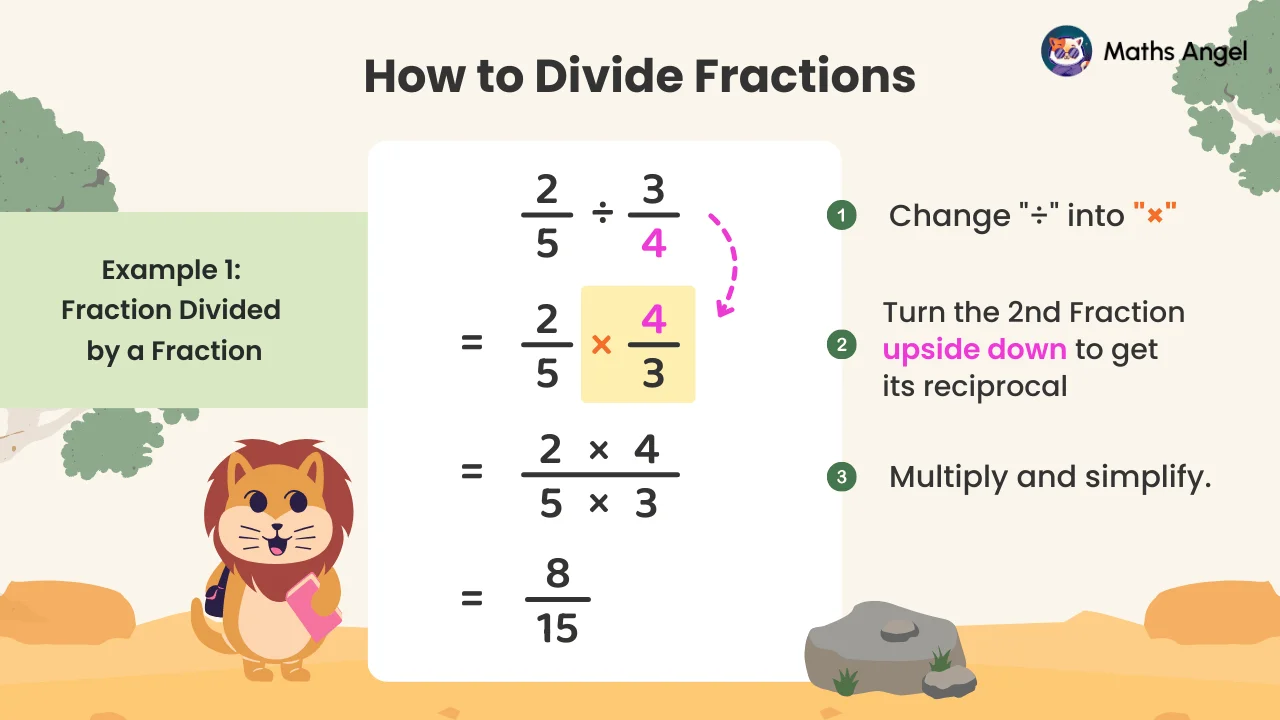
Dividing Fractions
Dividing Fractions means multiplying the reciprocal. Learn how to divide fractions by a whole number and by mixed numbers with step-to-step examples.

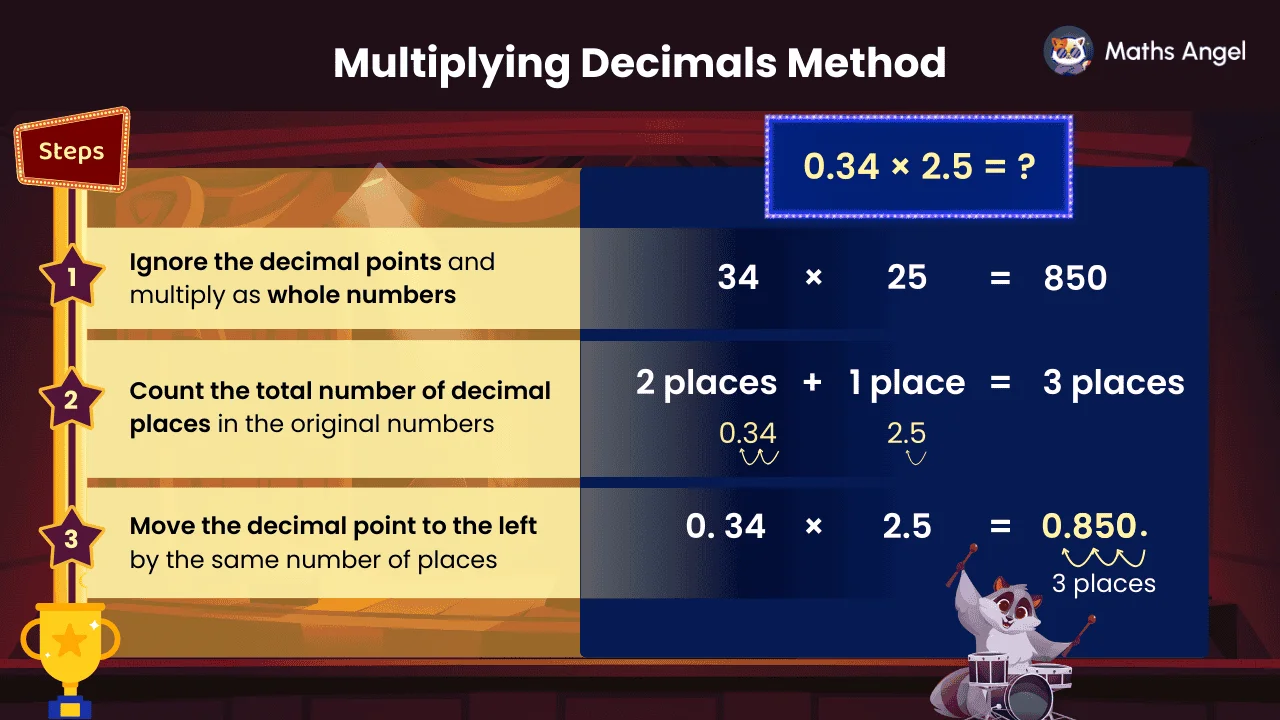
Multiplying Decimals
Multiplying decimals involves 3 steps: ignore the decimal points, multiply as whole numbers, and correctly place the decimal. Learn with clear examples and real-life applications.

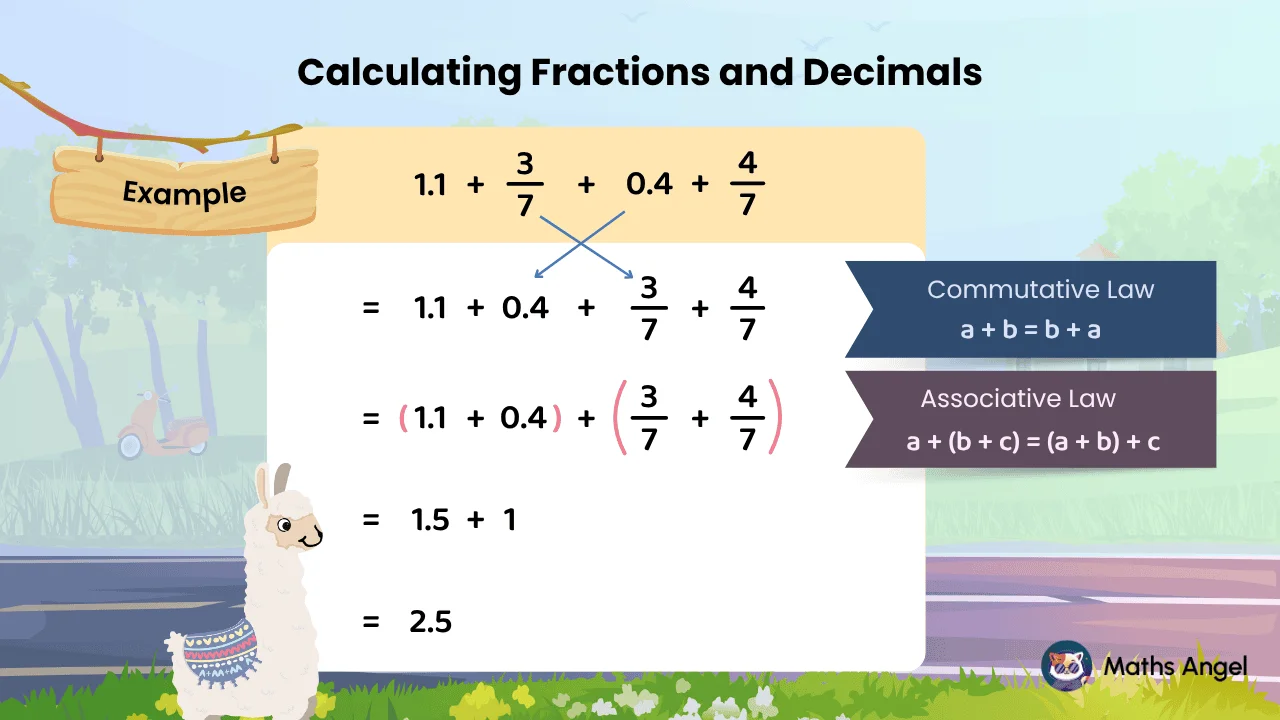
Calculating Fractions and Decimals
Fractions and Decimals become easier with maths laws! Rearrange with the commutative law, group with the associative law, and break down using the distributive law.

Standard Form
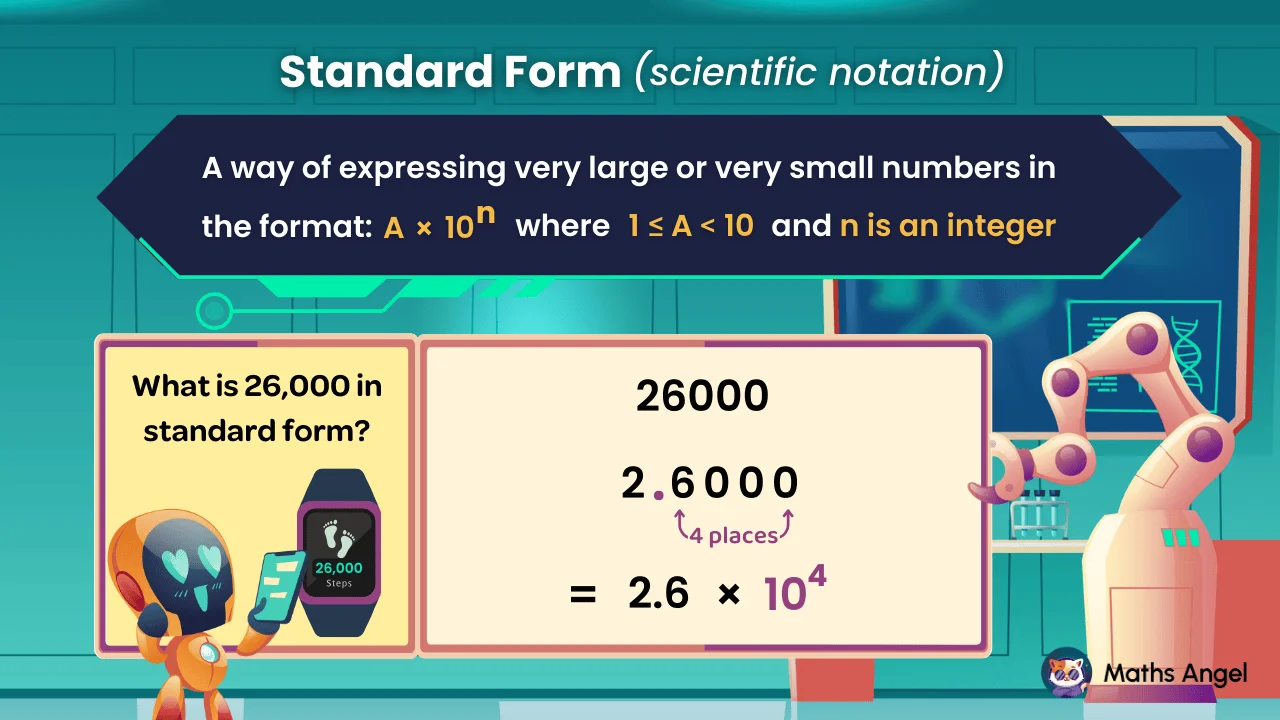
Standard form simplifies very large or small numbers into a × 10ⁿ, where 1 < a < 10. Learn how to write and calculate numbers in standard form with clear examples.

Absolute Frequency and Relative Frequency
Relative frequency is the proportion of a category, calculated by dividing the absolute frequency by the total. Learn how to calculate absolute and relative frequencies and interpret data using pie charts.

How to Calculate the Mean, Median, Mode and Range
The mean is the total divided by the count. The median is the middle value. The mode is the most frequent number. Learn how to calculate the mean, median, mode, and range with examples.

Median, Mean, Mode and Range from a Frequency Table
Learn how to find the mean from a frequency table and the median of a frequency table with clear methods and step-by-step examples in this engaging maths lesson.

How to Draw and Read a Box Plot
A box plot represents data distribution using 5 key values: min, Q1, median, Q3, and max. Learn to draw, read, and find interquartile range (IQR) with examples.

Averages from a Grouped Frequency Table
A Grouped Frequency Table organizes data into intervals. Learn how to find the modal class, median class, and estimate the mean with step-by-step explanations.

Pie Chart
A pie chart represents data as slices of a circle, showing proportions within a whole. Learn how to draw, calculate angles, and interpret pie charts with step-by-step examples.

Deriving and Evaluating Expressions with One Variable
A variable is a symbol (e.g., x) that represents a changing value. Learn how to derive and evaluate expressions with one variable, such as 20 + 5x, to solve real-world problems.

Directly Proportional and Inversely Proportional
In directly proportional relationships, doubling one quantity doubles the other (y = kx). In inversely proportional relationships, doubling one quantity halves the other, but their product remains constant (xy = k).

Line Graphs and Curve Graphs
Line graphs connect data points with line segments, while a curved graph fits points with a smooth line. Learn when to use each and how to interpret both with clear examples.

Natural Numbers, Whole Numbers, and Integers
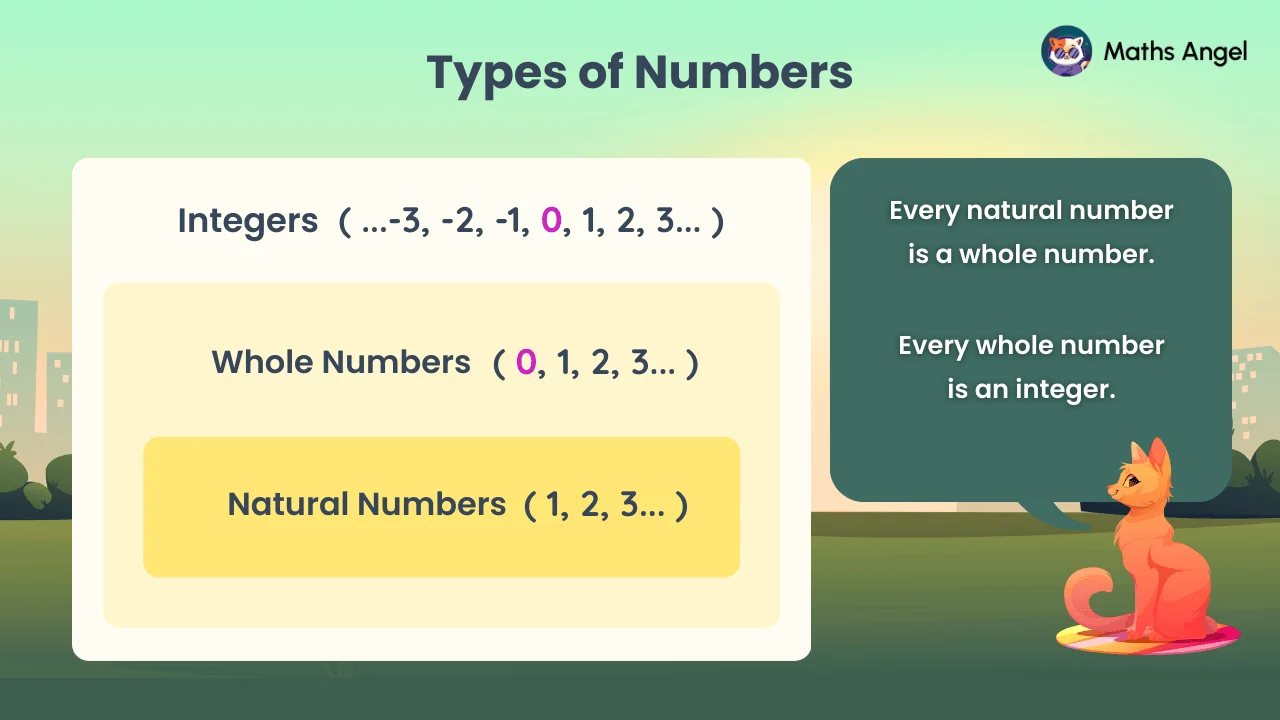
Learn the difference between natural numbers, whole numbers, and integers. See how they are related using clear examples and learn useful exam tips.

Rational Numbers and Their Location on a Number Line
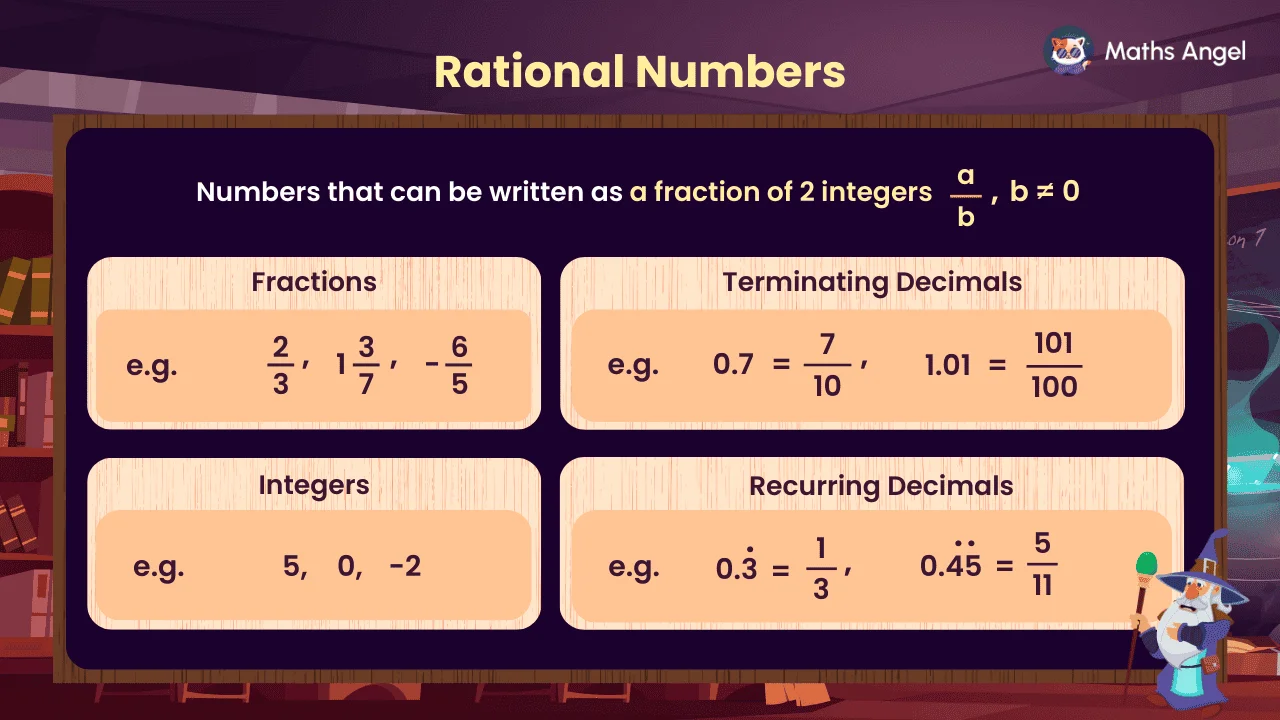
Rational numbers can be written as fractions of two integers. Learn the difference between rational and irrational numbers with examples and how to locate rational numbers on a number line.

Absolute Value
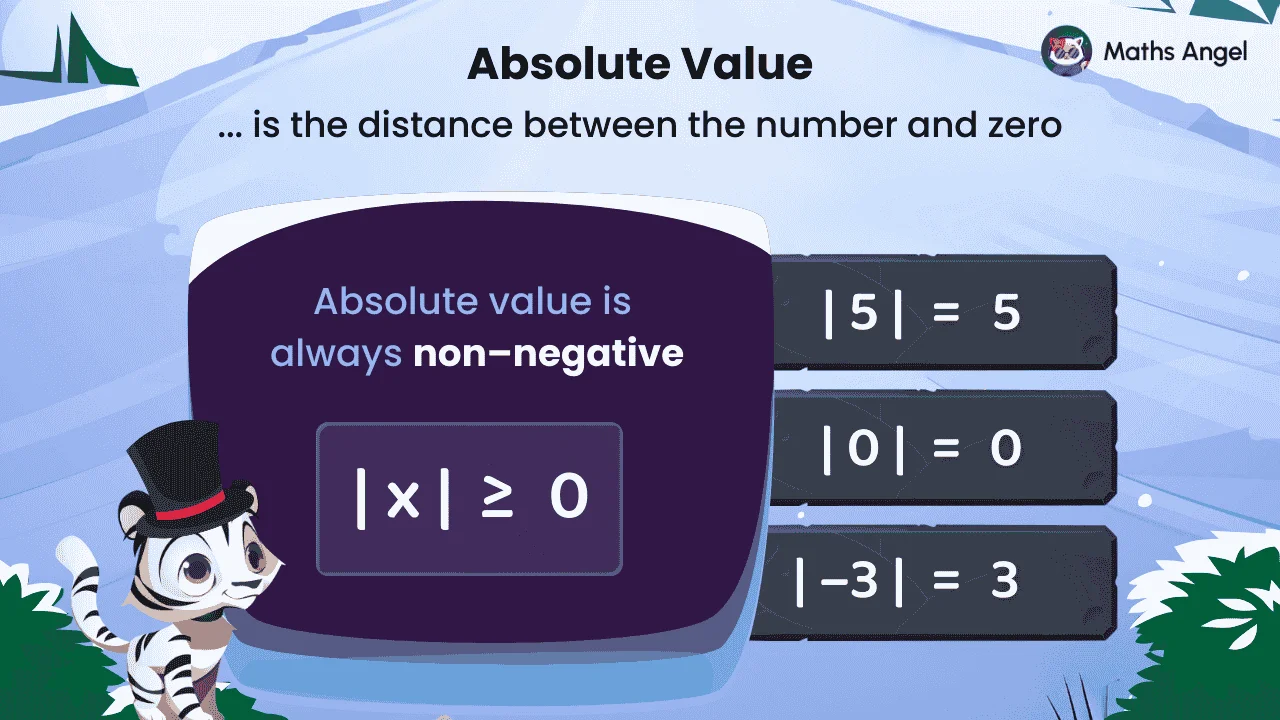
Absolute value is the distance of a number from zero on a number line. It is always non-negative. Learn to simplify absolute values and work with negatives.

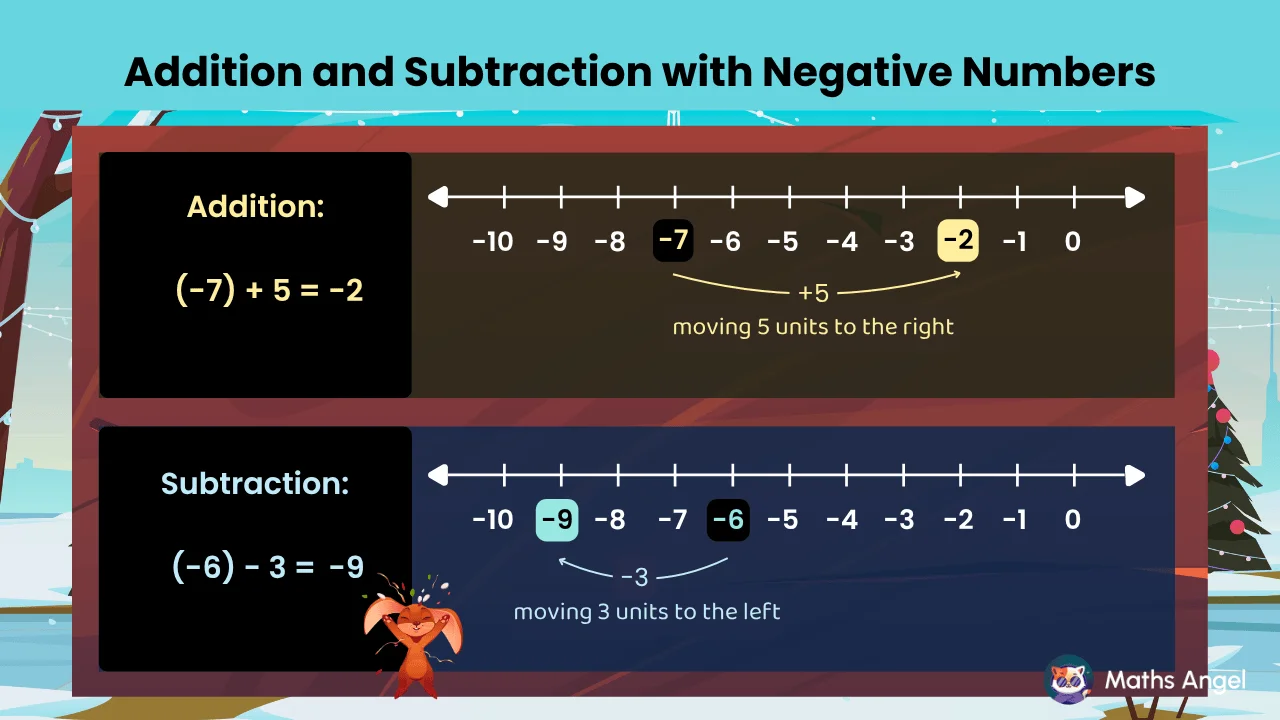
Adding and Subtracting Negative Numbers
Learn the rules for adding and subtracting negative numbers in this video: Same signs (e.g., minus-minus) become a plus, opposite signs (e.g., plus-minus) become a minus.

Multiplying and Dividing Negative Numbers
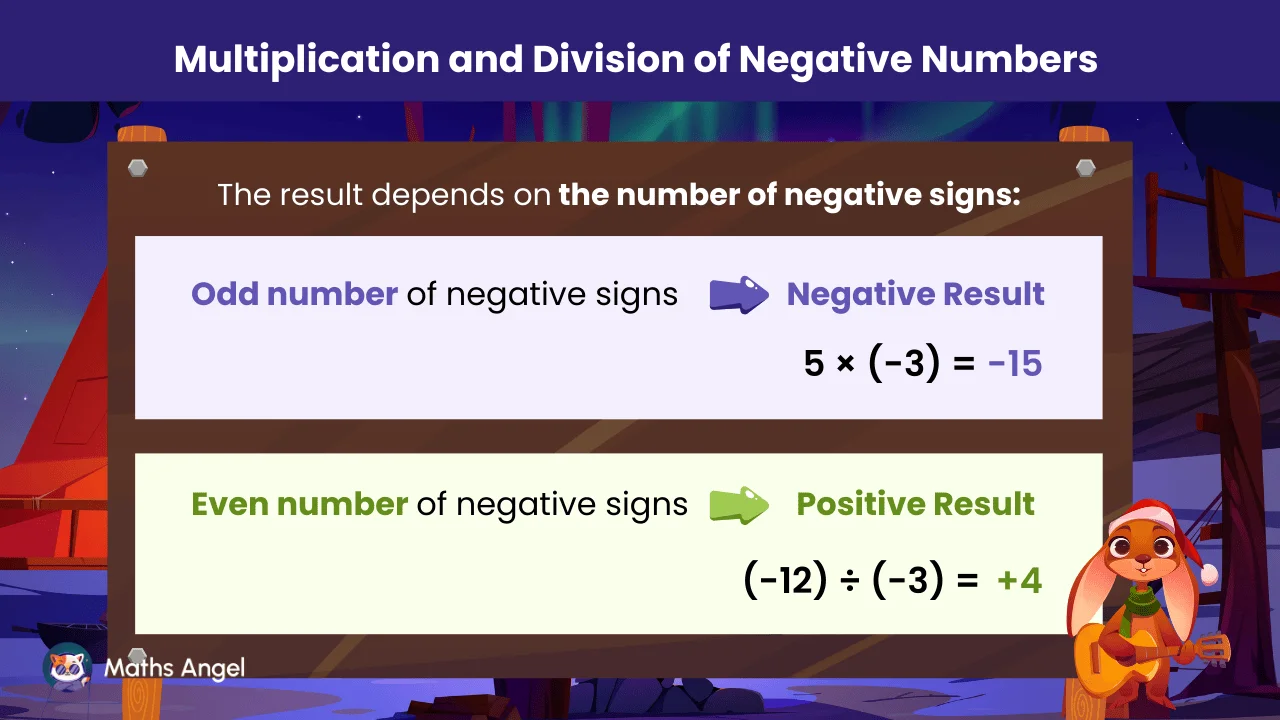
Learn the sign rules for Multiplying and Dividing Negative Numbers: Odd negatives give a negative result, even negatives give a positive result. See how it works!

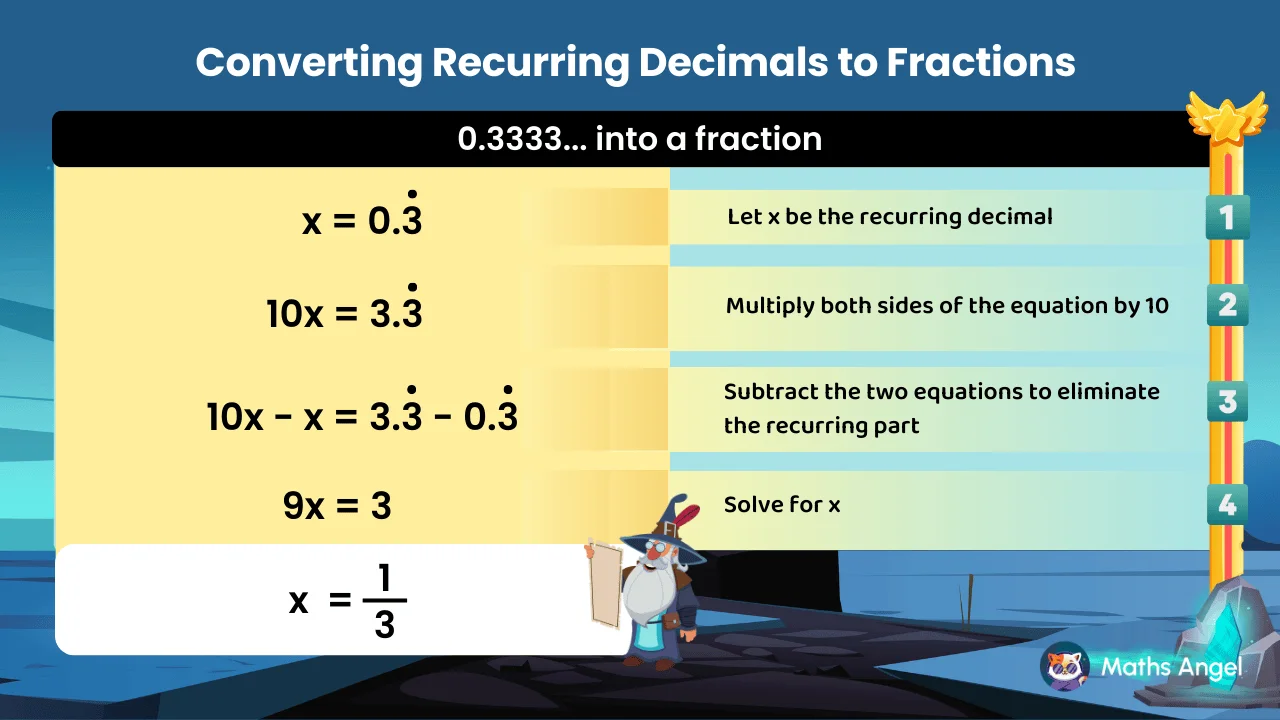
Convert Recurring Decimals to Fractions
Learn how to convert recurring decimals to fractions with step-by-step instructions. E.g., to turn 0.33... into 1/3, set x = 0.33..., multiply by 10 to get 10x = 3.33..., subtract x from 10x to get 9x = 3, and simplify to x = 1/3.

Introduction to Mapping
Mapping in maths shows the relationship between two quantities, like time and speed. Learn how to use tables and graphs to visualise mappings in this lesson.

Introduction to Formulas
A formula is a mathsematical equation connecting variables, like y = 2x + 3. Learn how to substitute values, visualise with tables and graphs, and apply formulas to solve real-life problems.

Direct Proportion Formula and Examples
Learn direct proportion using the formula y = kx. Work through clear examples, including y ∝ x² and y ∝ √x, and learn useful exam tips.

Inverse Proportion Formula and Examples
Learn inverse proportion using the formulas y = k ÷ x and xy = k. Work through clear examples with x² and √x, and learn useful exam tips.

How to Find Percentage of a Number
To find a percentage of any number, multiply the base value by the percentage rate. For example, 20% of 180 is 36. Learn more examples and quick tricks in this Maths Angel lesson.

Interest and Interest Rate Calculation
Interest is the amount earned by multiplying the principal by the interest rate. Example: £100 at 5% earns £5 in a year. Learn interest rate calculation through real-life examples.

Simple Interest and Compound Interest
Simple Interest is calculated only on the original principal using I = P × R × t. Compound Interest grows as interest is added to the principal each year. Learn the differences and formulas with examples.

Percentage Increase and Decrease
Learn the formula for any percentage increase and decrease problem: original value × (1 ± percentage change). Includes clear examples and reverse percentage tips.

How to Calculate Percentage Change
Learn how to calculate percentage change using the formula (change ÷ original value) × 100. Includes clear examples of increases and decreases, plus exam tips.

Simplifying Expressions
Simplifying Expressions means rewriting them in a shorter form while keeping their value. Learn to expand brackets and combine like terms with step-by-step examples.

Solving Equations
Solving equations means finding the unknown value that makes the equation true. Learn to simplify both sides, rearrange terms, and solve for x with step-by-step examples.

Solving Rational Equations
Rational Equations contain fractions with variables (x) in the numerator or denominator. Solve by isolating x, clearing denominators, and checking solutions. Learn step-by-step with examples!

Angle Relationships in Intersecting and Parallel Lines
Angle relationships explain how intersecting and parallel lines create special angle pairs. Learn about vertically opposite, corresponding, alternate, and co-interior angles with examples.

Constructing Triangles
A triangle has 3 sides, 3 angles, and 3 vertices. Learn how to construct triangles using ASA, SSS, and SSA methods with a compass, ruler, and protractor.

Congruent Triangles
Congruent triangles are identical in size and shape, with equal side lengths and angles. Learn the rules of congruence (SSS, SAS, ASA, RHS) with examples and visuals.

Calculating Probability
Probability measures how likely an event is to happen, from 0 (impossible) to 1 (certain). Learn how to calculate probability using formulas and understand experimental probability.

Addition Rule of Probability and Expected Frequency
The addition rule of probability states that for mutually exclusive events, P(A or B) = P(A) + P(B). Learn how to add probabilities and calculate expected frequency with examples.

Probability Tree Diagrams
A probability tree diagram is a visual tool to show all possible outcomes of an event and calculate their probabilities. Learn how to solve dependent and combined event problems with clear examples!

Sets and Venn Diagrams
A Venn Diagram visually represents relationships between sets. Learn set notation, union and intersection symbols, and how to interpret Venn diagrams with real examples.

Introduction to Functions and Graphs
A function maps each input to exactly one output, like f(x) = 2x + 1. Learn function definition, notation, how to graph functions, and how to find values with examples.

Gradient and Y-Intercept in Linear Equations
The equation y = mx + c represents a straight line, where m is the gradient and c is the y-intercept. Understand m and c, and learn how to graph linear equations with examples.

Finding the Equation of a Straight Line
The equation of a straight line is represented as: y = mx + c. Learn to find the slope (m), y-intercept (c), and check if points lie on the line with clear examples.

How to Find X-Intercept, Y-Intercept and Intersections
The x intercept is where a line crosses the x-axis, found by setting y = 0. Example: For y = 200 - 50x, solving 0 = 200 - 50x gives x = 4. Learn to find the y-intercept and intersections too!

Simplifying Expressions with Multiple Variables
Simplifying expressions means rewriting in a simpler form. Learn to simplify expressions by applying exponents and combining like terms with clear examples.

Expanding Double Brackets
Learn expanding double brackets with the formula (a+b)(c+d) = ac+ad+bc+bd. Follow step-by-step examples and practice simplifying algebraic expressions.

Square of a Binomial
The square of a binomial involves expanding expressions like (a + b)² and (a - b)². Learn the binomial theorem formulas, geometric interpretations, and step-by-step examples!

Area of Parallelograms and Triangles
Learn the area formulas for parallelograms (A = b × h) and triangles (A = ½ × b × h). Understand base and height and see clear examples.

Area of Compound Shapes
Learn how to find the area of compound shapes by breaking them into simpler shapes, such as rectangles and triangles, then adding or subtracting areas.

Solving Equations with 2 Variables
Equations with 2 Variables represent relationships like x + 2y = 20. Learn to solve 2 variable equations using substitution and graphing methods with examples.

Solving Simultaneous Equations Graphically
Learn to solve systems of linear equations graphically. Plot equations, find intersections, and understand solutions with clear examples.

Simultaneous Equations: Equal Values and Substitution Method
Learn how to solve systems of linear equations using Equal Values Method and Substitution Method. Understand how to isolate variables, substitute values, and solve equations with clear examples!

Elimination Method for Solving Simultaneous Equations
The Elimination Method simplifies solving simultaneous equations by removing one variable. Learn how to transform, add, or subtract equations to find solutions with step-by-step examples.

Thales' Theorem
Thales' Theorem states that any triangle formed with a circle's diameter as one side is always a right-angled triangle. Learn how to apply Thales' Theorem with clear, step-by-step examples.

Perpendicular Bisectors and Circumcircle
A Perpendicular Bisector divides a line segment into two equal parts at a 90° angle. Learn its construction, properties, and how to use it to find the circumcenter of a triangle.

Angle Bisectors and Incircle
An Angle Bisector divides an angle into two equal parts. Learn its construction, properties, and how to find a triangle’s incenter and incircle with step-by-step examples

Medians and Centroid of a Triangle
Learn what the medians of a triangle are and how they meet at the centroid. Understand the 2:1 ratio and find missing lengths using clear examples.

Basics of Square Roots
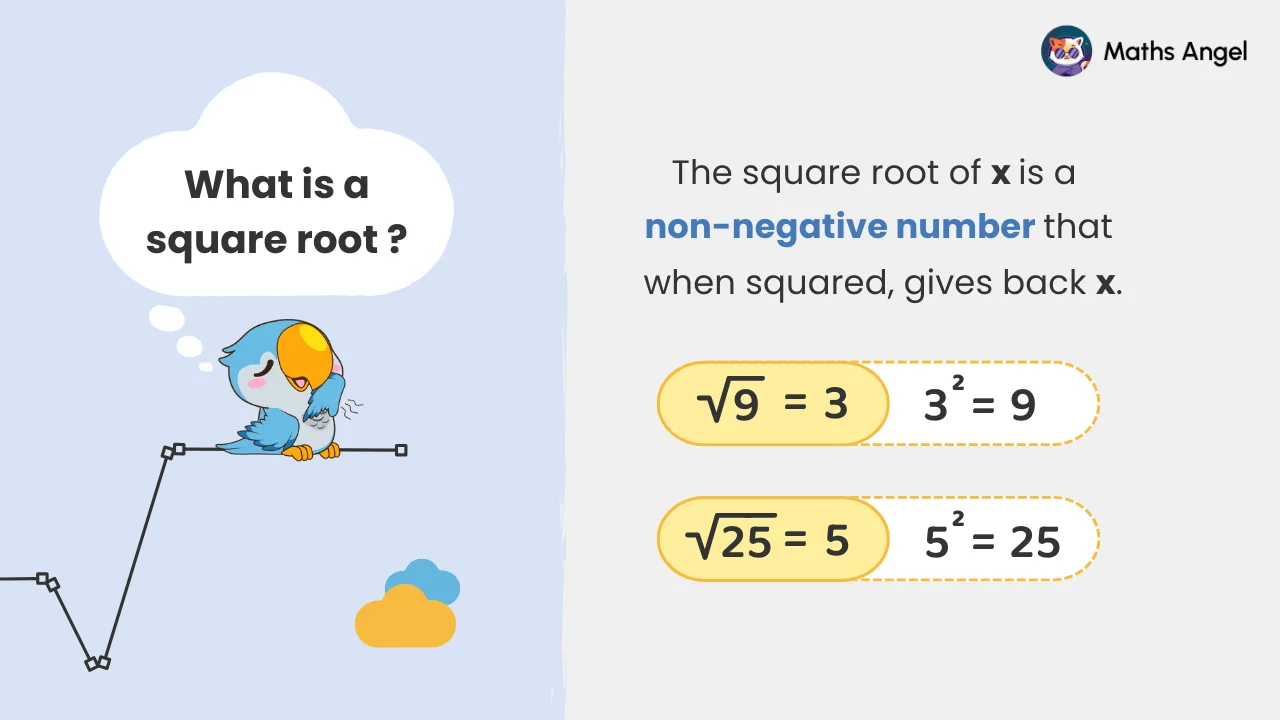
The square root of a number is a non-negative value that, when squared, equals the number (e.g., √9 = 3 as 3² = 9). Learn the definition, properties, and examples of square roots.

Multiplying and Dividing Square Roots
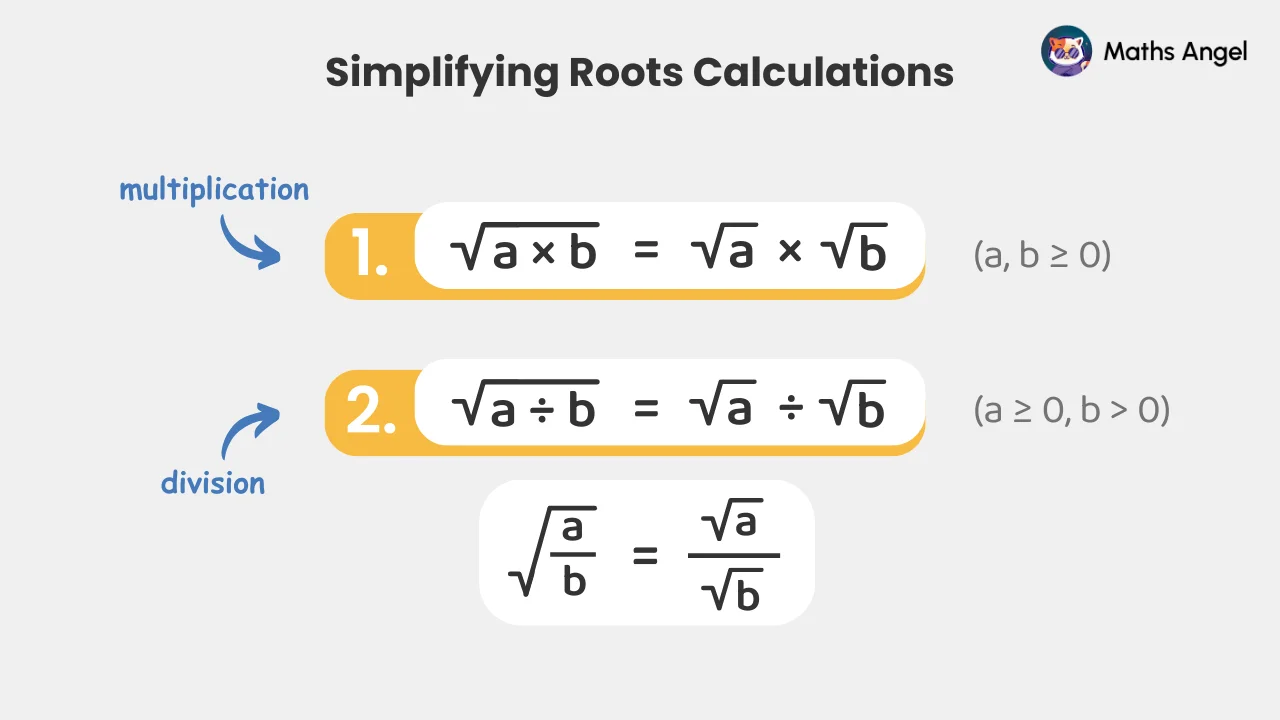
This video explains formulas for multiplying and dividing square roots and how to use them to simplify root expressions with step-by-step examples. Practice the rules yourself!

Simple Quadratic Equations
Learn how the coefficient ‘a’ affects a quadratic equation and its graph. See how the sign and value of ‘a’ change the direction and width of the parabola.

Vertex Form and Parabola Transformations
The vertex form of a quadratic equation is y = a(x − h)² + k, where (h, k) is the vertex of the parabola. Learn how to find the vertex and transform the parabola with step-by-step examples!

Converting Quadratics: Standard Form and Vertex Form
Learn step-by-step how to convert a quadratic equation between standard form and vertex form. Master key methods like completing the square and simplifying.

How to Write Quadratic Equations in Vertex Form and Standard Form
Forming quadratic equations in vertex form, use y = a(x - h)² + k and solve for 'a' with a given point. In standard form, use 3 points to find a, b, and c. Learn step by step with examples.

Circumference and Area of a Circle and a Sector
The circumference of a circle is found using C = πd or C = 2πr. The area is A = πr². Learn how to calculate the arc length and area of circle sectors with examples.

Volume of Prisms and Cylinders
Learn how to calculate the volume of prisms and cylinders using the formula V = base area × height. Explore different shapes and real-life examples in this maths lesson.

Cavalieri's Principle
Cavalieri's Principle states that 3D shapes with the same height and cross-sectional area have equal volume. Learn how to apply it to compare and calculate volumes.
-math-angel.webp)
Laws of Indices (Same Base, Same Indices)
The Laws of Indices help simplify calculations with powers. To multiply indices with the same base, add the exponents: a^m × a^n = a^(m+n). Learn more key rules with examples.

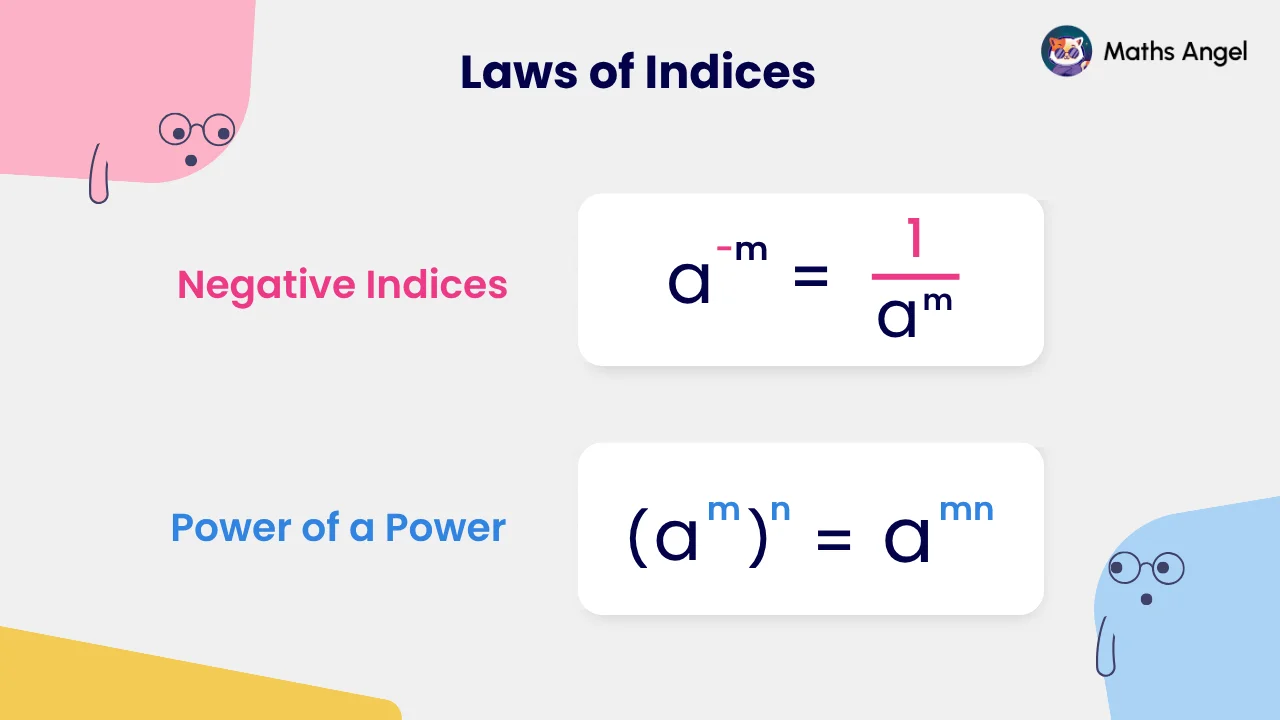
Negative Exponents and Power of a Power
To simplify Negative Indices, take the reciprocal of the base with positive indices. To raise a power to a power, multiply the indices. Learn indices rules with clear examples.

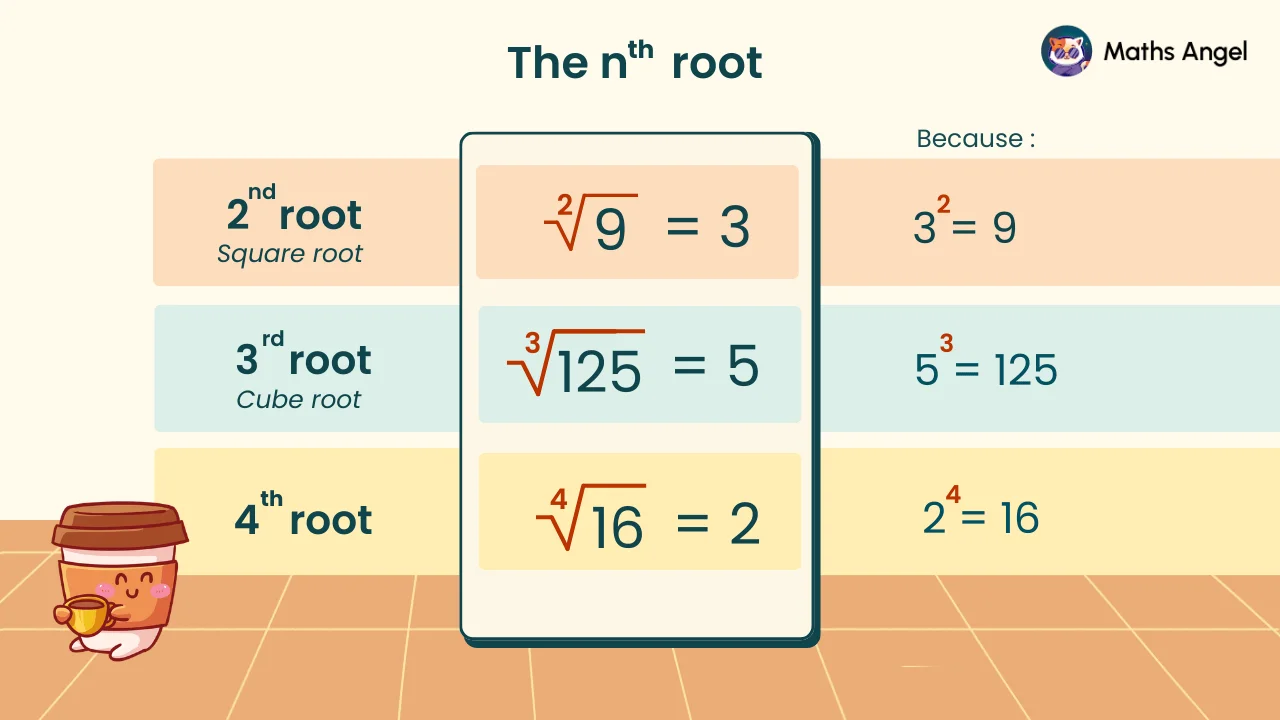
The nth Root and Fractional Indices
Fractional indices express exponents as nth roots. Example: 125^(2/3) means finding the cube root (the 3rd root) of 125, which is 5, then squaring it to get 25.

Pythagoras' Theorem
Pythagoras' Theorem states that in a right-angled triangle, a² + b² = c². Learn how to use it to find missing sides, calculate distances, and determine diagonals in 3D shapes with examples.

Volume and Surface Area of Pyramids, Cones, Spheres
The volume of a pyramid is (1/3) × base × height. The surface area of a cone is πr² + πrs. Learn how to find the surface area and volume of pyramids, cones, and spheres with formulas and clear examples.

Solving Simple Quadratic Equations
Learn how to solve simple quadratic equations, including x² = k and factorising x² − dx = 0. Find solutions and avoid common exam mistakes.

Solving Quadratic Equations by Factorising
Solve quadratic equations by factorising expressions like x² + bx + c = 0 into (x + m)(x + n) = 0. Learn to find solutions quickly with step-by-step examples.

Solving Quadratic Equations: Quadratic Formula
Learn how to solve quadratic equations using the quadratic formula. Understand the discriminant b² − 4ac, identify the number of solutions, and see clear examples.

Introduction to Enlargement
Enlargement is a transformation that changes the size of a shape. Learn about scale factor, centre of enlargement, and how to enlarge shapes.

Trigonometry: Sine, Cosine, Tangent
This video explains basic trigonometry ratios - how to use sin, cos, and tan to find missing sides or angles in right-angled triangles, including using inverse functions with clear examples.

Cosine Rule
Learn how to use the cosine rule, a² = b² + c² − 2bc cos A, to find missing sides and angles in triangles. See clear worked examples and useful exam tips.

Sine Rule
The Sine Rule formula is a/sinA = b/sinB = c/sinC. Learn how to use it to find missing sides and angles in non-right-angled triangles with step-by-step examples.