Area of Compound Shapes
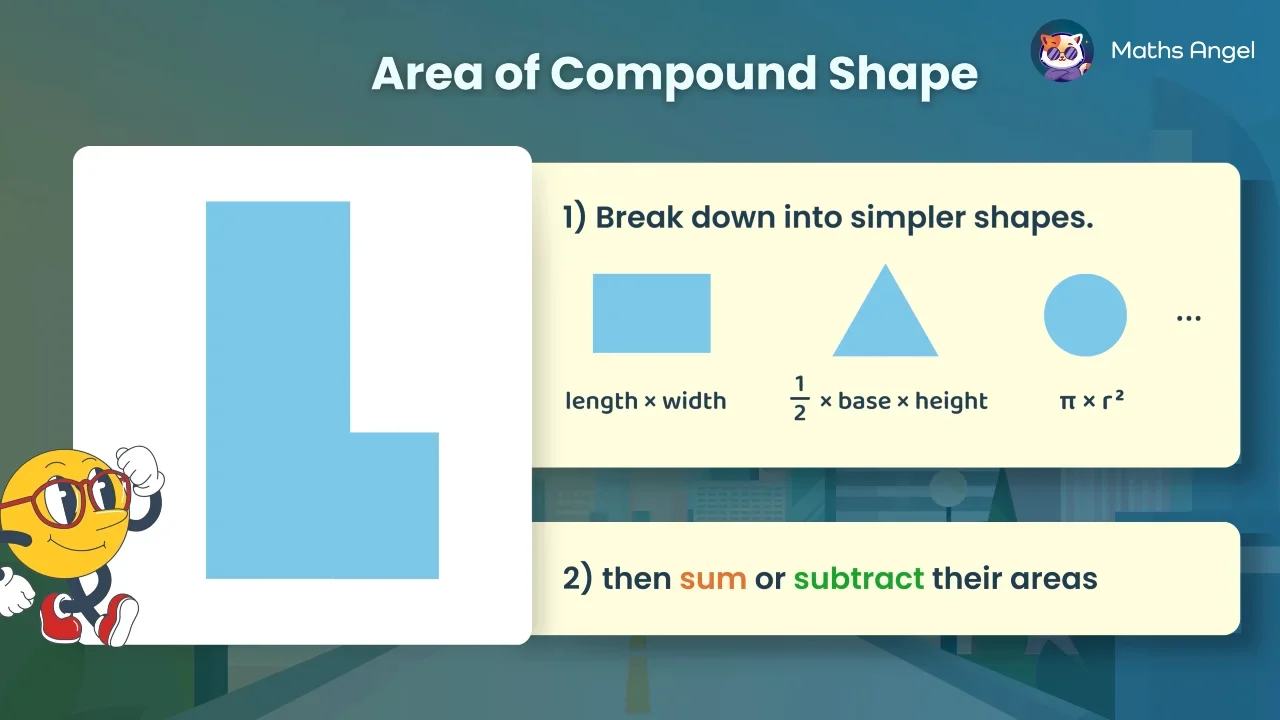
The area of a compound shape is found by splitting it into simpler shapes like rectangles and triangles. Find each area, such as length × width, then add them for the total area. You subtract instead when a part is cut out.
Video Lesson
Watch and learn the basics
🎬 Did this video explain it clearly?
Flashcards
Review key concepts visually
%20How%20to%20Find%20Area%20of%20Compound%20Shape.webp)
%20Compound%20Shape%20Two%20Rectangles.webp)
%20Compound%20Shape%20Rectangle%20and%20Triangle.webp)
%20Application%20of%20Area%20of%20Compound%20Shapes.webp)
Area of a Compound Shape
- A compound shape is made by joining two or more simple shapes.
- To find the area, break it into familiar shapes such as rectangles, triangles, or circles.
- Example: Two Rectangles
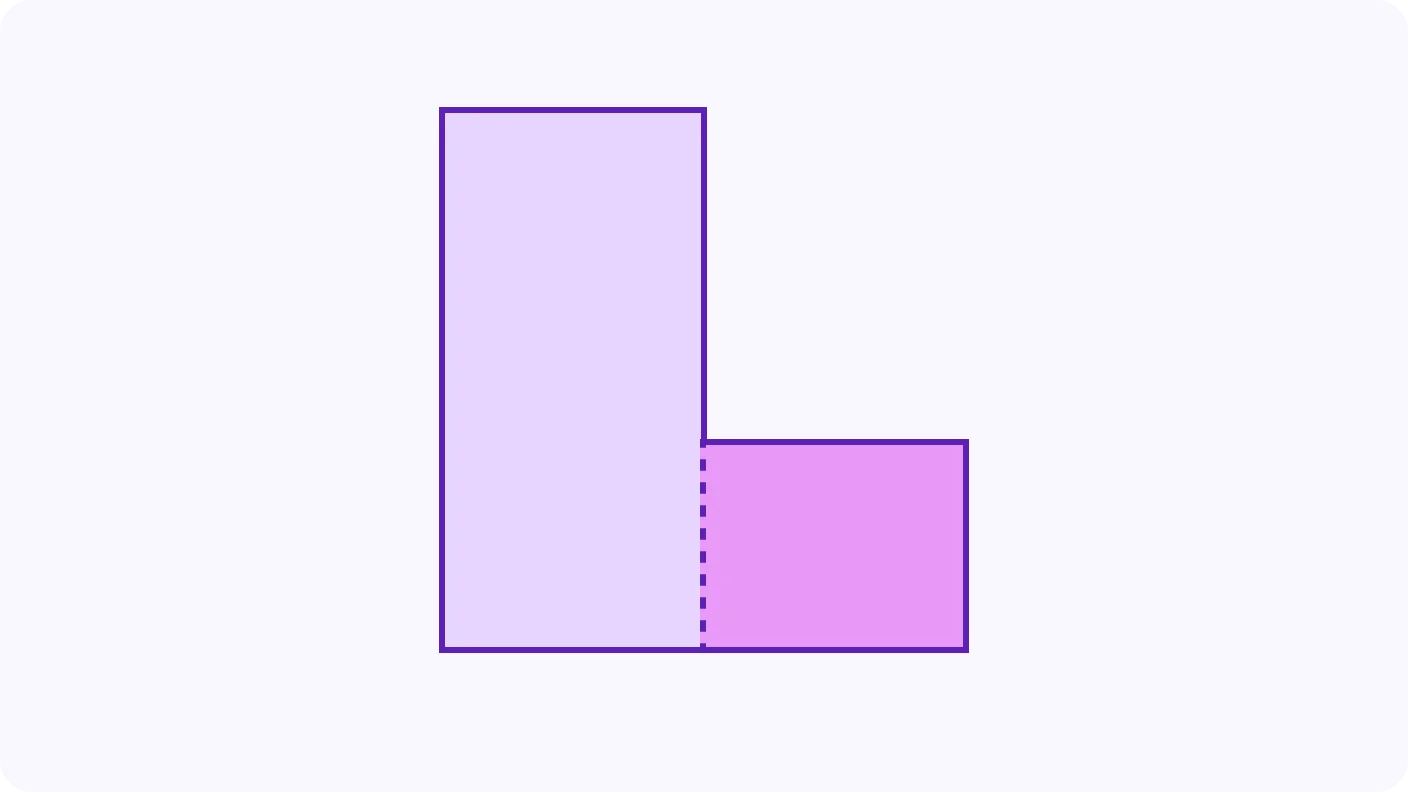
- An L-shaped figure can be split into two rectangles.
- Find each rectangle’s area using length × width.
- Add the two areas to get the total area.
Example: Mixed Shapes
- Find the area of each shape separately, such as a rectangle and a triangle.
- The triangle area formula is base × height.
- Add the areas together to get the total area.
Real-Life Application
- Always calculate the total area before finding costs.
- Subtract areas for holes like doors or windows.
- Multiply the area by the price per square metre.
Practice Questions
Test your understanding
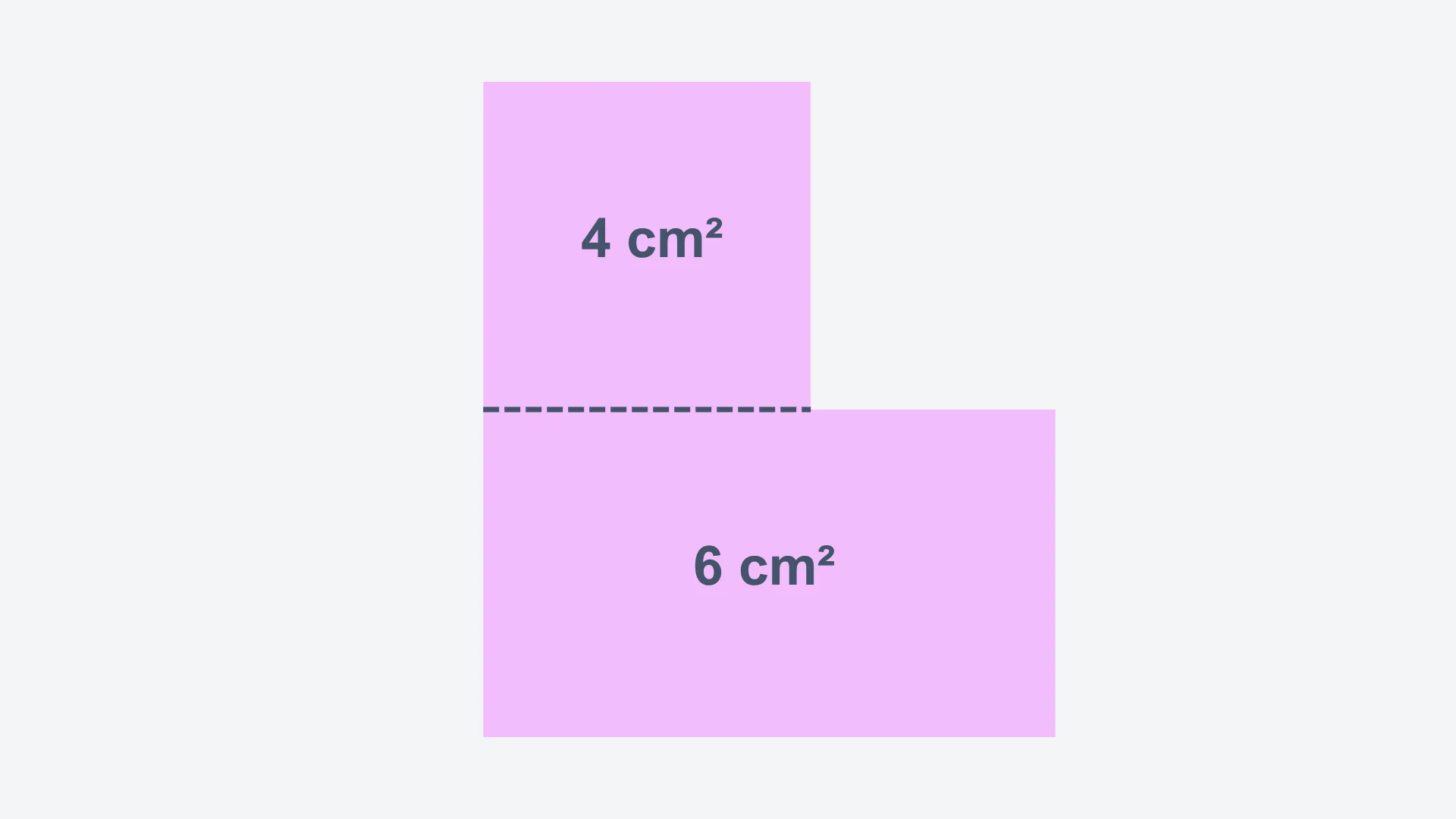
A compound shape is made from a square of area and a rectangle of area . What is the total area of the compound shape?
Correct! 🎉 +10 pointsCorrect! 🎉 Worth 10 XPNot quite right
The two parts do not overlap, so the total area is simply the sum of the parts.
, so the area of the compound shape is cm².
The dashed line only shows where the shape has been split: it is an internal line, so it neither adds to nor takes away from the area. The two pieces are joined together, so their areas are added, not multiplied, subtracted, or read off one at a time.
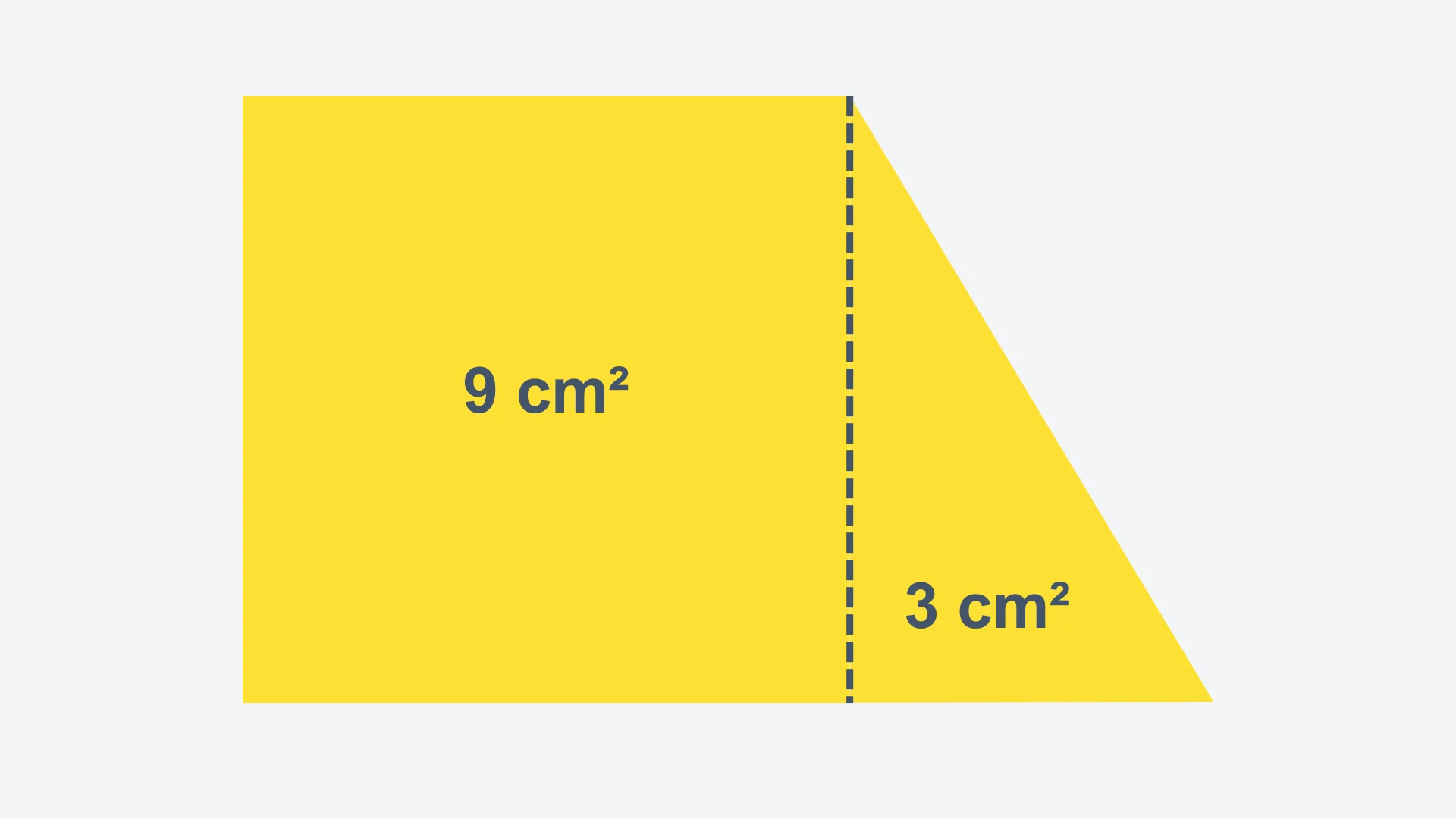
A compound shape is made of a square of , and a triangle of . What is the area of the compound shape?
Correct! 🎉 +10 pointsCorrect! 🎉 Worth 10 XPNot quite right
Both parts are already given as areas, so no formula work is needed: the two areas just have to be added.
Area of compound .
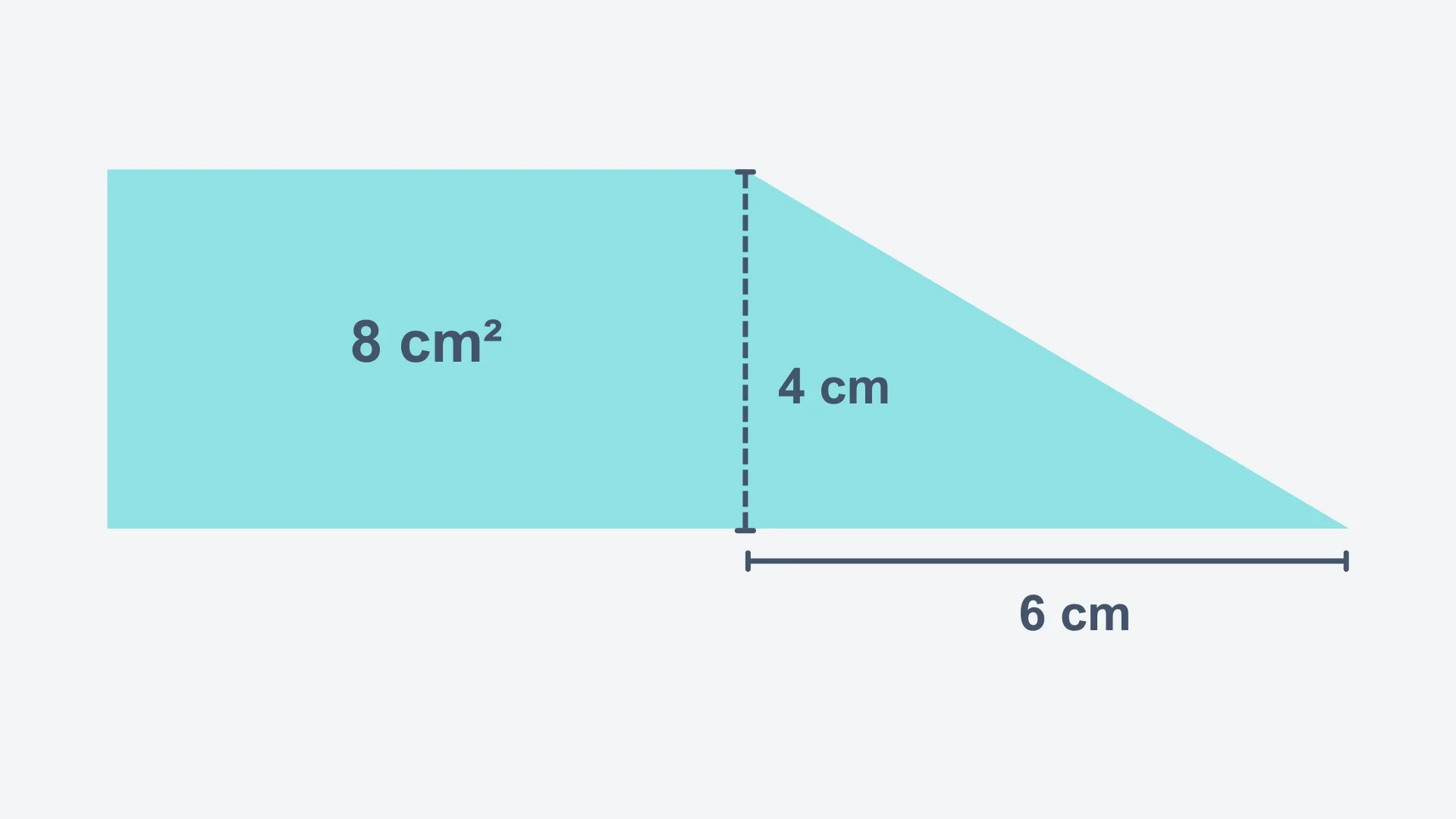
A compound shape consists of a rectangle with an area of and a triangle with a base of and a height of . What is the area of the compound shape?
Correct! 🎉 +20 pointsCorrect! 🎉 Worth 20 XPNot quite right
Area of the base × .
Total area = rectangle + .
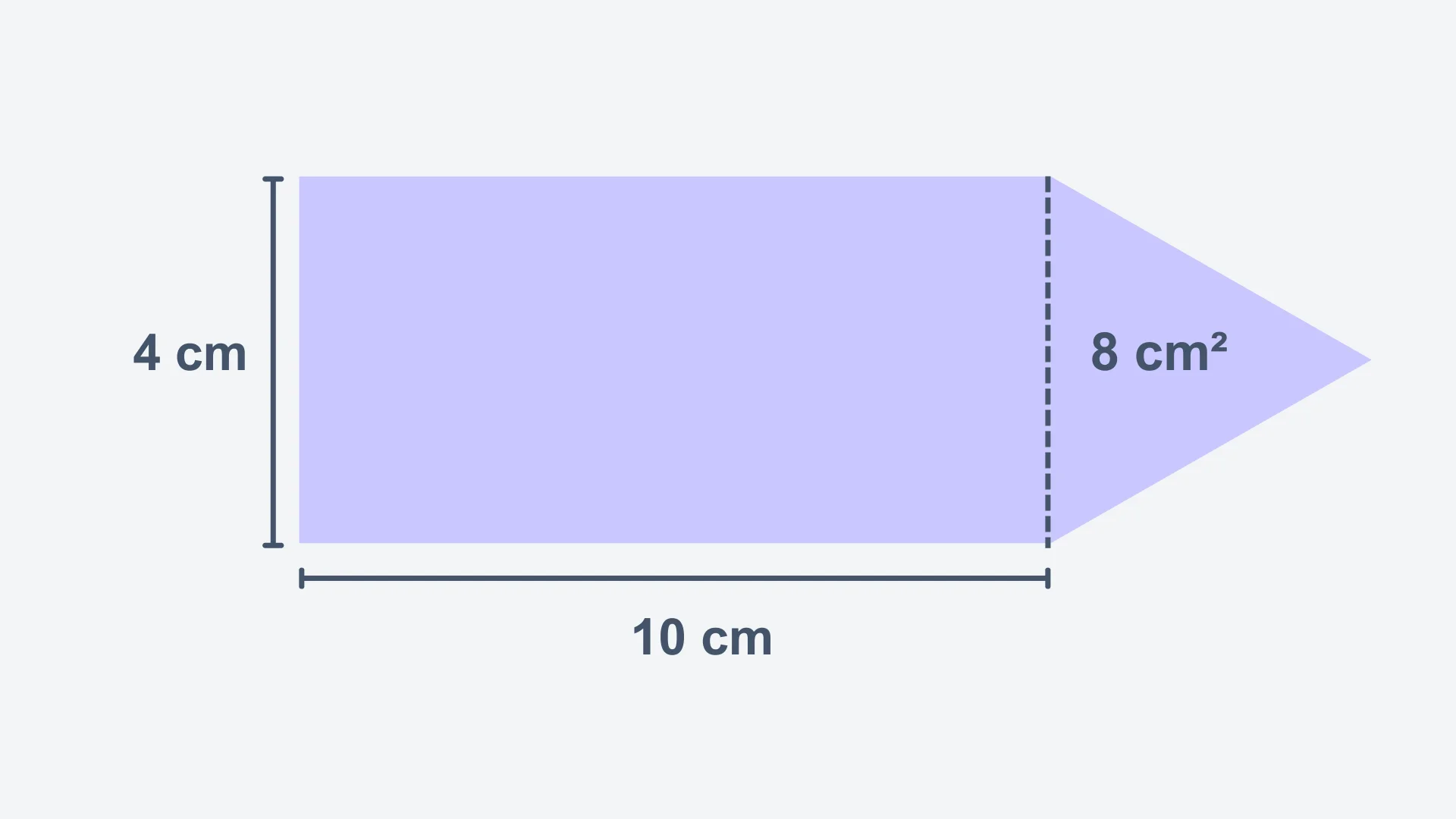
A compound shape consists of a rectangle with a length of and a width of , and a triangle with an area of . What is the area of the compound shape?
Correct! 🎉 +20 pointsCorrect! 🎉 Worth 20 XPNot quite right
Area of the rectangle = length × .
Total area = rectangle + .
A compound shape consists of a square with side length of and two triangles, each having an area of . What is the area of the compound shape?
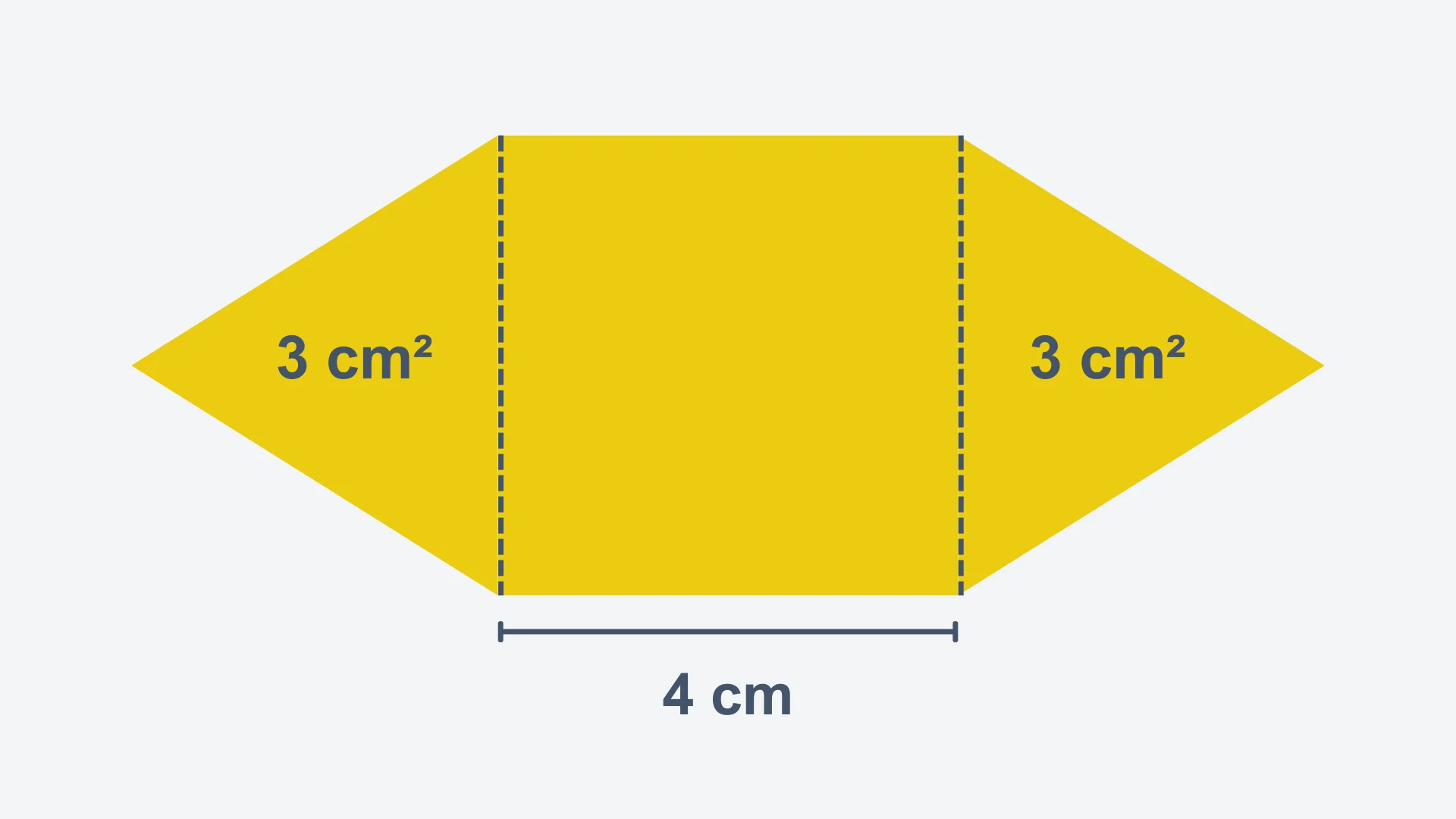
Correct! 🎉 +20 pointsCorrect! 🎉 Worth 20 XPNot quite right
Area of the square = side × .
The two triangles together give .
Total .
A compound shape consists of a rectangle with a length of and a width of , and a semicircle with a radius of . What is the area of the compound shape? Give your answer in terms of .
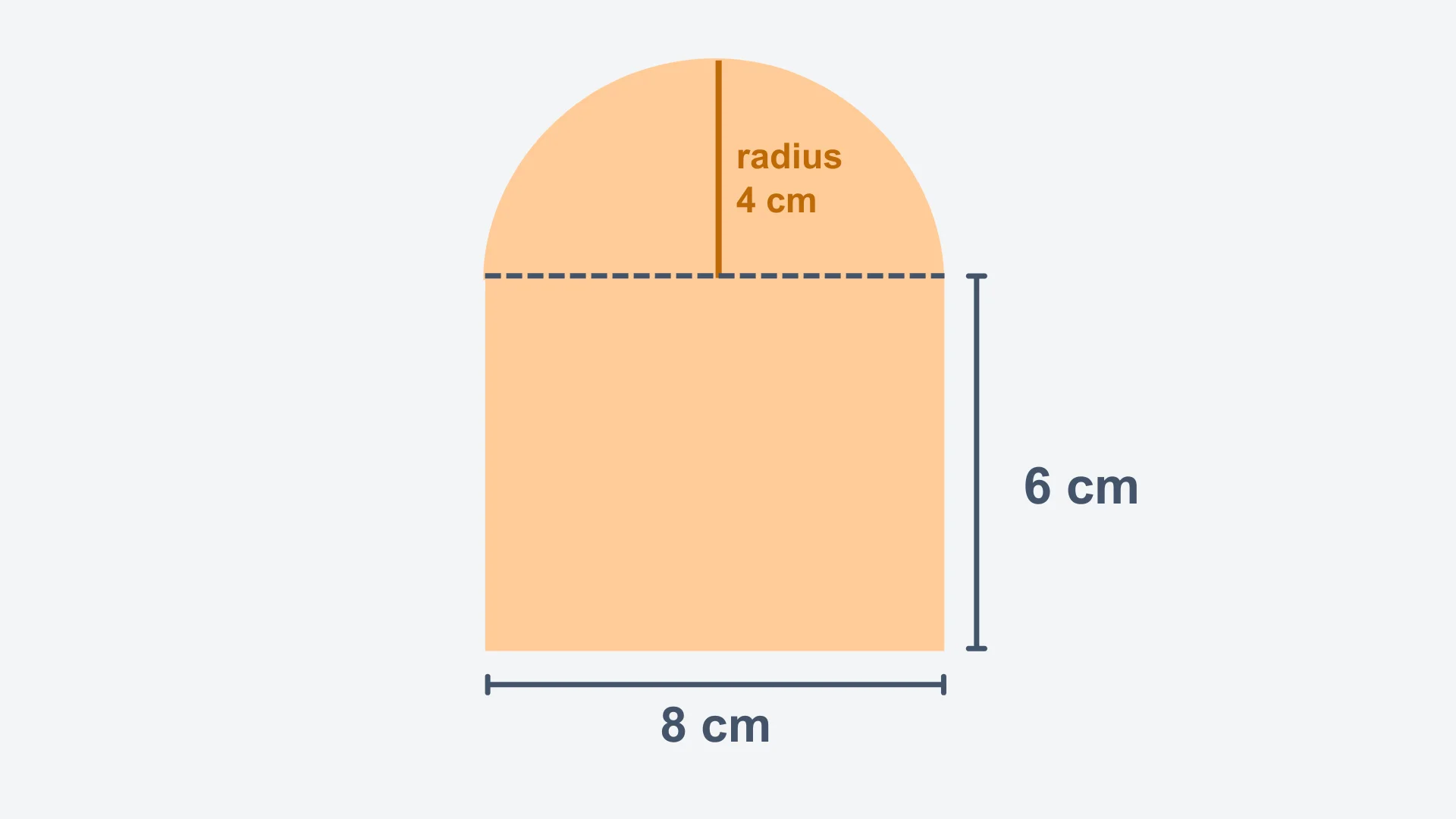
Correct! 🎉 +30 pointsCorrect! 🎉 Worth 30 XPNot quite right
The area of the rectangle is .
The semicircle is half a circle of radius , so its area is .
Adding them gives (about ).
Want to see the full working?
Interactive Activity
Practice: Area of Compound Shape
Loading interactive widget...
Frequently asked questions
The questions students bump into most on this topic
A compound shape is a shape made by joining two or more simple shapes, such as rectangles, triangles and circles, or by cutting one out of another. An L-shape is two rectangles joined; a wall with a door and a round window cut out is a compound shape too. To find its area, work with the simple shapes inside it.
Split it into simple shapes, find each area, then add them. An L-shape splits into a 5 m by 2 m rectangle, area 10 m², and a 2 m by 1 m rectangle, area 2 m²; the total is 12 m². Work out any missing lengths from the ones given before you start. American sites call these composite shapes.
No. Each simple shape has its own formula: length × width for a rectangle, ½ × base × height for a triangle, π × r² for a circle. In a shape made of a rectangle and a right-angled triangle, the rectangle is 5 × 4 = 20 m² and the triangle ½ × 4 × 3 = 6 m², so the total is 26 m². The only rule is add or subtract.
Add when shapes are joined; subtract when a shape is cut out. A 4 m by 3 m wall has a 2 m by 1 m door and a window of radius 0.5 m: the wall is 12 m², the door 2 m² and the window about 0.79 m², so the painted area is about 9.2 m². At £5 a square metre, about £46.
Yes, a whole circle or part of one. Use π × r² for the circle and halve it for a semicircle, then add or subtract like any other part. A rectangle 8 cm by 6 cm with a semicircle of radius 4 cm on top has area 48 + ½ × π × 4² = 48 + 8π cm², about 73 cm².
What's next?
Found this one hard? Go one step back first. Feeling confident? Carry on to the next lesson.