Circumference and Area of a Circle and a Sector
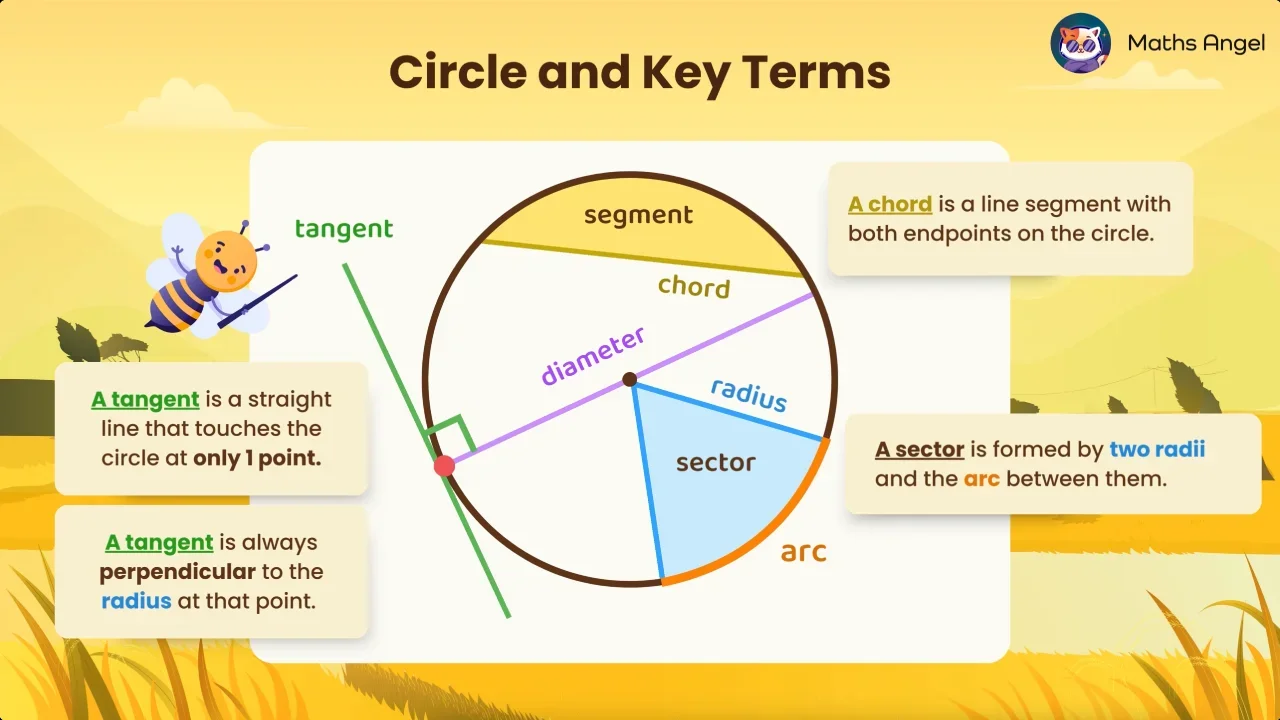
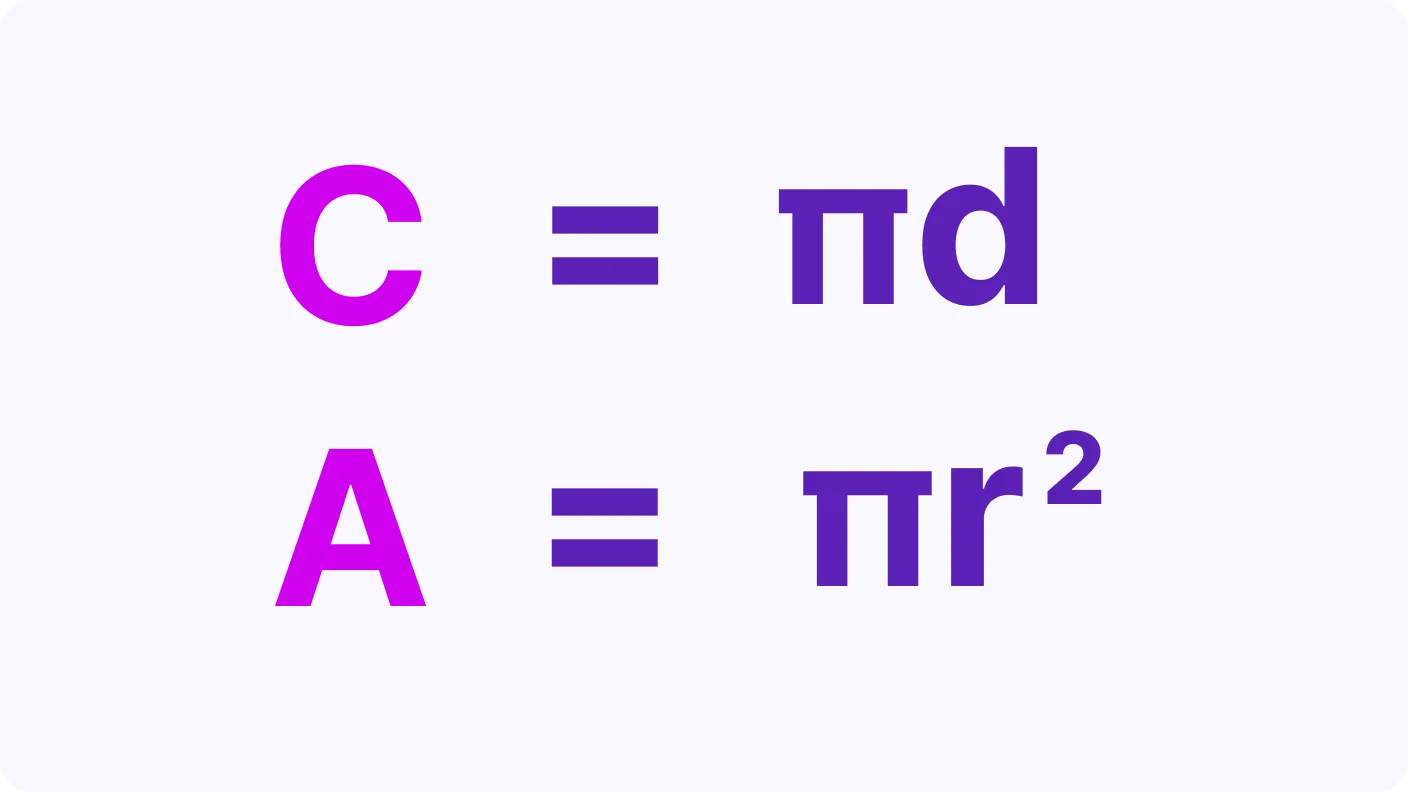
Circumference of a circle is the distance around its edge, found with C = 2πr, where r is the radius. A circle with radius 5 has C = 10π. The area of a circle is the space inside it, found with A = πr².
Video Lesson
Watch and learn the basics
🎬 Did this video explain it clearly?
Flashcards
Review key concepts visually
%20Constant%20pi.webp)
%20Circumference%20of%20a%20Circle.webp)
%20Area%20of%20a%20Circle.webp)
%20Arc%20Length%20and%20Area%20of%20Circle%20Sectors.webp)
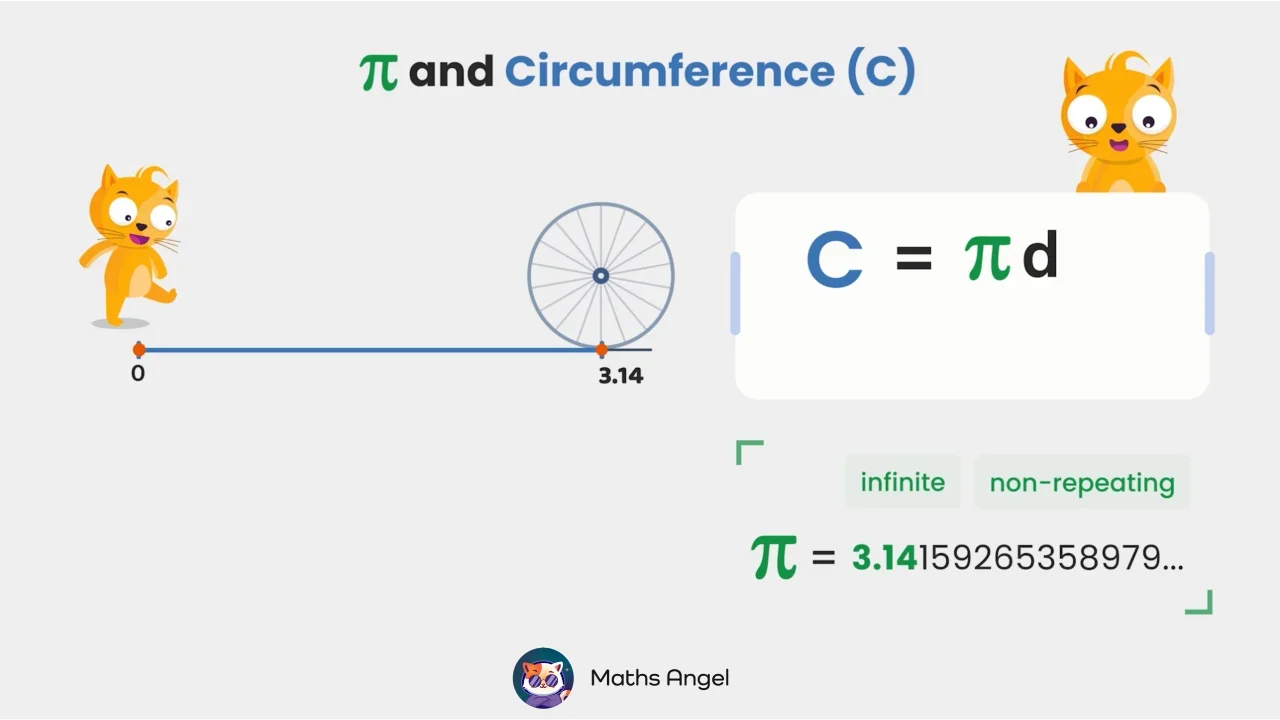
π and Circumference
- is a number used in circle formulas and is usually rounded to 3.14 in calculations.
- The formula for circumference is or .
Finding the Circumference of a Circle
- If the radius is , substitute into .
- This gives , which is approximately .
Finding the Area of a Circle
- The formula for circle area is .
- If the radius is , the area is , about .
Circle Sectors
- A sector is a fraction of a circle based on the central angle.
- Use for arc length and for area.
Practice Questions
Test your understanding
A circle has a radius of . What is the circumference of the circle? Give your answer in terms of .
Correct! 🎉 +10 pointsCorrect! 🎉 Worth 10 XPNot quite right
The formula for the circumference of a circle is .
The radius is , so .
'In terms of ' means leaving in the answer as a factor rather than working it out as a decimal, so the answer is , not .
A circle has a diameter of . What is the circumference of the circle? Give your answer in terms of .
Correct! 🎉 +10 pointsCorrect! 🎉 Worth 10 XPNot quite right
The formula for the circumference of a circle in terms of the diameter is .
The diameter is , so .
You can check this with the radius form: the radius is , and , the same answer.
The radius of a circle is . What is the area of the circle in terms of ?
Correct! 🎉 +20 pointsCorrect! 🎉 Worth 20 XPNot quite right
The formula for the area of a circle is .
The radius is , so .
Note that means , not , and that 'in terms of ' means keeping as a factor in the answer, so the area is , not .
The diameter of a circle is . What is the area of the circle in terms of ?
Correct! 🎉 +20 pointsCorrect! 🎉 Worth 20 XPNot quite right
The formula for the area of a circle is , which needs the radius, not the diameter.
The diameter is , so the radius is .
Then .
'In terms of ' means leaving in the answer as a factor, so the area is .
A sector of a circle has a central angle of and a radius of . What is the area of the sector in terms of ?
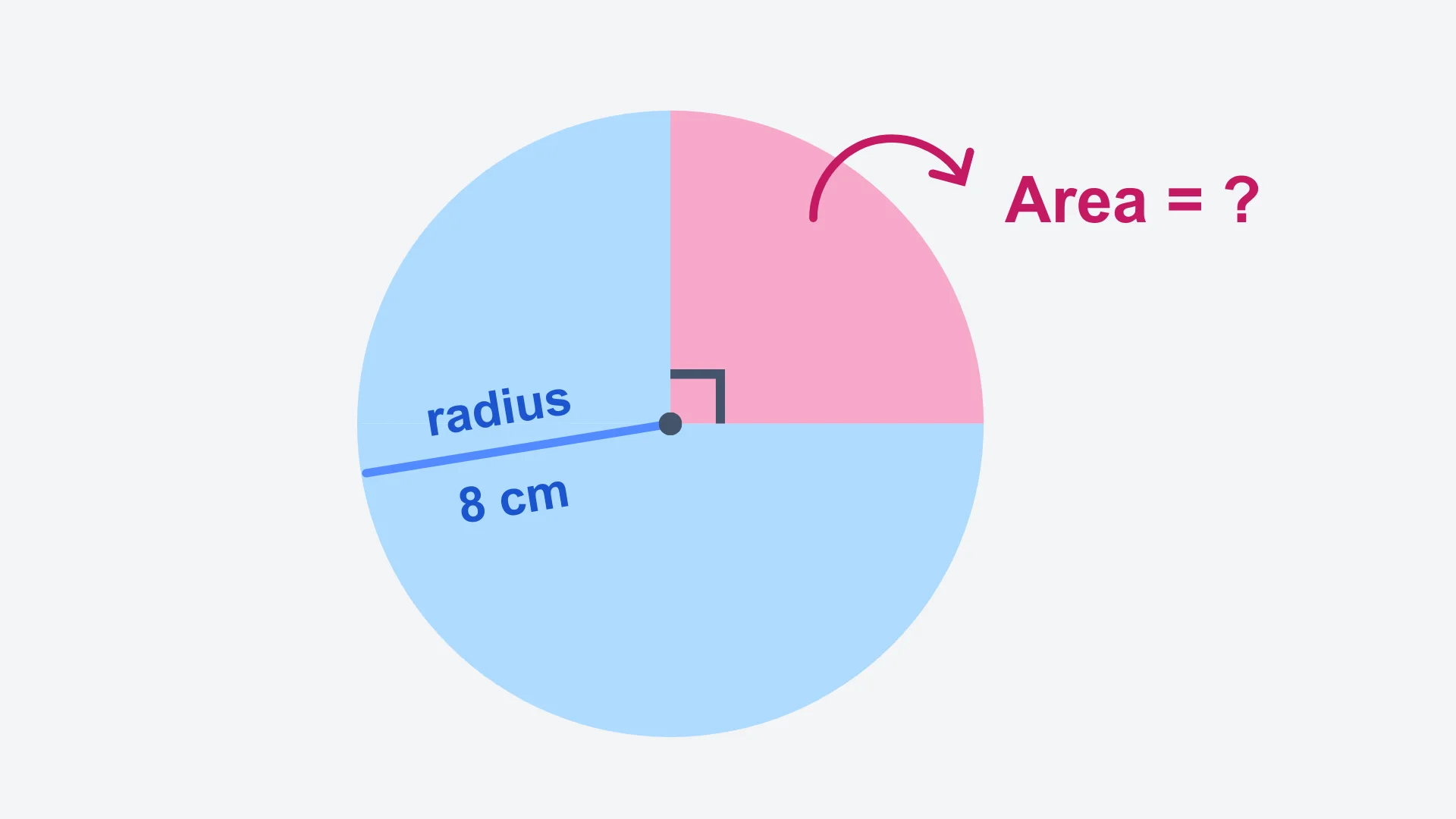
Correct! 🎉 +20 pointsCorrect! 🎉 Worth 20 XPNot quite right
The area of a sector is , where is the central angle.
Here and .
Whole circle: .
Fraction of the circle: , so the sector is a quarter of the circle.
.
A sector of a circle has a central angle of and a radius of . What is the arc length of the sector in terms of ?
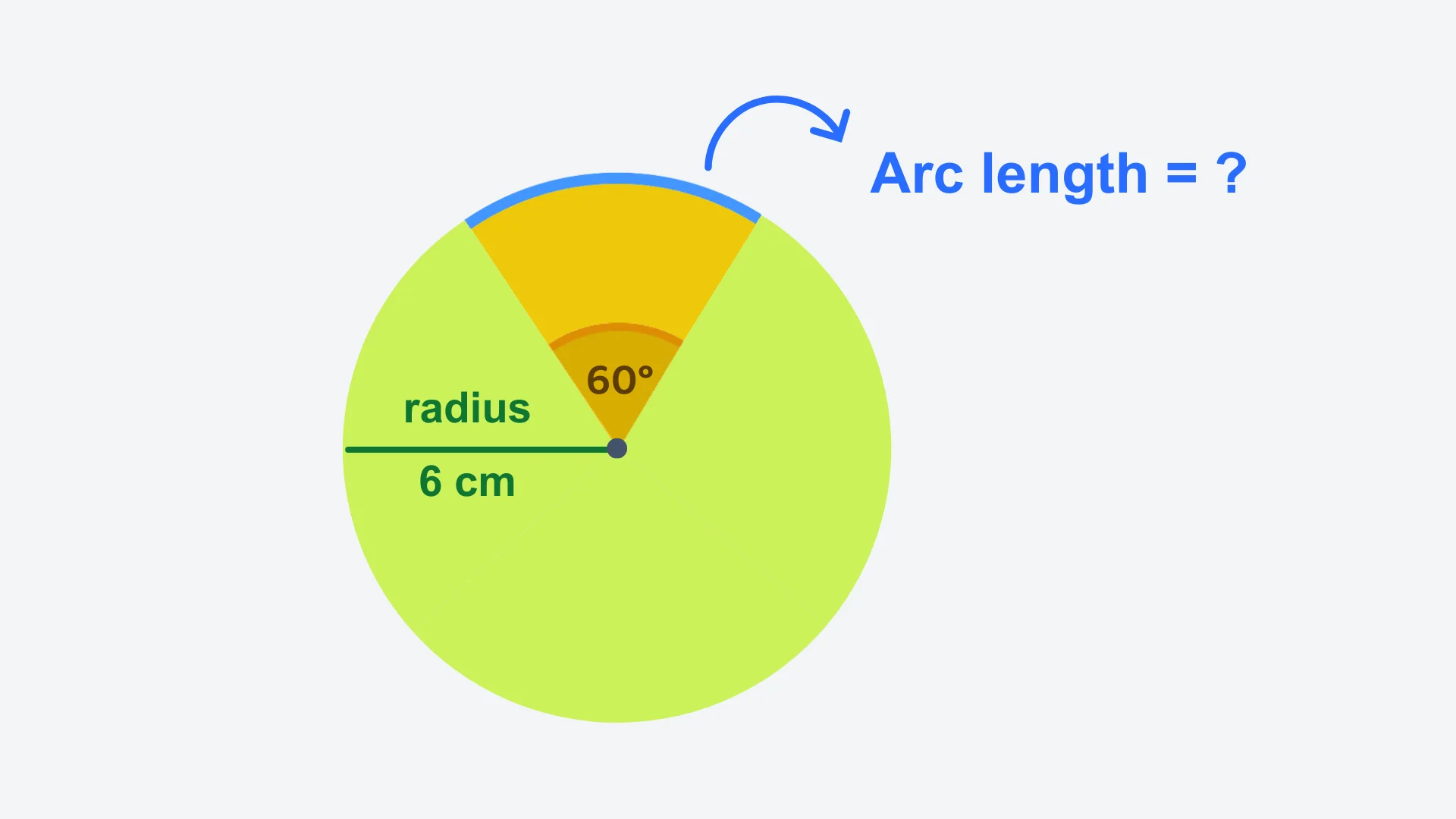
Correct! 🎉 +30 pointsCorrect! 🎉 Worth 30 XPNot quite right
The arc length of a sector is , where is the central angle.
Here and .
Whole circumference: .
Fraction of the circle: .
.
Want to see the full working?
Interactive Activity
Explore circumference, area, arc length, and sector area
Loading interactive widget...
Frequently asked questions
The questions students bump into most on this topic
The circumference is the distance around the edge of a circle, its perimeter. Roll a wheel 1 metre across through one full turn and it travels about 3.14 metres: the circumference of any circle is π times its diameter. Written as a formula, C = πd, or C = 2πr using the radius.
Multiply the diameter by π, or the radius by 2π. A circle with a radius of 5 cm has circumference 2 × π × 5 = 10π cm, about 31.4 cm; with a diameter of 8 cm it is 8π cm. To go backwards, divide the circumference by π to get the diameter, and halve that for the radius.
No. π is the number you get when you divide any circle’s circumference by its diameter, and it is the same for every circle: 3.14159…, with infinite decimal places and no repeating pattern. 3.14 is a rounded value for quick working. That is why the formula is C = πd: the circumference is always π times the diameter.
Square the radius, then multiply by π: A = πr². A circle with a diameter of 6 cm has a radius of 3 cm, so its area is π × 3² = 9π cm², about 28.26 cm². If you are given the diameter, halve it first: a diameter of 10 cm gives a radius of 5 cm and an area of 25π cm².
A sector is a slice of a circle, so take the same slice of the circle’s area. The fraction is the central angle over 360: a 60° sector is 60/360 = 1/6 of the circle, so its area is 1/6 × πr². A 90° sector of a circle with radius 8 cm is 1/4 × π × 8² = 16π cm². No new formula is needed.
Take the same fraction of the circumference: arc length = angle/360 × 2πr. For a 60° sector of a circle with radius 6 cm, that is 1/6 × 2π × 6 = 2π cm. For the perimeter of the sector, add the two radii to the arc: 2π + 6 + 6, about 18.3 cm.
What's next?
Found this one hard? Go one step back first. Feeling confident? Carry on to the next lesson.