Volume of Prisms and Cylinders
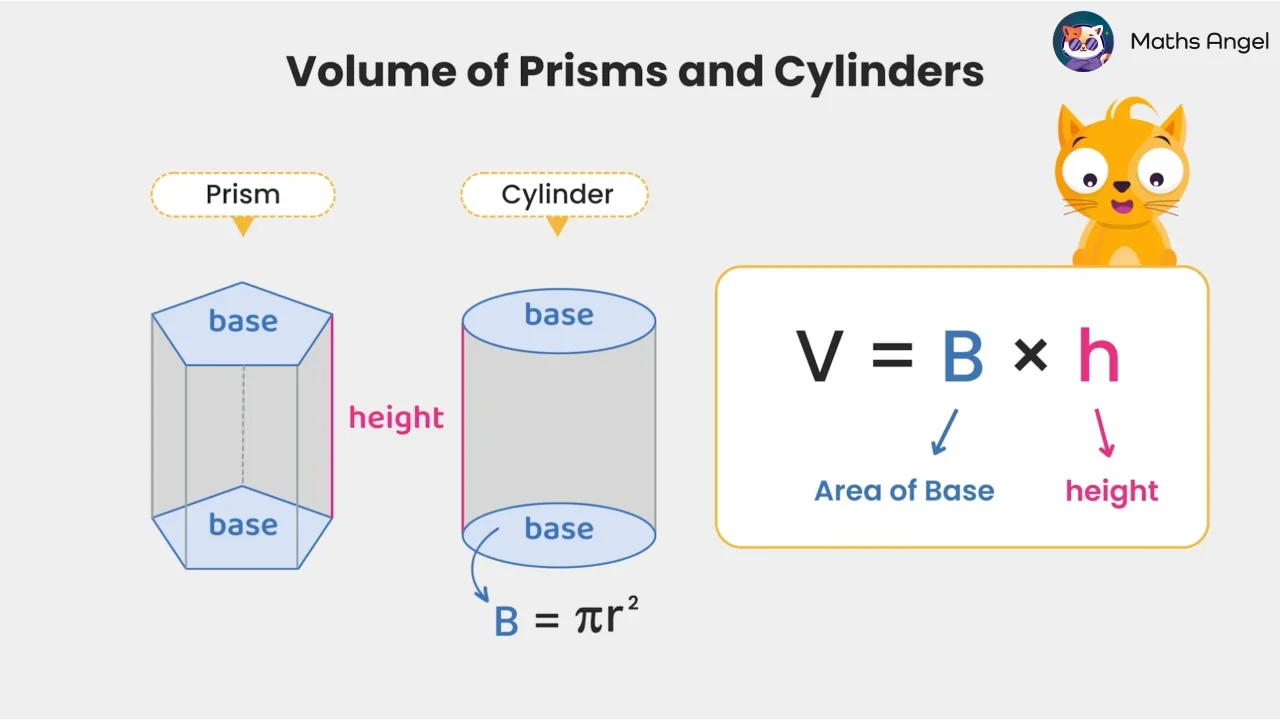
Volume of prisms and cylinders equals base area × height. Find the flat base area, then multiply by the height; a 20 cm² base 3 cm tall gives 60 cm³. A cylinder has a circular base of area πr², so V = πr²h.
Video Lesson
Watch and learn the basics
🎬 Did this video explain it clearly?
Flashcards
Review key concepts visually
%20Volume%20of%20Prisms%20and%20Cylinders.webp)
%20Volume%20of%20Prisms.webp)
%20Volume%20of%20Cylinders.webp)
Volume of Prisms and Cylinders
- The volume of any prism or cylinder is
- B is the area of the base, and h is the perpendicular height
Finding the Volume of a Prism
- First, find the area of the base (e.g., area of the triangle)
- Then multiply this area by the height of the prism (i.e., the distance between the two parallel faces)
Finding the Volume of a Cylinder
- The base of a cylinder is a circle, so
- Multiply B by the height of the cylinder to get the volume:
Practice Questions
Test your understanding
A prism has a cross-sectional area of and a height of . Which formula gives its volume?
Correct! 🎉 +10 pointsCorrect! 🎉 Worth 10 XPNot quite right
The volume of any prism is the area of its cross-section (the base), B, multiplied by the height (or length), h. So .
There is no halving or thirding: the belongs to the area of a triangle, and the belongs to the volume of a pyramid or cone.
What is the volume of a prism with a base area of and a height of ?
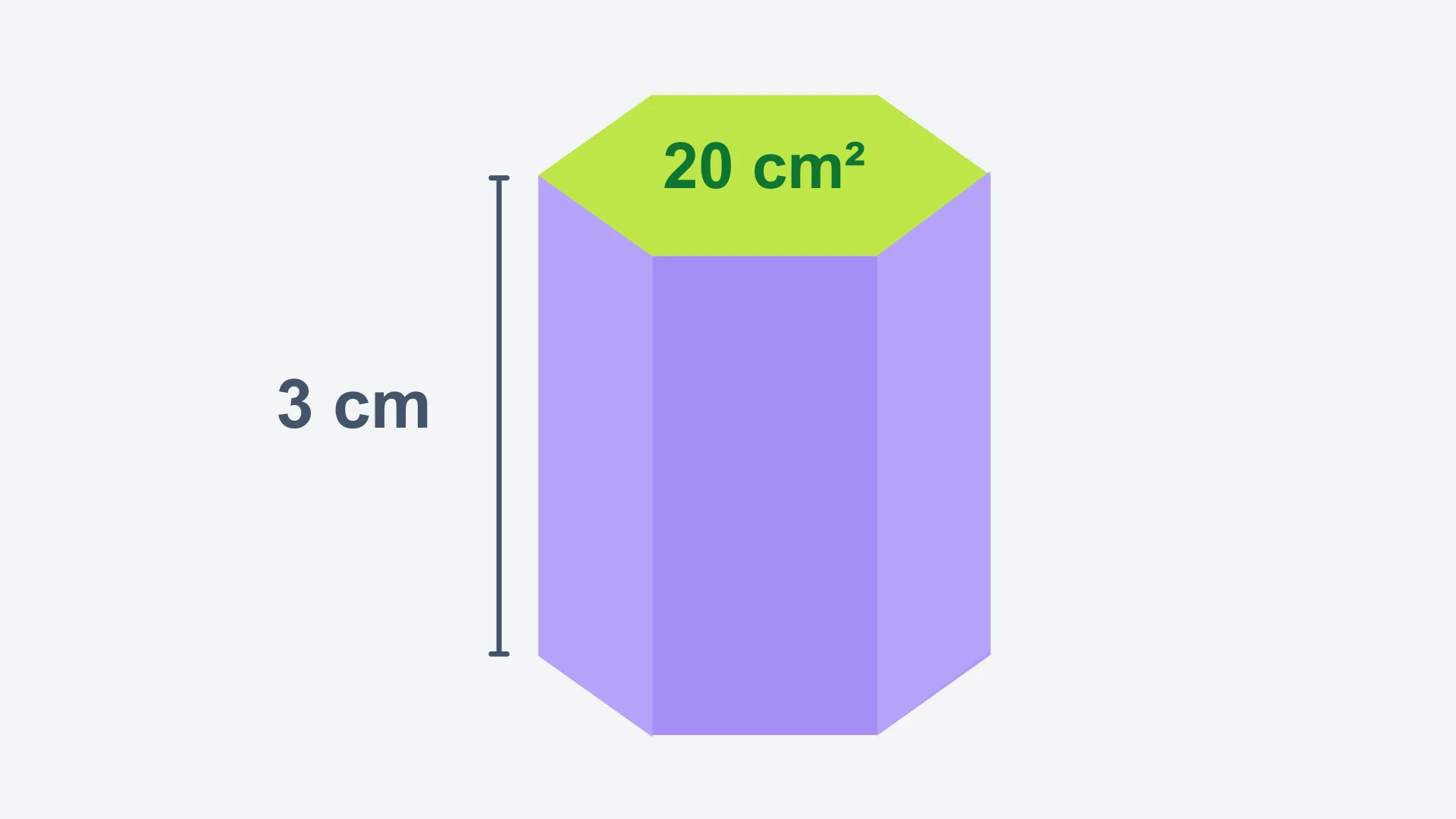
Correct! 🎉 +10 pointsCorrect! 🎉 Worth 10 XPNot quite right
The formula for the volume of a prism is , where B is the area of the cross-section (the base).
Here and , so .
The is already an area, so there is nothing to halve and nothing to divide by 3.
What is the volume of a cylinder with a radius of and a height of ?
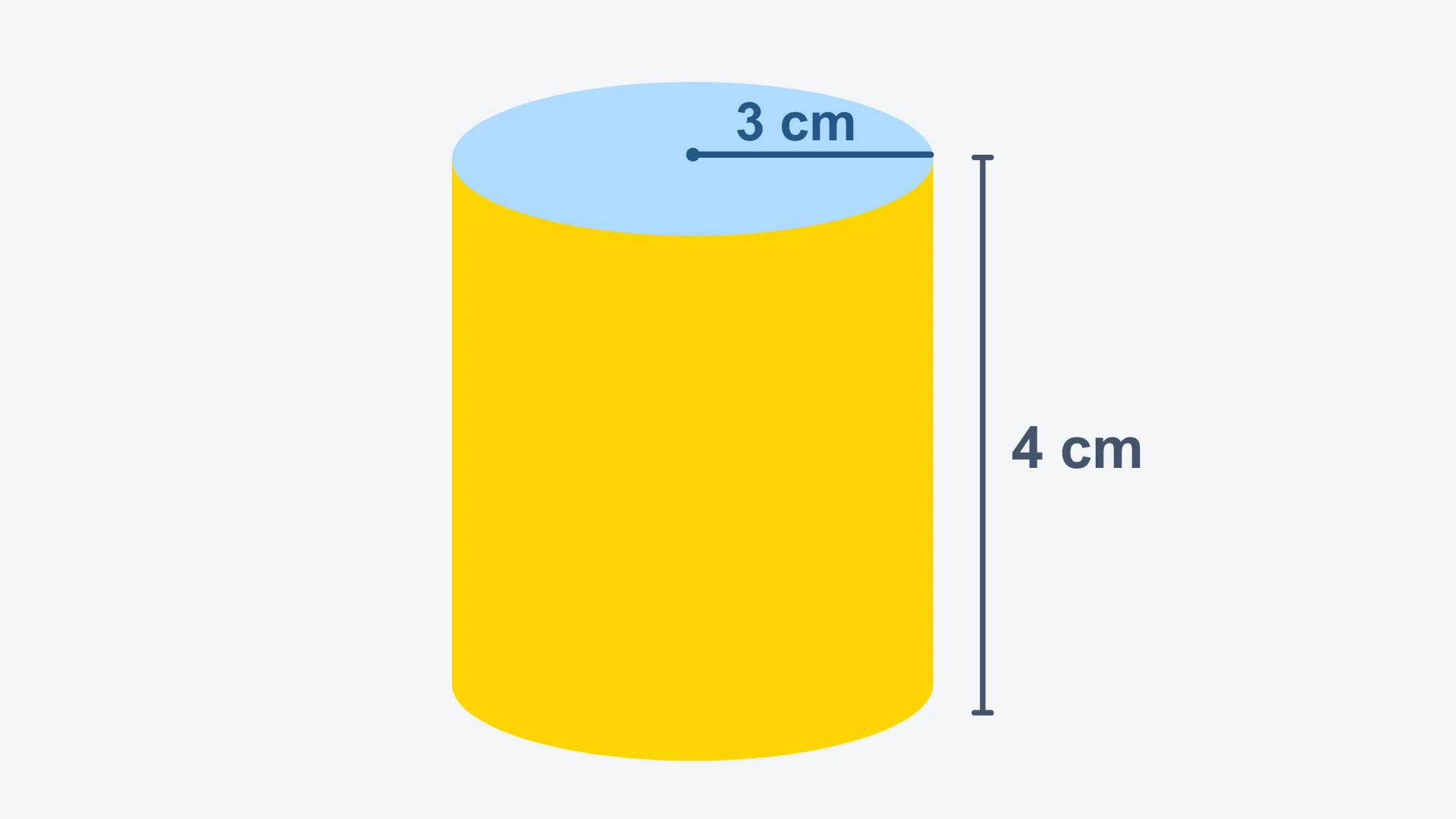
Correct! 🎉 +20 pointsCorrect! 🎉 Worth 20 XPNot quite right
The formula for the volume of a cylinder is .
Square the radius first: . Then (about ).
What is the volume of a cylinder with a radius of and a height of ?
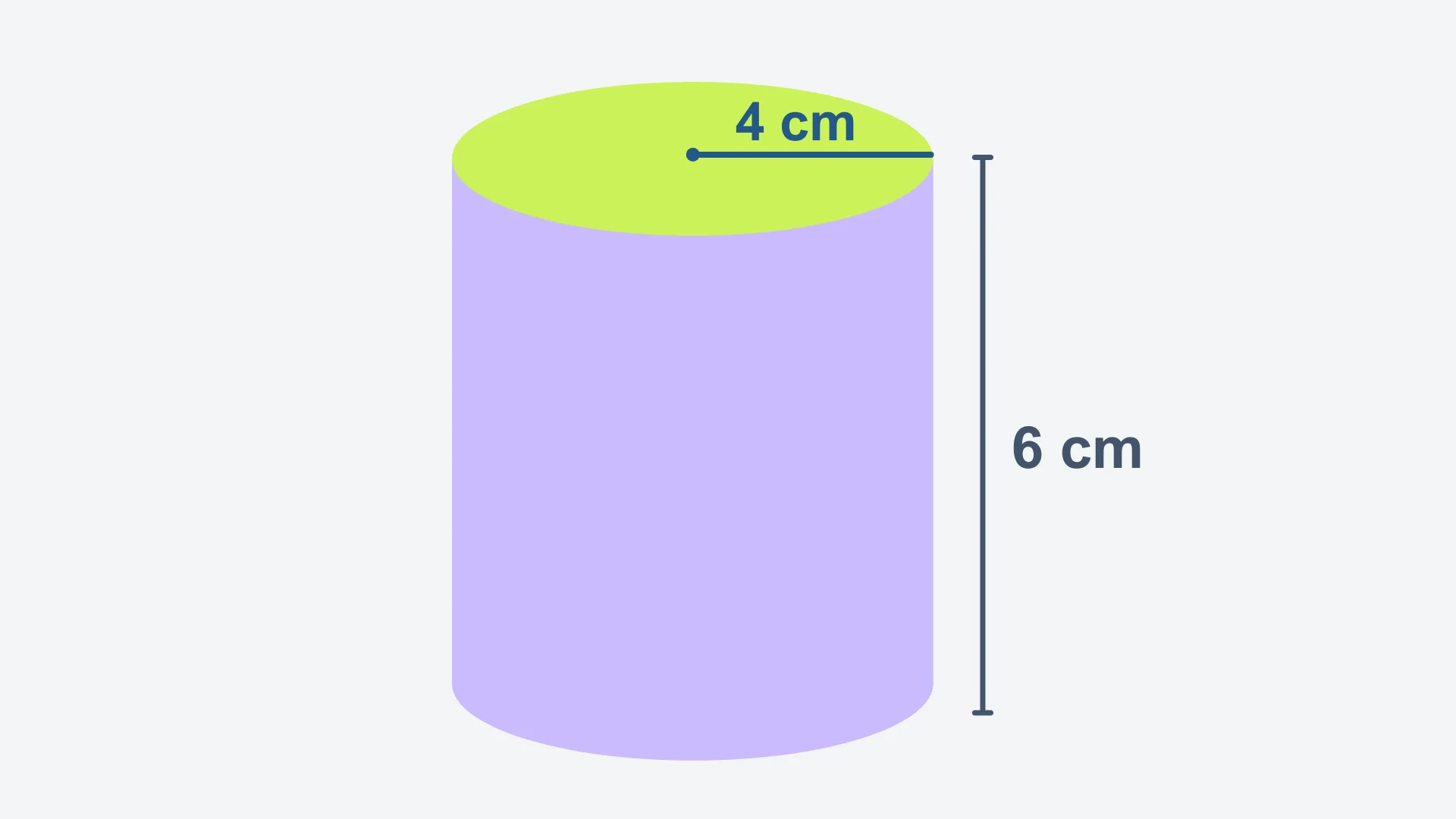
Correct! 🎉 +20 pointsCorrect! 🎉 Worth 20 XPNot quite right
The formula for the volume of a cylinder is .
Square the radius first: . Then (about ).
What is the volume of a cylinder with a diameter of and a height of ?
Correct! 🎉 +20 pointsCorrect! 🎉 Worth 20 XPNot quite right
The formula for the volume of a cylinder is , and it uses the radius, not the diameter.
The diameter is , so cm. Then (about ).
A prism has a triangular base with a base length of and a height of . The height of the prism is . What is the volume of the prism?
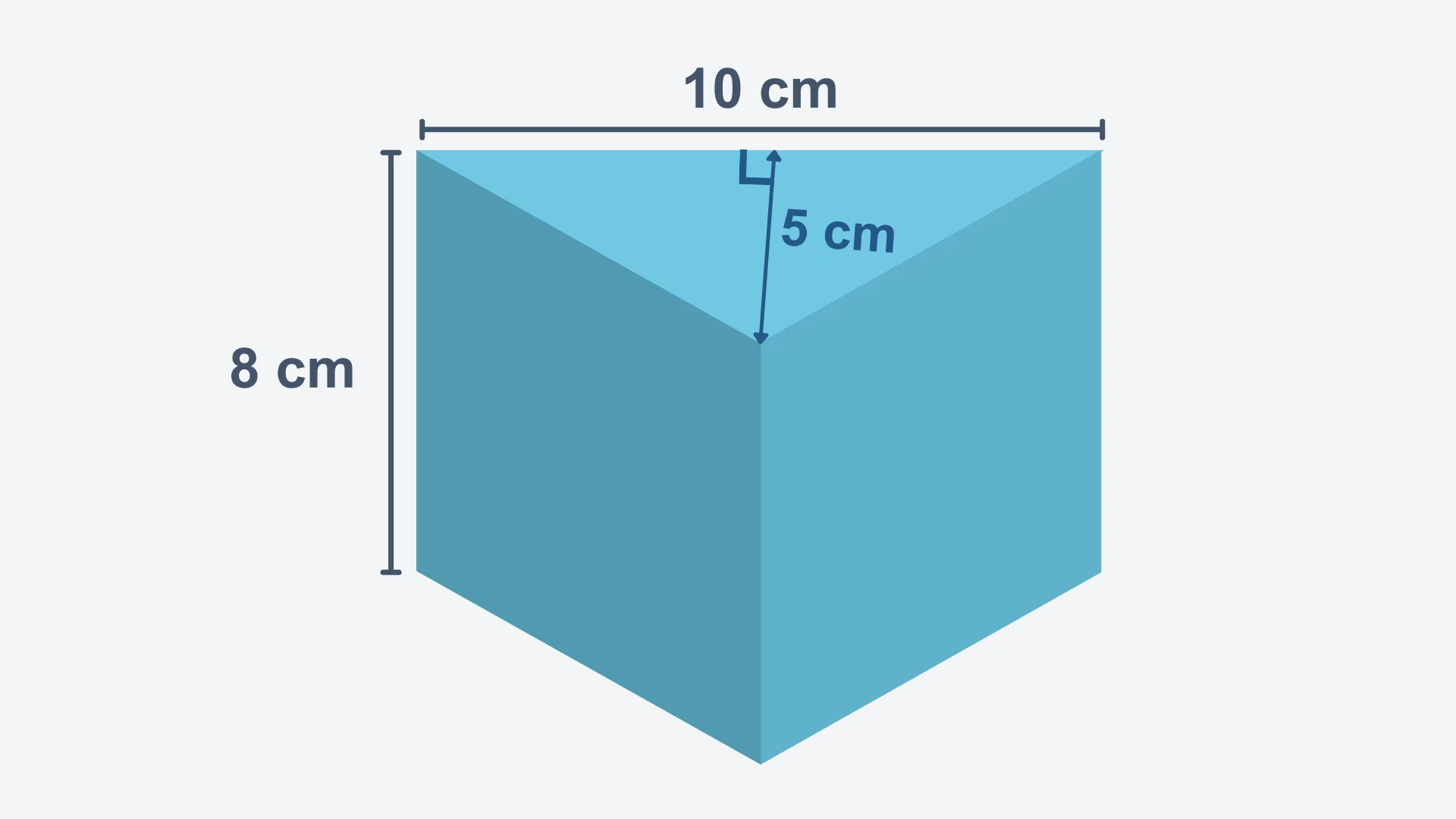
Correct! 🎉 +30 pointsCorrect! 🎉 Worth 30 XPNot quite right
First find the area of the triangular cross-section: .
Then multiply by the height of the prism: .
The halving happens once only, when finding the area of the triangle, not again at the end.
Want to see the full working?
Interactive Activity
Explore volume of prisms and cylinders by adjusting dimensions
Loading interactive widget...
Frequently asked questions
The questions students bump into most on this topic
A prism is a solid with two identical, parallel bases joined by edges of equal length; that shared length is its height, the distance between the bases. A triangular prism has triangles at each end. A cylinder is not strictly a prism, because its base is a circle rather than a polygon, but it has the same two-identical-ends shape, so its volume works the same way.
Multiply the area of the base by the height: V = B × h. First find the area of one of the identical end faces, then multiply by the distance between them. A prism with a base area of 20 cm² and a height of 3 cm has a volume of 20 × 3 = 60 cm³. Volume is always in cubic units.
Find the area of the triangular end with ½ × base × height, then multiply by the prism’s length. The video’s triangle has area 6 cm² and the prism is 5 cm long, so the volume is 6 × 5 = 30 cm³. A triangle of base 10 cm and height 5 cm has area 25 cm²; on an 8 cm prism that is 200 cm³.
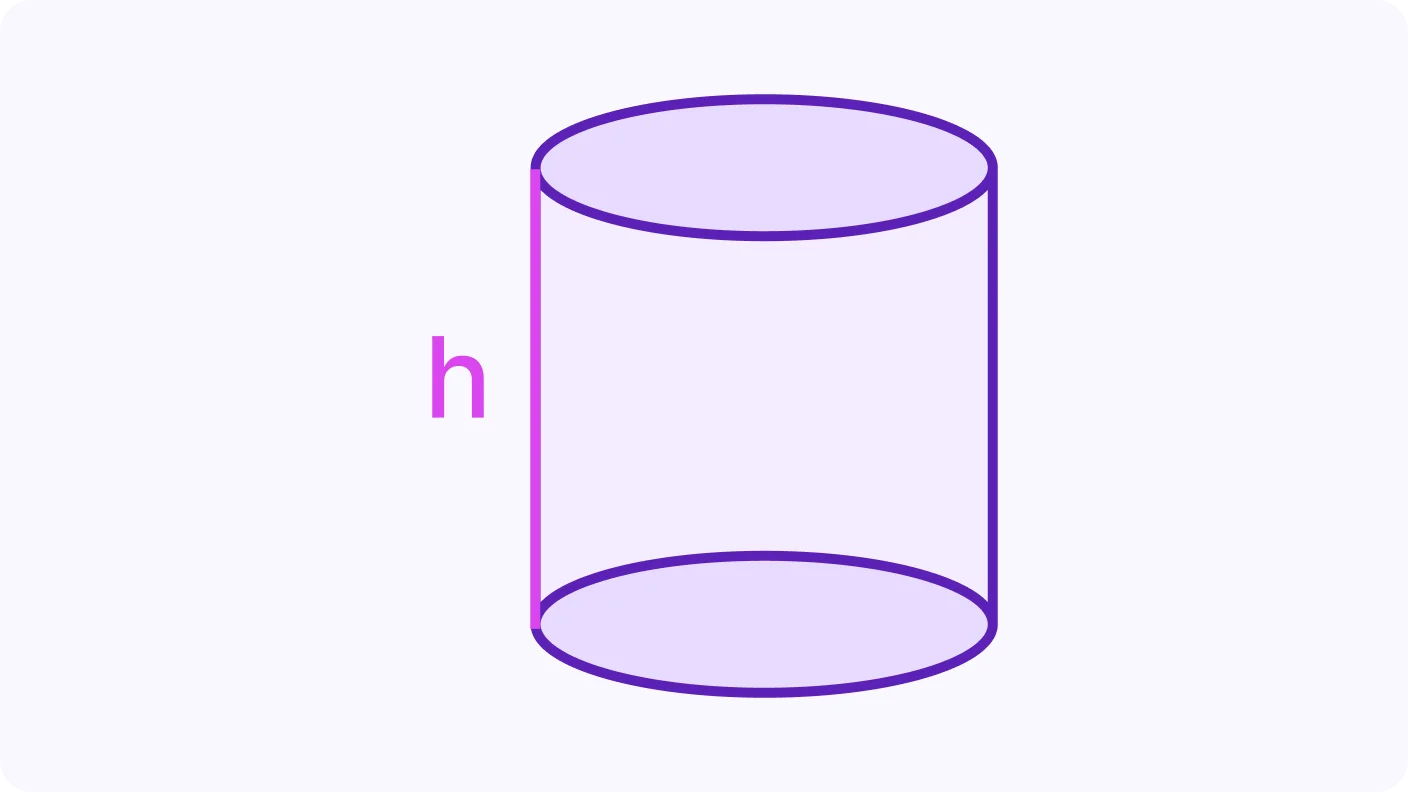
The base is a circle, so multiply its area by the height: V = πr²h. A can with a radius of 2 cm and a height of 5 cm has volume π × 2² × 5 = 20π cm³, about 62.8 cm³ using 3.14 for π. A cylinder with radius 3 cm and height 4 cm has volume 36π cm³. Leave the answer in terms of π unless asked for a decimal.
Halve the diameter to get the radius first, then use V = πr²h. A cylinder with a diameter of 10 cm has a radius of 5 cm, so with a height of 5 cm its volume is π × 5² × 5 = 125π cm³. To turn cubic centimetres into litres, divide by 1,000: 125π cm³ is about 393 cm³, or 0.39 litres.
What's next?
Found this one hard? Go one step back first. Feeling confident? Carry on to the next lesson.