Trigonometry: Sine, Cosine, Tangent
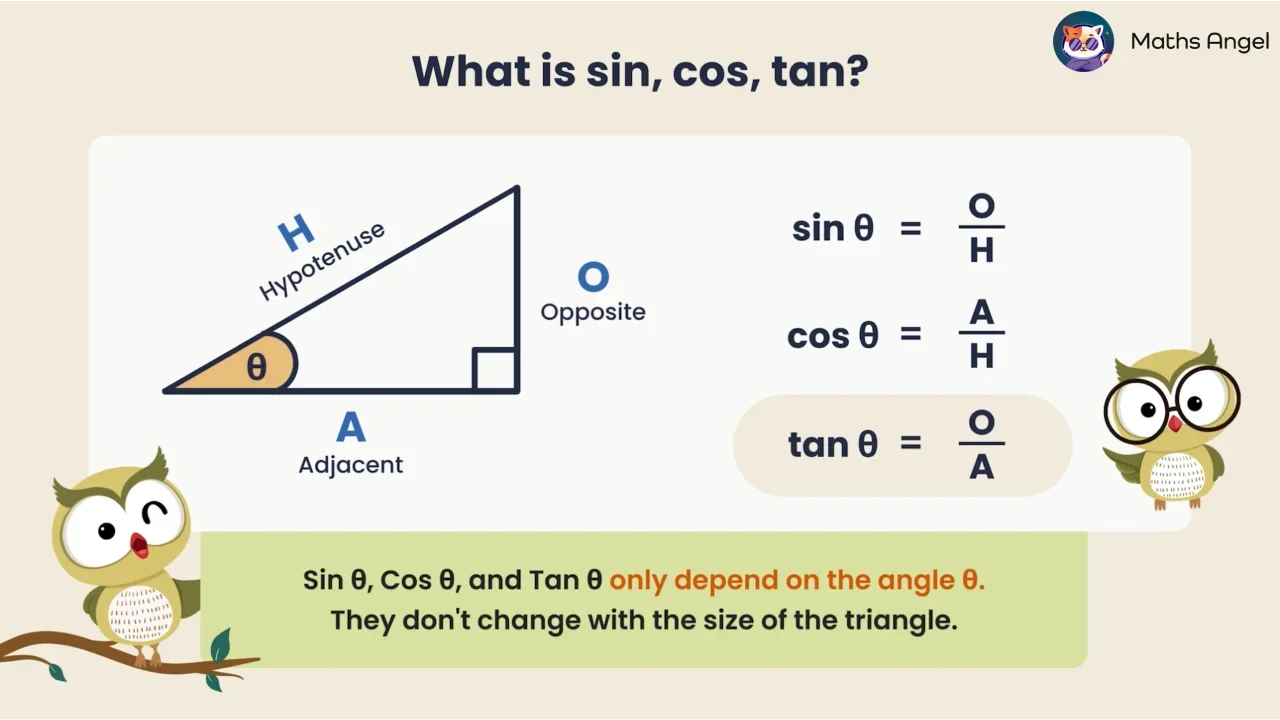
Trigonometry uses sine, cosine and tangent to find missing sides and angles in right-angled triangles. SOH CAH TOA picks the right ratio, such as sin θ = opposite ÷ hypotenuse. For a given angle the ratio never changes.
Video Lesson
Watch and learn the basics
🎬 Did this video explain it clearly?
Flashcards
Review key concepts visually
%20Trigonometry%2C%20Sine%2C%20Cosine%2C%20Tangent.webp)
%20Trigonometry%2C%20Sine%20for%20Finding%20Side.webp)
%20Trigonometry%2C%20Tangent%20for%20Finding%20Side.webp)
%20Trigonometry%2C%20Cosine%20for%20Finding%20Angle.webp)
%20Trigonometry%2C%20Common%20values%20Sine%2C%20Cosine%2C%20Tangent.webp)
What Are sin, cos, and tan?
- These are ratios used in right-angled triangles
- Once the angle is given, the ratios are fixed
Using sin, cos, and tan
- SOH:
- CAH:
- TOA:
Finding a Missing Side
- Choose sin, cos, or tan based on the sides you know and the side you want
- Substitute the values and rearrange to find the unknown side
Finding a Missing Angle
- Write the correct trig ratio first (sin, cos, or tan)
- Use the inverse function on the calculator (, , or )
Common Trigonometric Values
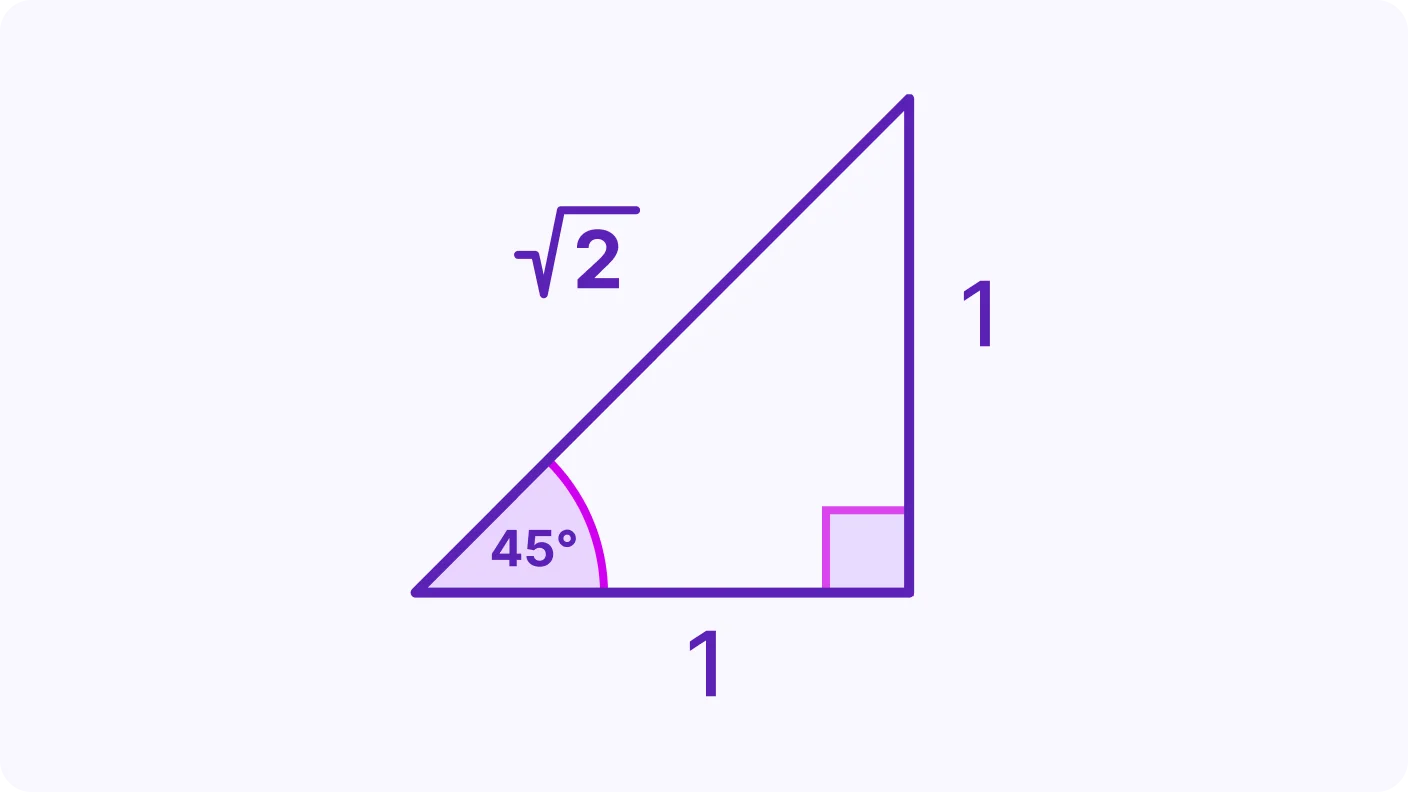
- You should know the exact values for , , and without a calculator
- Having these triangles in your head helps you see the ratios instantly
Practice Questions
Test your understanding
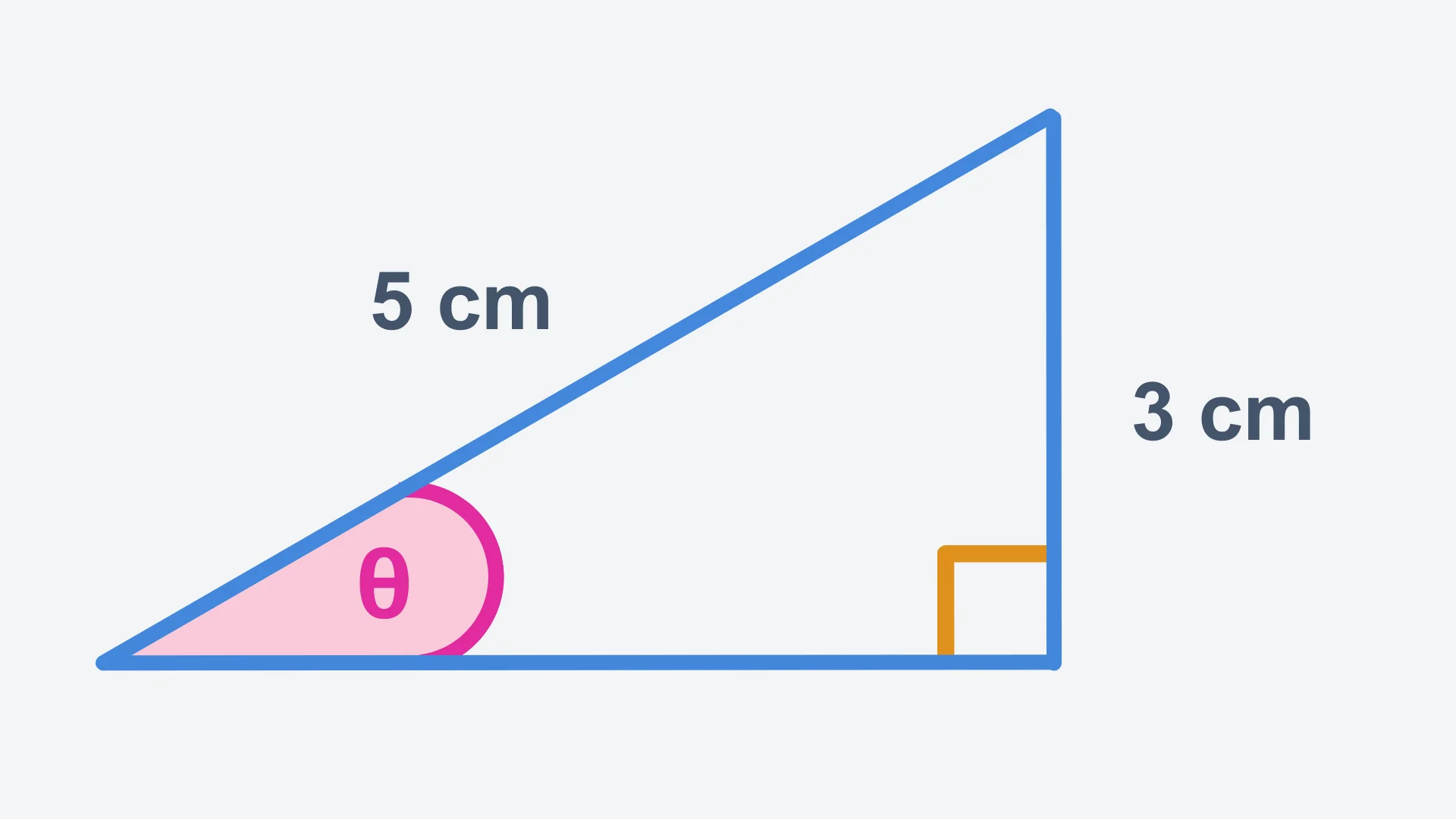
In the right-angled triangle, the side opposite the angle is and the hypotenuse is . What is the sine of the angle? Give your answer as a fraction in its simplest form.
Correct! 🎉 +10 pointsCorrect! 🎉 Worth 10 XPNot quite right
The sine formula is .
The hypotenuse is the side opposite the right angle, and the side opposite is .
So , which is already in its simplest form (and equals as a decimal).
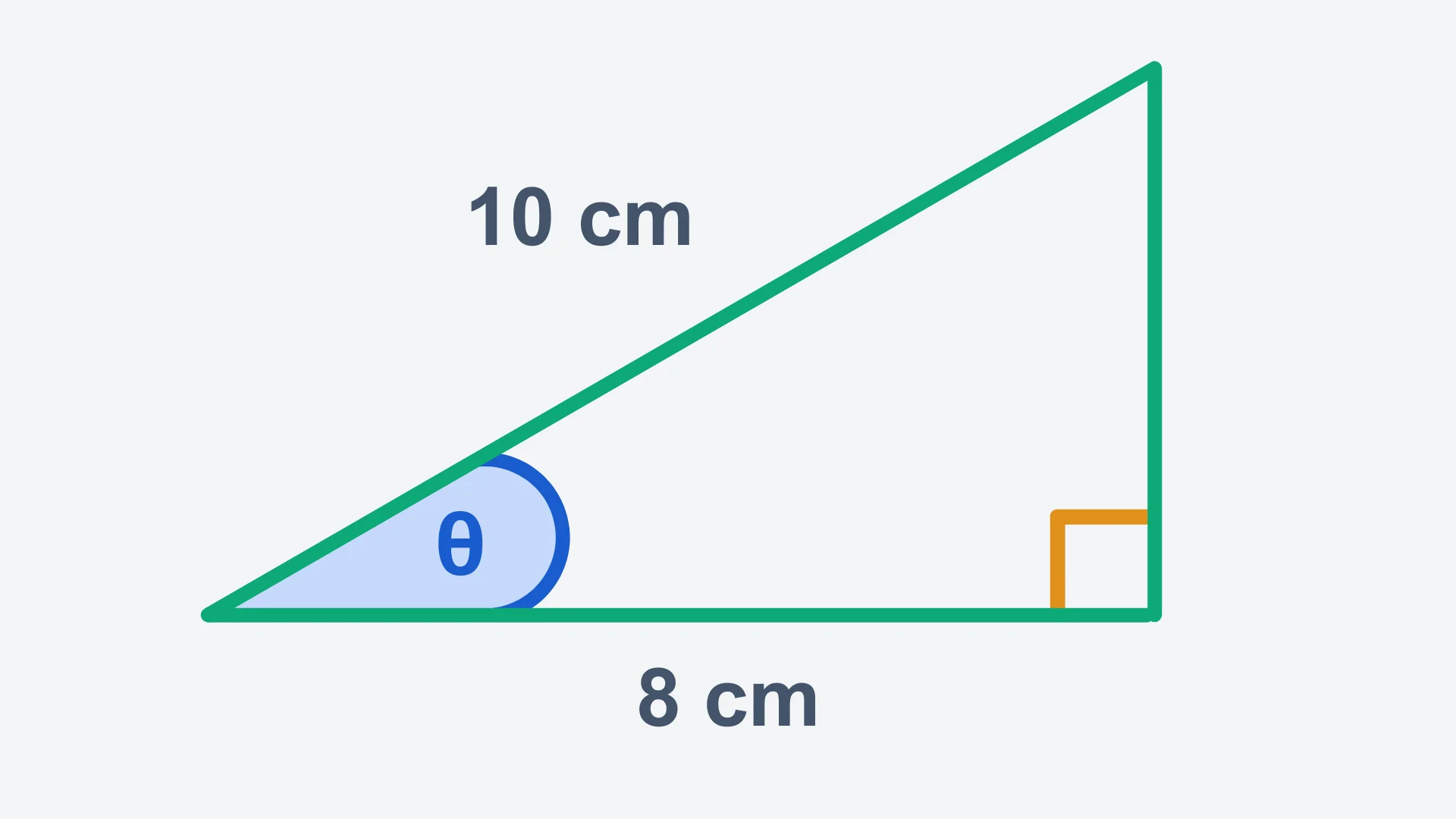
In the right-angled triangle, the side adjacent to the angle is and the hypotenuse is . What is the cosine of the angle? Give your answer as a fraction in its simplest form.
Correct! 🎉 +10 pointsCorrect! 🎉 Worth 10 XPNot quite right
The cosine formula is .
The adjacent side is the base that runs from to the right angle, and the hypotenuse is the side opposite the right angle.
So in its simplest form (equal to ).
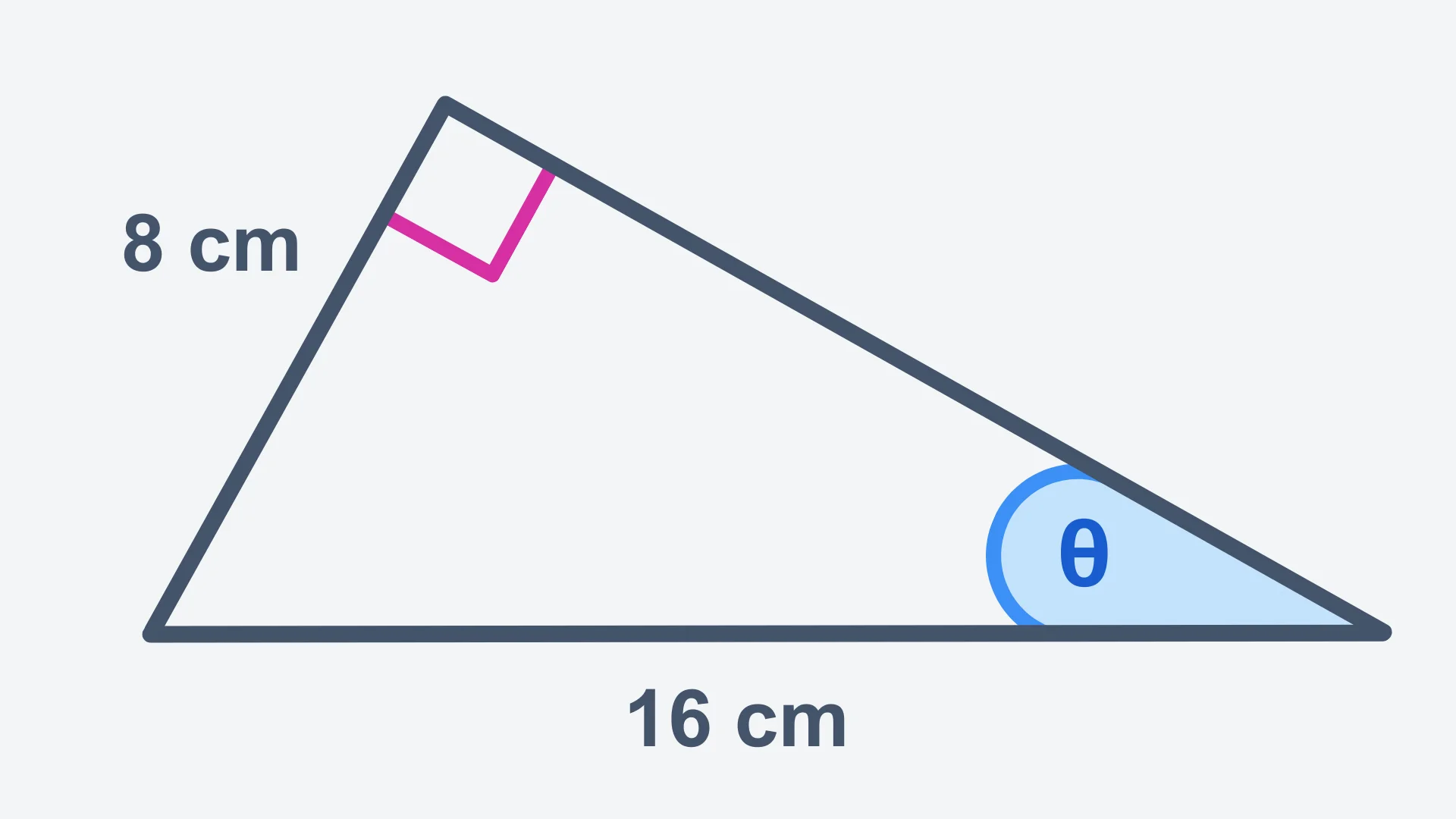
What is the sine of the angle marked in the diagram? Give your answer in its simplest form.
Correct! 🎉 +20 pointsCorrect! 🎉 Worth 20 XPNot quite right
The sine formula is .
The right angle is at the top vertex, so the hypotenuse is the base opposite it. The side is the one opposite .
So in its simplest form.
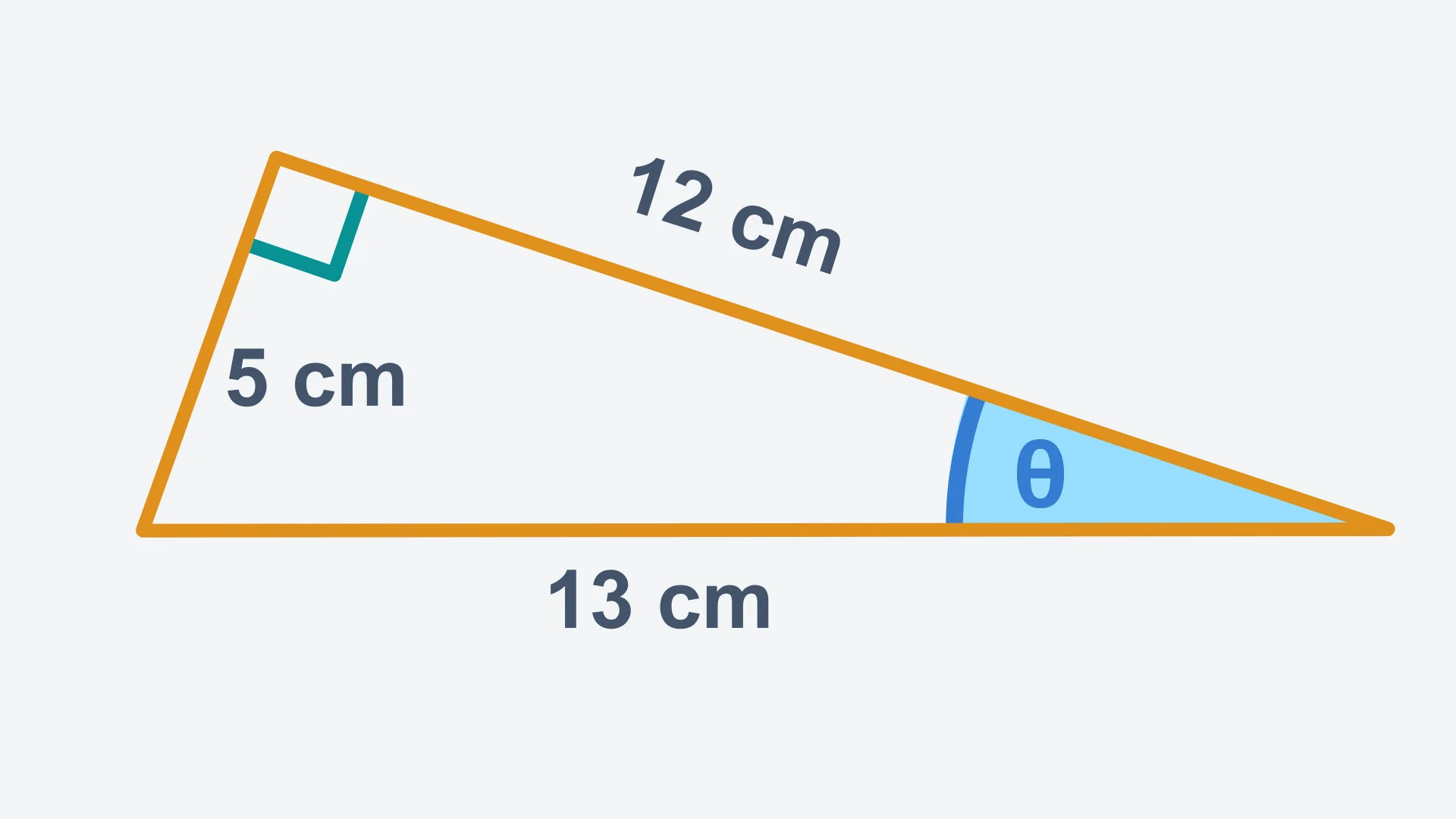
What is the tangent of the angle marked in the diagram? Give your answer as a fraction in its simplest form.
Correct! 🎉 +20 pointsCorrect! 🎉 Worth 20 XPNot quite right
The tangent formula is .
The right angle is at the top left, so the hypotenuse is the base - and the hypotenuse is not used for tangent.
The side opposite is and the side adjacent to is , so , which is already in its simplest form.
What is the cosine of the angle marked in the diagram? Give your answer as a fraction in its simplest form.
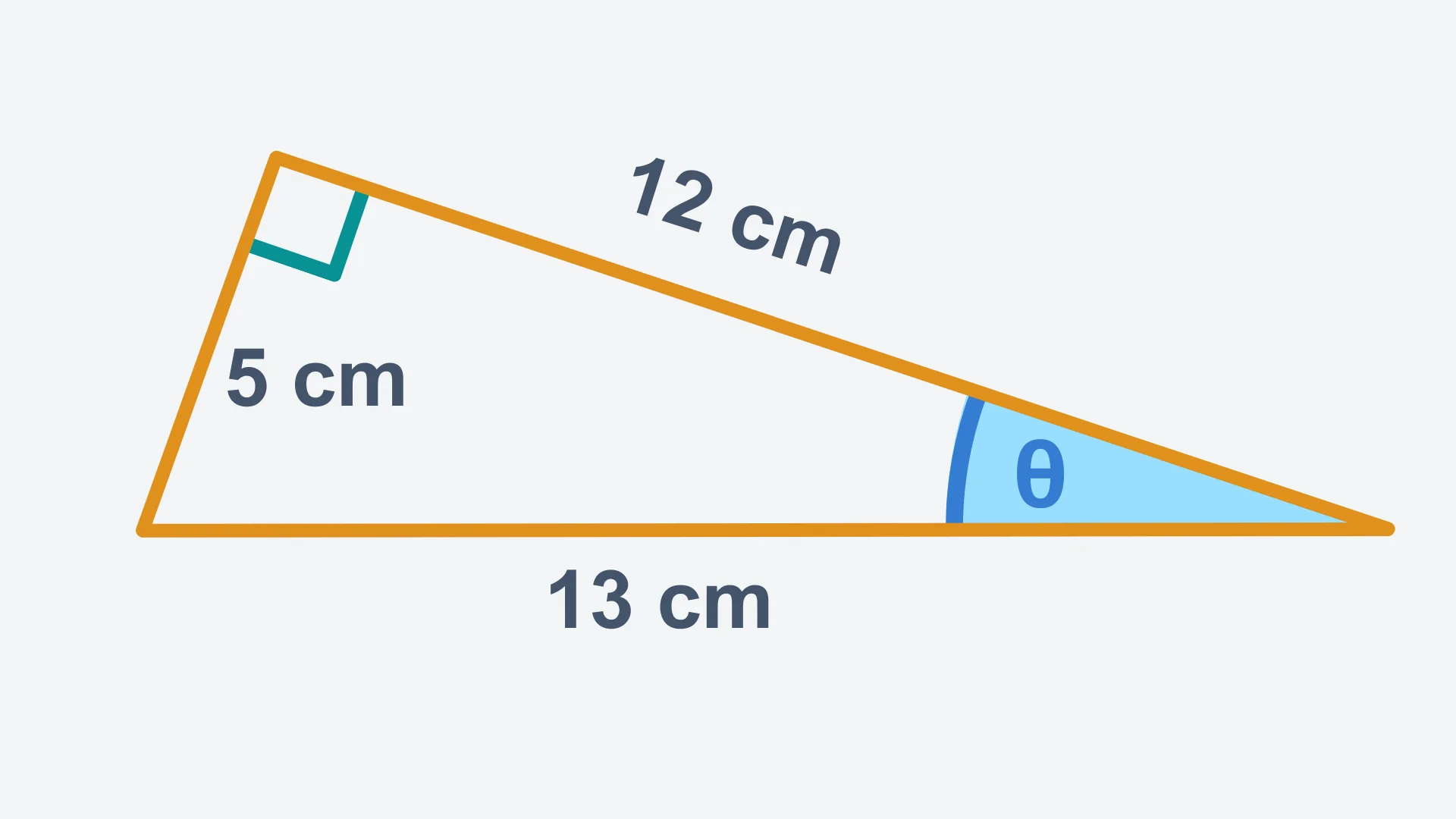
Correct! 🎉 +20 pointsCorrect! 🎉 Worth 20 XPNot quite right
The cosine formula is .
The right angle is at the top left, so the hypotenuse is the side opposite it. The side adjacent to (the one running from to the right angle) is .
So , which is already in its simplest form.
Find the angle in the right-angled triangle.
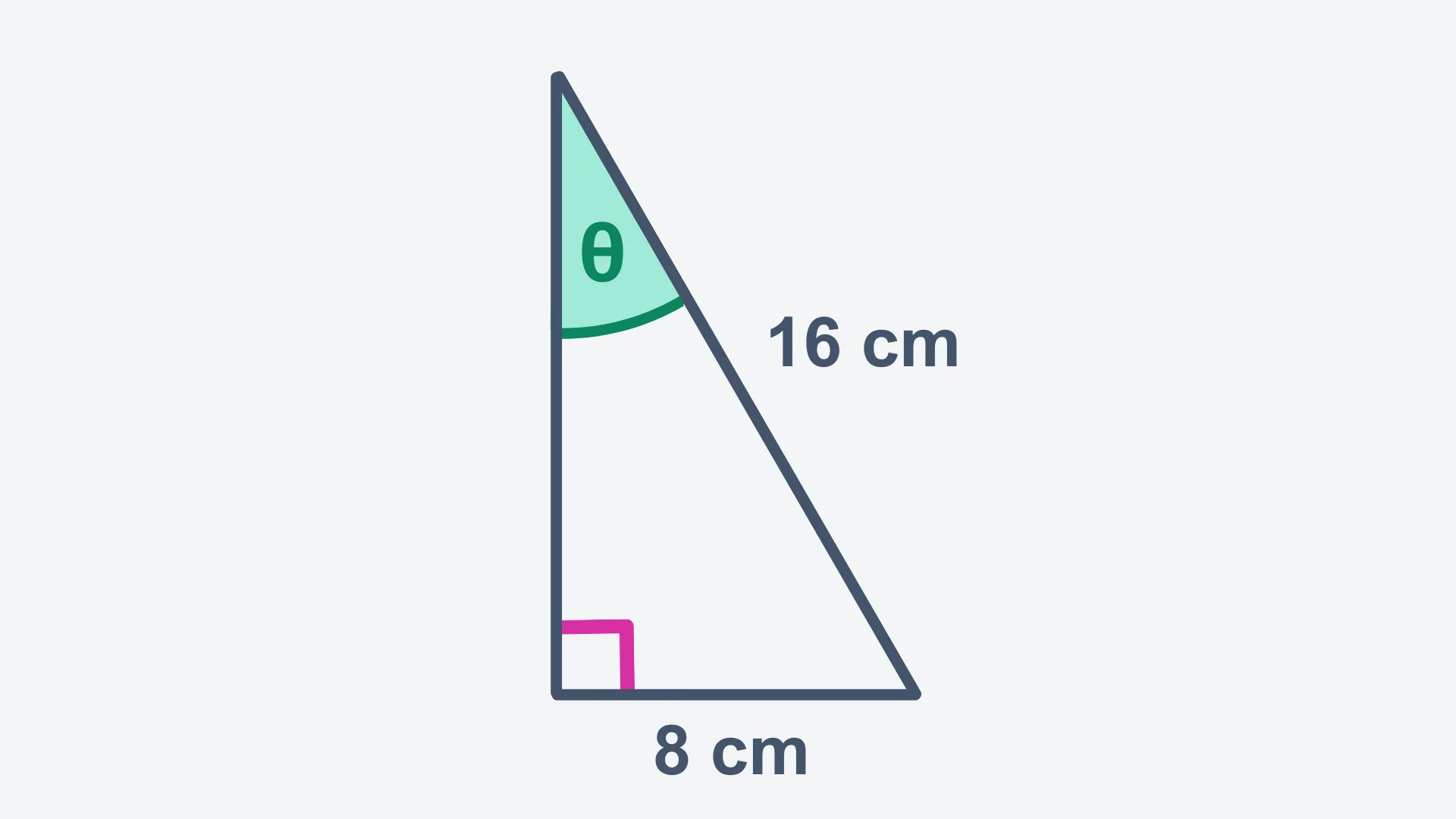
Correct! 🎉 +30 pointsCorrect! 🎉 Worth 30 XPNot quite right
The side is opposite and the side is the hypotenuse, so use sine:
Because the unknown is the angle, apply the inverse sine (with the calculator in degrees):
Want to see the full working?
Interactive Activity
Explore trigonometric ratios in a right-angled triangle
Loading interactive widget...
Frequently asked questions
The questions students bump into most on this topic
Trigonometry links the angles and sides of a right-angled triangle through three ratios, sine, cosine and tangent. Once you know an angle, each ratio is fixed, so you can find a missing side from one angle and one side, or a missing angle from two sides. That is the GCSE core; it is used in surveying, building, navigation and physics.
A memory aid for the three ratios, with the angle called θ. SOH: sin θ = opposite ÷ hypotenuse. CAH: cos θ = adjacent ÷ hypotenuse. TOA: tan θ = opposite ÷ adjacent. The hypotenuse is the longest side, opposite the right angle; the opposite side faces θ and the adjacent side touches it.
Label the sides from the angle, pick the ratio that uses the side you know and the one you want, then solve. Knowing a 30° angle and its opposite side of 4 cm, the hypotenuse comes from sin 30° = 4 ÷ x, and since sin 30° = ½, x = 8 cm. For a missing angle, work out the ratio, then use the inverse button: cos θ = 4 ÷ 8 = ½, so θ = 60°.
No. Sine, cosine and tangent as defined here need a right angle, because the hypotenuse, opposite and adjacent sides only exist in a right-angled triangle. For other triangles you use the sine rule and the cosine rule, which are separate lessons. Check for the right angle before you start.
Choose by the two sides involved. Opposite and hypotenuse: sine. Adjacent and hypotenuse: cosine. Opposite and adjacent: tangent. To find the side opposite a 50° angle when the adjacent side is 5 cm, use tan: tan 50° ≈ 1.2, so the side is about 6 cm. The ratios depend only on the angle, so a bigger triangle with the same angle gives the same values.
The values for 30°, 45° and 60°, which GCSE expects without a calculator. sin 30° = ½ and cos 60° = ½, which is why the video’s hypotenuse comes out as 8 cm. Rather than memorising a table, keep two triangles in mind, the half-equilateral triangle for 30° and 60° and the half-square for 45°, and read the ratios off them.
What's next?
Found this one hard? Go one step back first. Feeling confident? Carry on to the next lesson.