Volume of a Cuboid and Cube
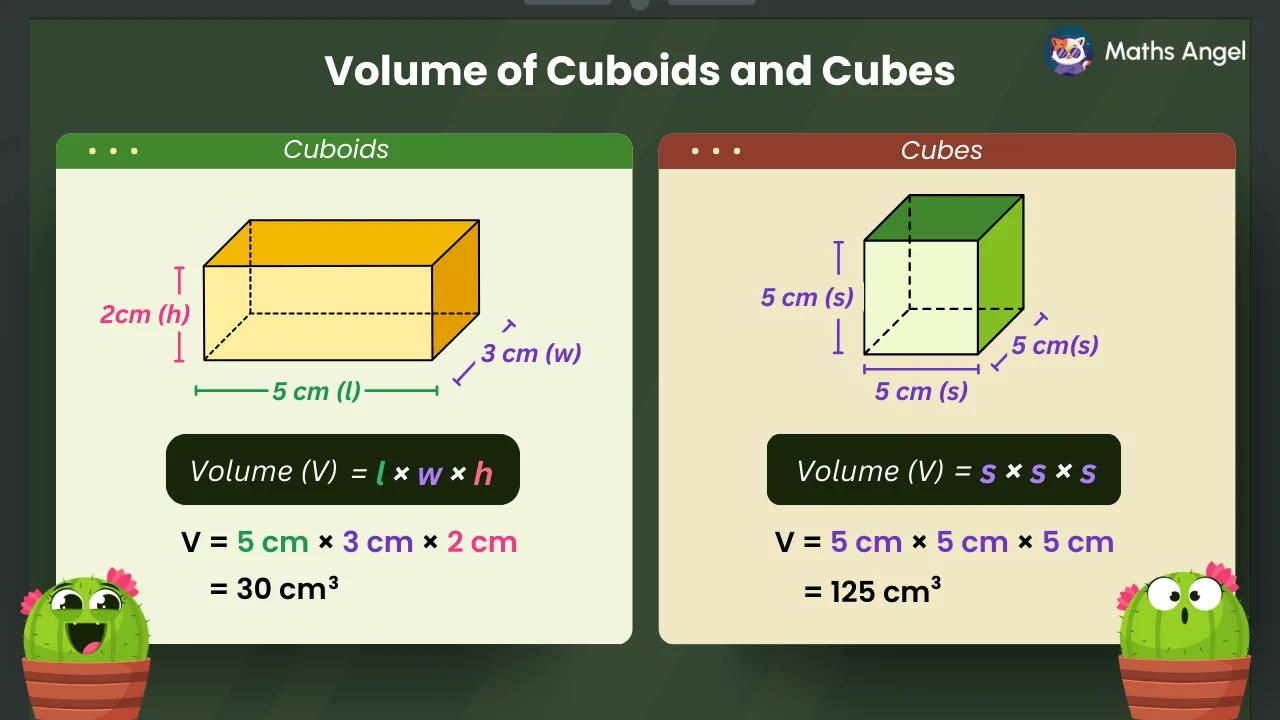
Volume of a cuboid is the space inside it, found by length × width × height. For example, a 5 × 3 × 2 box holds 30 cm³, given in cubic units. A cube is a special cuboid with equal edges, so its volume is side × side × side.
Video Lesson
Watch and learn the basics
🎬 Did this video explain it clearly?
Flashcards
Review key concepts visually
%20Volume%20of%20Cuboids%20an%20Cubes.webp)
%20Volume%20of%20Cuboids%20Calculation.webp)
%20Volume%20of%20Complex%20Solids.webp)
%20Volume%20of%20Cuboid%20Application.webp)
Volume of Cuboids and Cubes
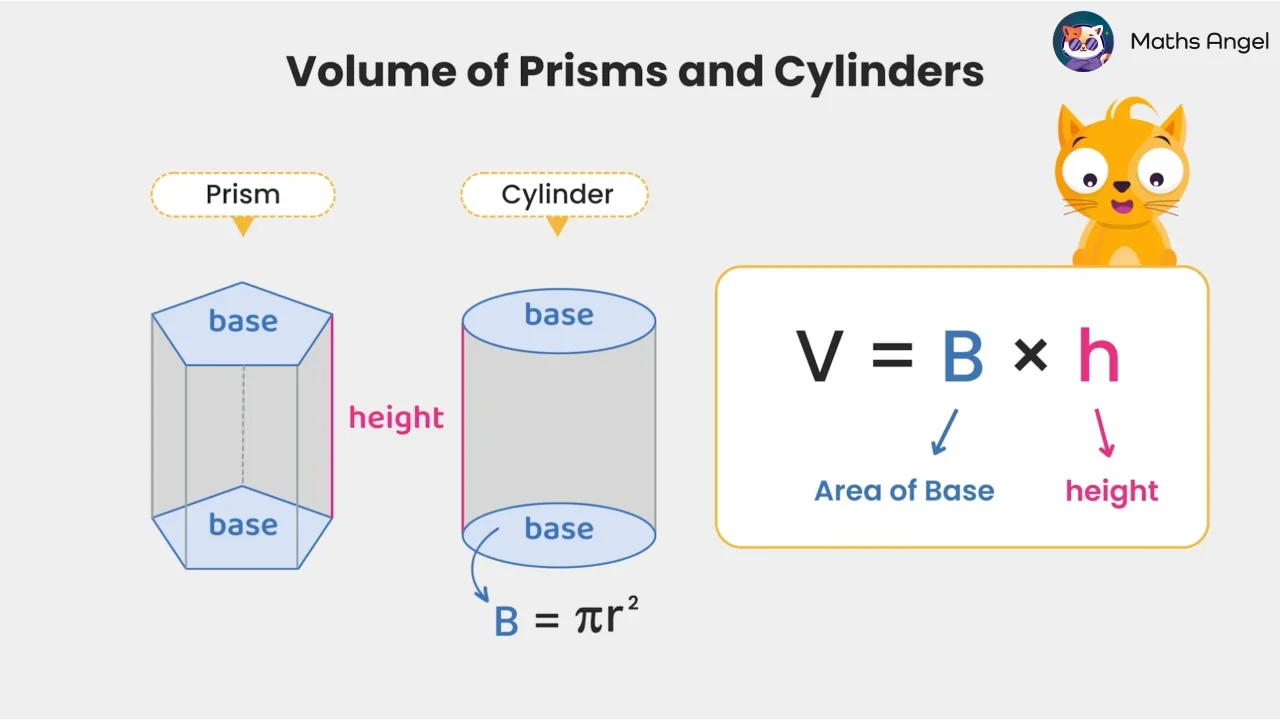
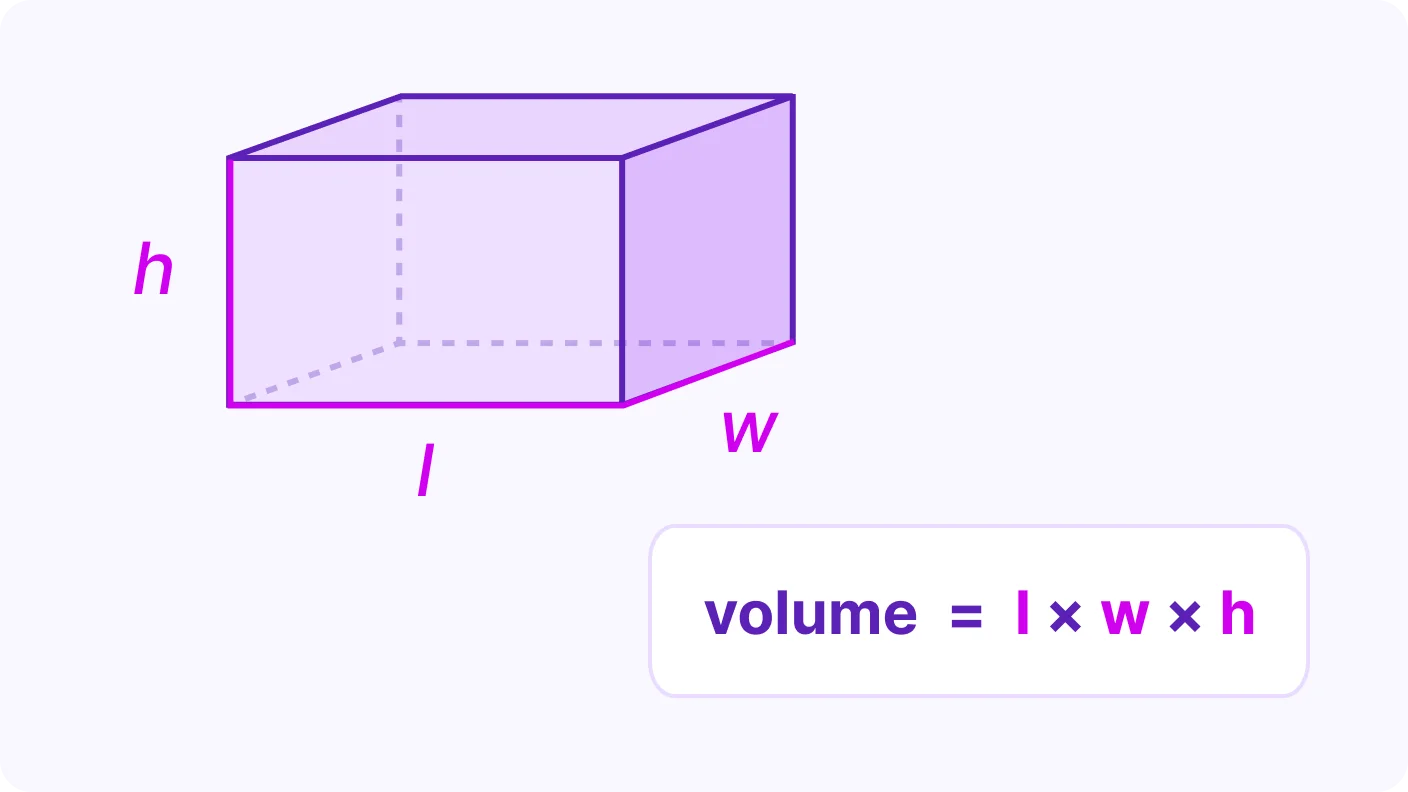
- The volume of a cuboid: Volume = length × width × height.
- The volume of a cube: Volume = side × side × side.
Finding a Missing Dimension
- If the volume of a cuboid and two dimensions are known, the third can be found.
- Use Volume = length × width × height, then divide to find the missing value.
Volume of Compound Solids
- A compound solid can be split into smaller cuboids.
- Find the volume of each part and add them together.
Using Volume in Real Life
- Volume can be used to find capacity, such as how much liquid a container holds.
- You may need to convert units (e.g. from cm³ to litres) when calculating volume.
Practice Questions
Test your understanding
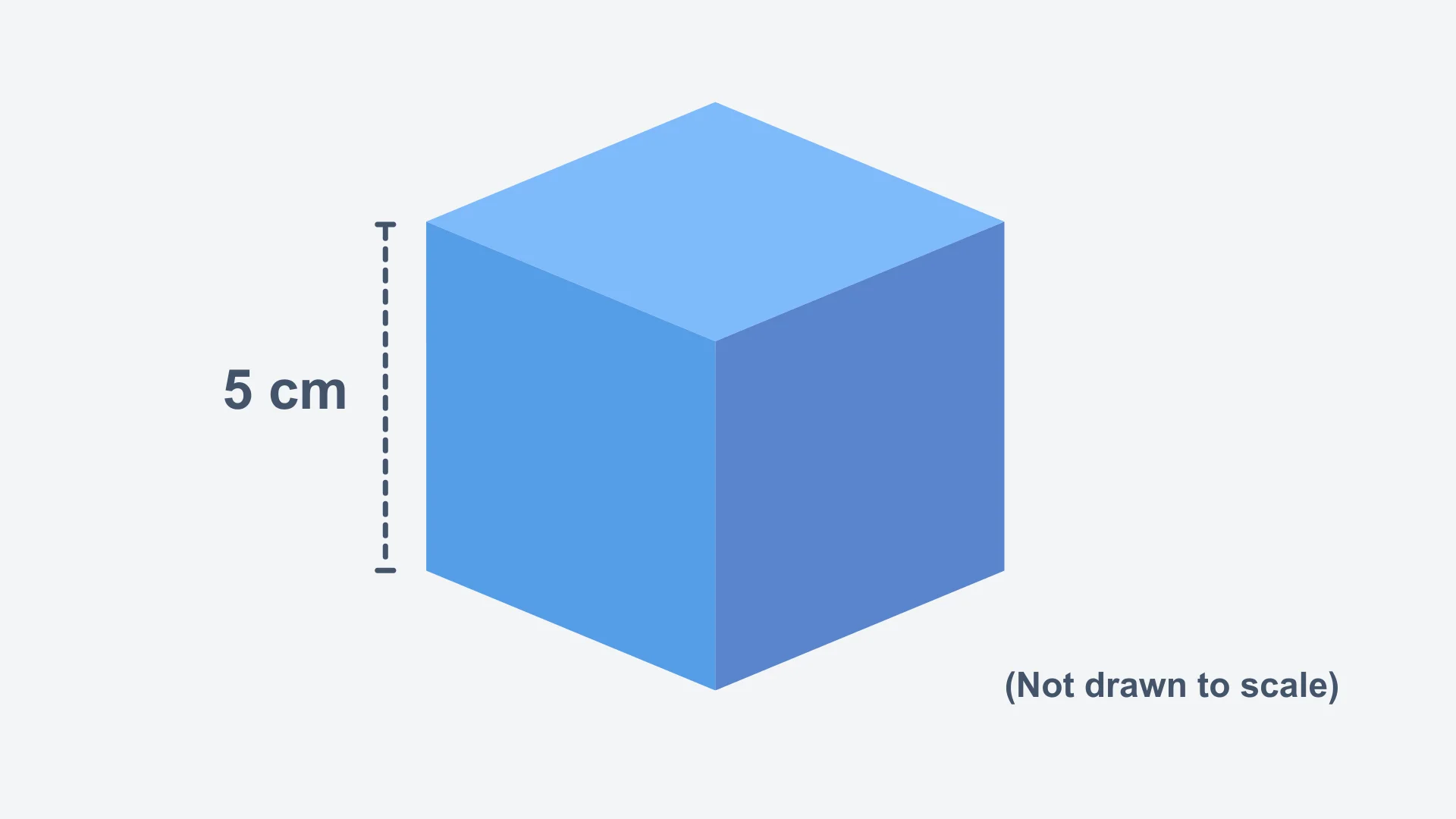
What is the volume of a cube with side length ?
Correct! 🎉 +10 pointsCorrect! 🎉 Worth 10 XPNot quite right
Every edge of a cube is the same length, so volume = side × side × side.
. Multiplying three lengths gives cubic units, so the answer is in cm³.
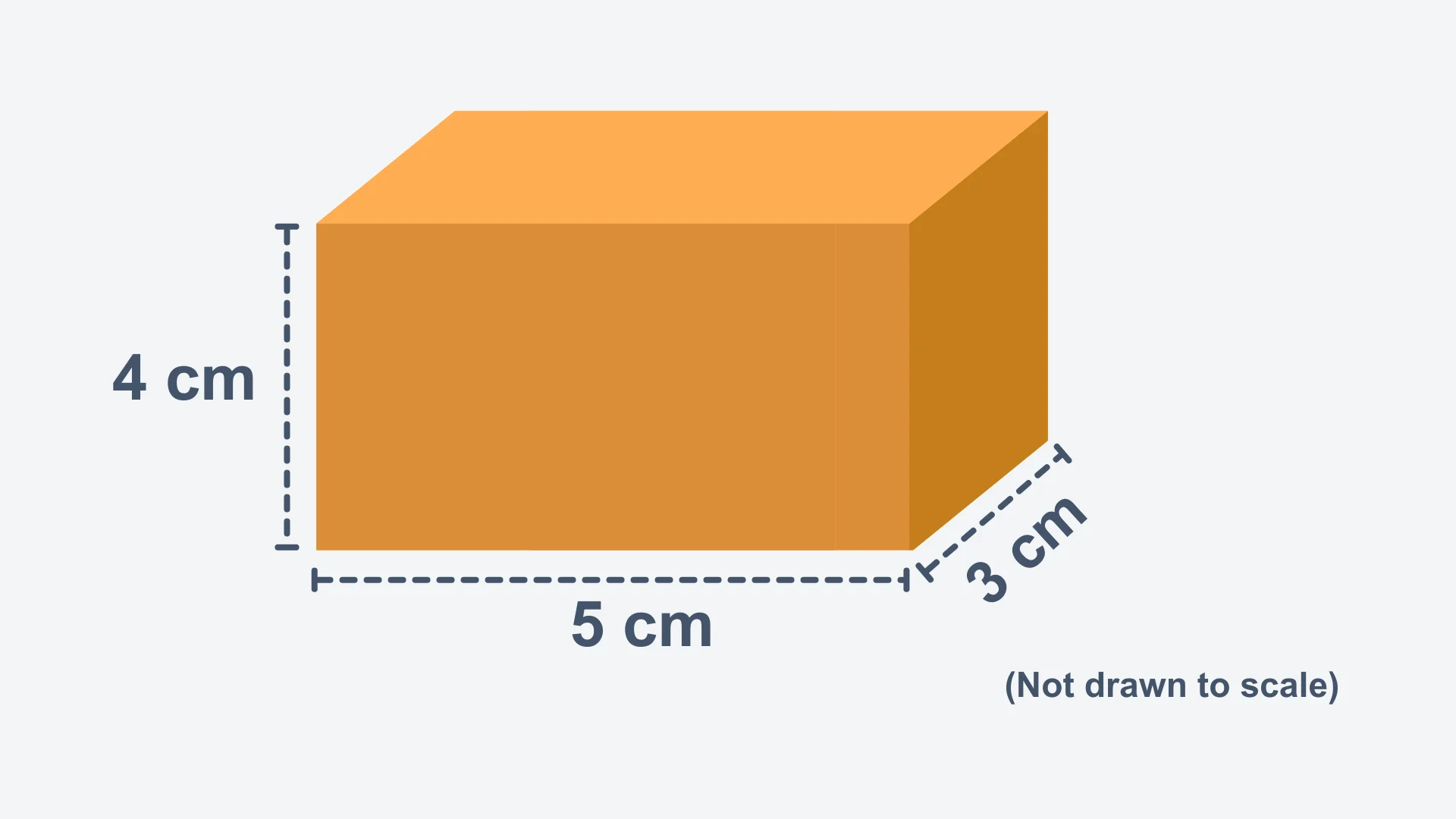
What is the volume of this cuboid?
Correct! 🎉 +10 pointsCorrect! 🎉 Worth 10 XPNot quite right
Volume of a cuboid = length × width × height.
Using the measurements on the diagram: . Three lengths multiplied together give cubic units, so the answer is , not .
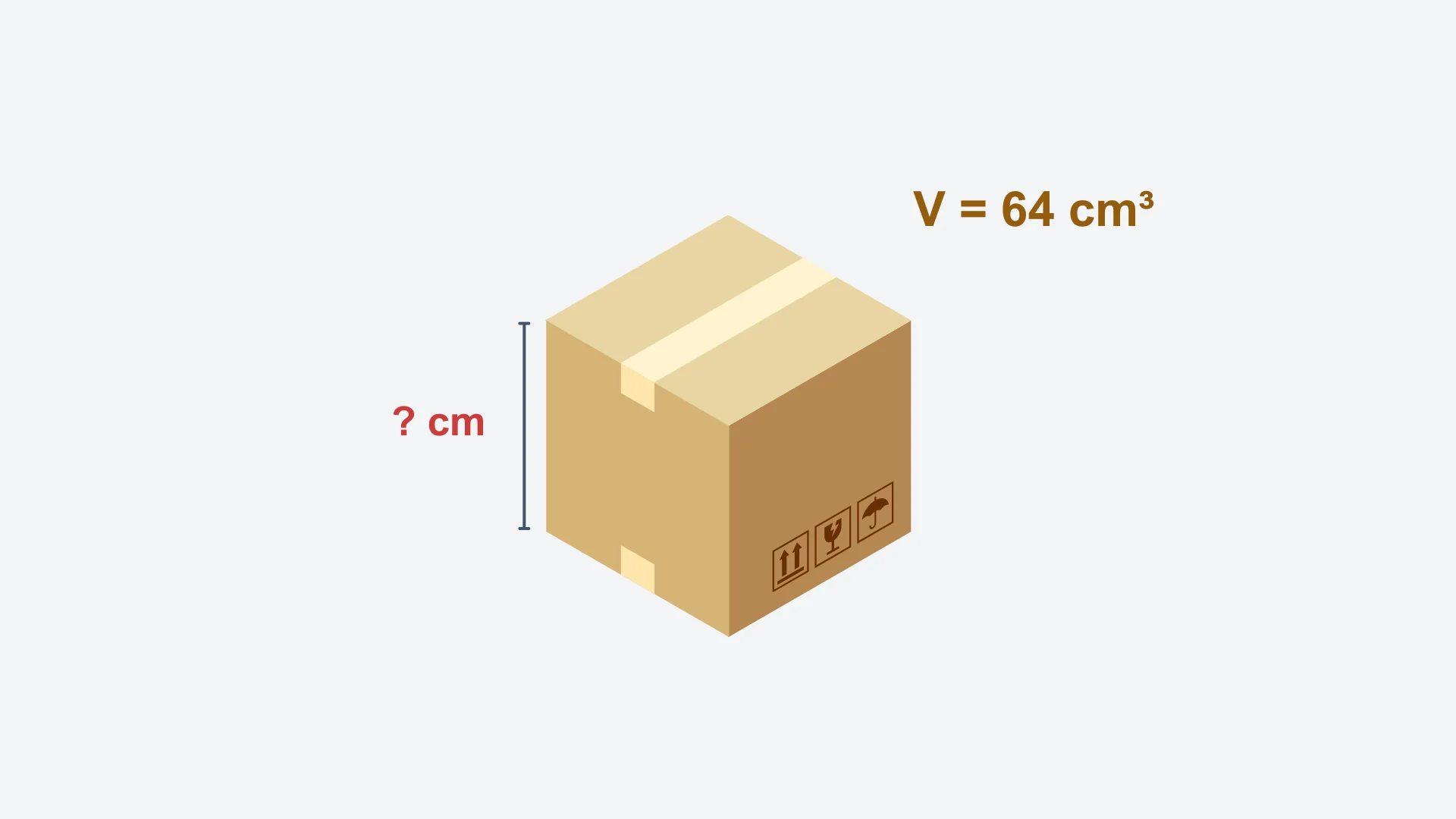
A cube has a volume of . What is the length of one side?
Correct! 🎉 +20 pointsCorrect! 🎉 Worth 20 XPNot quite right
The volume of a cube is side × side × side, so to work backwards from the volume you take the cube root.
, because . So each side is .
Take care not to use the square root: , which would only be correct if 64 were an area.
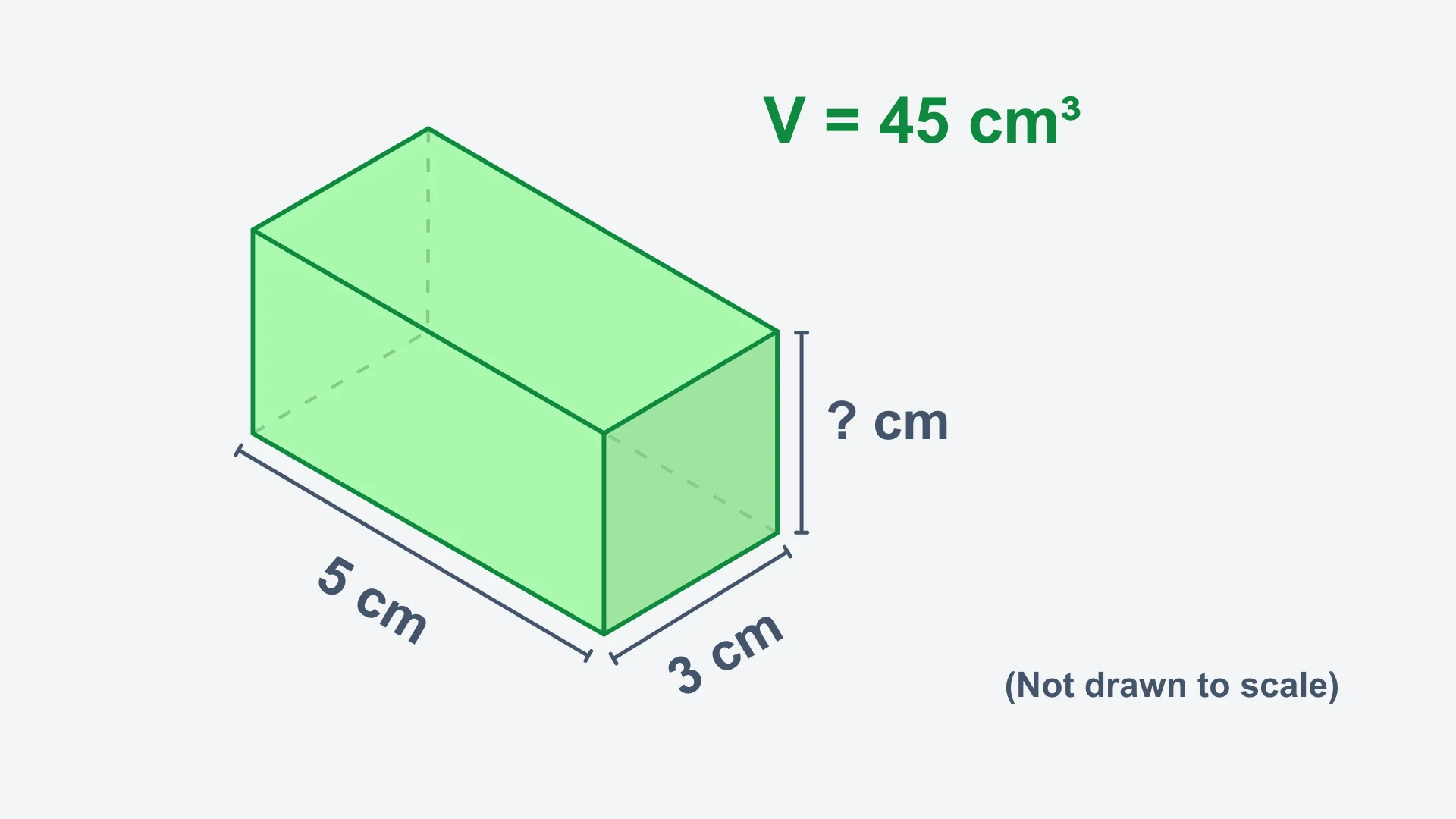
A cuboid has a volume of , with a length of and a width of . What is its height?
Correct! 🎉 +20 pointsCorrect! 🎉 Worth 20 XPNot quite right
The volume of a cuboid is length × width × height, so height = volume ÷ (length × width).
Height = cm.
Check: cm³.
A cuboid has a volume of . Its height is and its width is . What is the length of the cuboid?
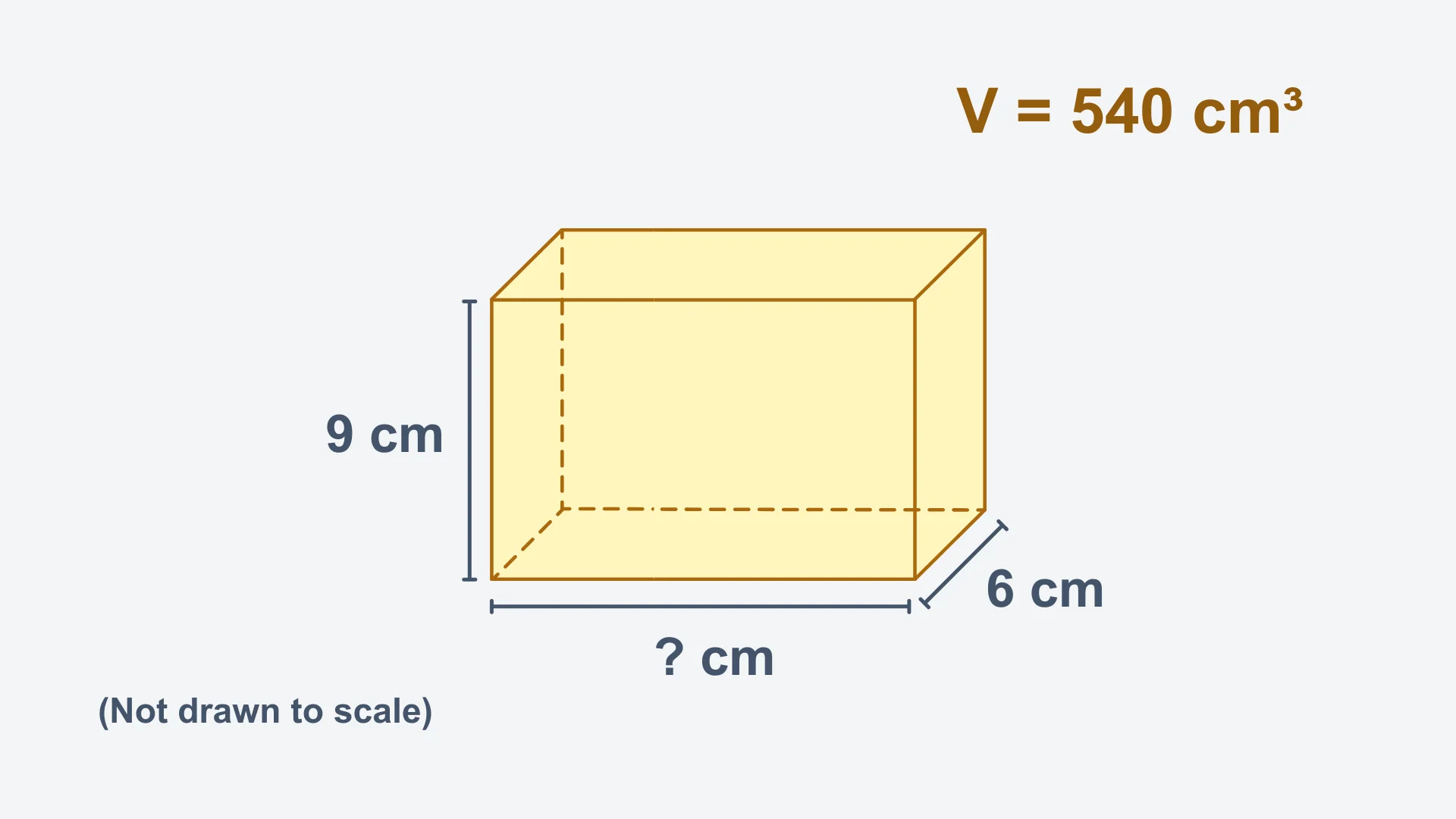
Correct! 🎉 +20 pointsCorrect! 🎉 Worth 20 XPNot quite right
The volume of a cuboid is length × width × height, so length = volume ÷ (width × height).
Length = cm.
Check: cm³.
A compound solid consists of a cuboid and a cube. The cuboid has a length of , a width of , and a height of . The cube has a side length of . What is the total volume of the solid?
Correct! 🎉 +30 pointsCorrect! 🎉 Worth 30 XPNot quite right
Work out each part separately, then add.
Cuboid: .
Cube: .
Total volume .
Want to see the full working?
Interactive Activity
Explore volume of cubes and cuboids by adjusting dimensions
Loading interactive widget...
Frequently asked questions
The questions students bump into most on this topic
A cuboid is a 3D shape with six rectangular faces, like a box or a brick. It has 12 edges and 8 corners, and opposite faces are the same size. A cube is a cuboid whose edges are all equal. In the US a cuboid is usually called a rectangular prism.
The volume of a cuboid is length × width × height. Multiply the three measurements and give the answer in cubic units such as cm³ or m³. A cuboid 5 cm long, 3 cm wide and 2 cm high has volume 5 × 3 × 2 = 30 cm³. A cube is a cuboid with equal edges, so its volume is side × side × side.
A cuboid has 6 faces, 12 edges and 8 vertices, which are its corners. The faces are rectangles, and opposite faces are identical. A cube has the same 6 faces, 12 edges and 8 vertices, but all of its faces are squares. These counts stay the same whatever size the cuboid is.
A cuboid’s length, width and height can all be different. A cube is a special cuboid where every edge is the same length, so every cube is a cuboid. Both use length × width × height; for a cube that is side × side × side, so a 5 cm cube has volume 5 × 5 × 5 = 125 cm³.
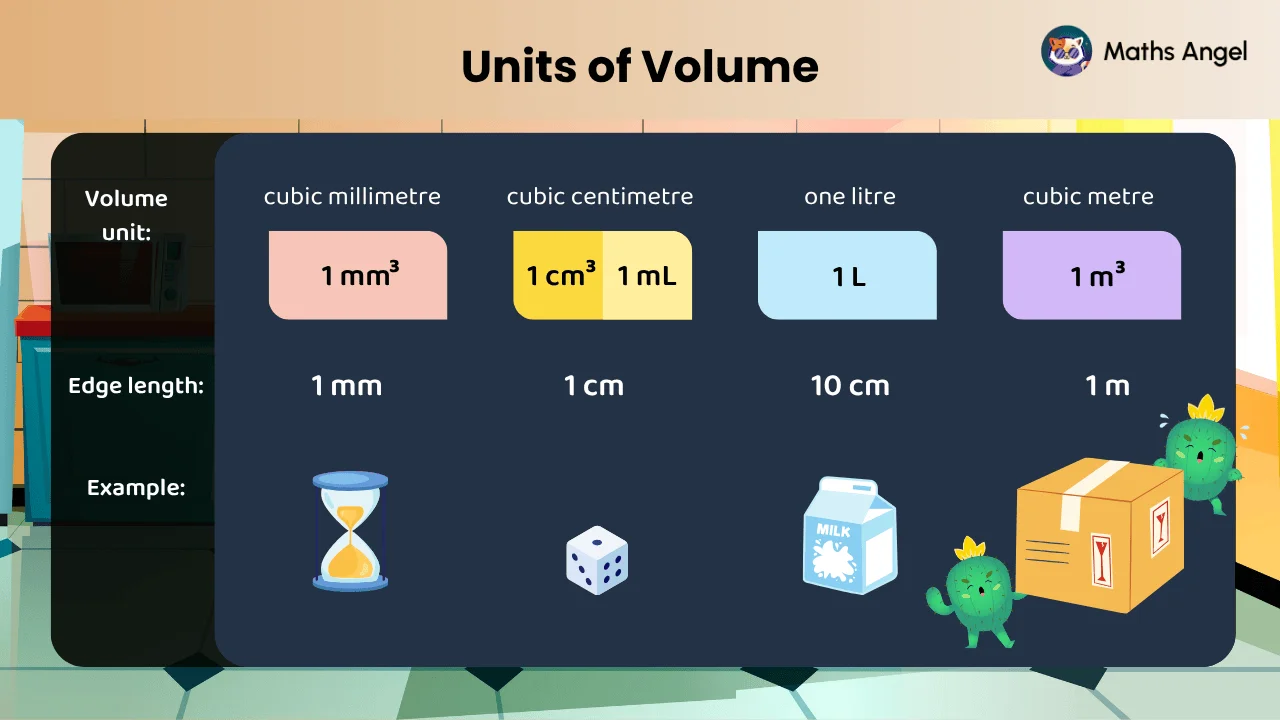
Volume is measured in cubic units, because it fills three dimensions: cubic centimetres (cm³) for small objects and cubic metres (m³) for large ones. Liquids are often measured in litres, and 1 litre = 1,000 cm³. In the lesson’s example, a container of 50 × 30 × 20 = 30,000 cm³ holds 30 litres.
Volume is the space inside a 3D shape. Start with a box: count how many 1 cm cubes fit along its length, width and height, then multiply the three numbers. A box 5 cubes long, 3 wide and 2 high holds 5 × 3 × 2 = 30 cubes, so its volume is 30 cm³.
What's next?
Found this one hard? Go one step back first. Feeling confident? Carry on to the next lesson.